Virginia SOL 9.C.4.C
The Standard
Evaluate the credibility, word choice, viewpoints, and bias in media presentations.
Virginia Standards of Learning for English · Examining Media Messages
Teacher's field guide
What This Standard Means
What Students Need to Do
- Students examine who created a media message, what evidence it uses, and how its language shapes meaning. They identify represented and missing viewpoints, then explain possible bias and judge credibility.
What Mastery Looks Like
- Students can judge a media message using its source, evidence, language, and missing perspectives. They support each judgment with specific details and explain how those choices shape the audience's response.
Common Misconceptions
- Students may treat bias as proof that a source is false. They may also confuse strong language, popularity, or polished visuals with reliable evidence. Some identify only the stated viewpoint and miss omitted voices or facts.
How to Assess It
- Give students a headline, image, and short news excerpt. Ask them to rate its credibility and cite one word choice, one source detail, and one sign of bias.
Lesson moves
Ways to Teach It
Give pairs two printed reports of one event, then have them highlight evidence, loaded words, source details, and missing viewpoints in different colors.
Show a short advertisement and ask, "Whose viewpoint is centered, whose is missing, and which words shape your reaction?"
Play Credibility Sort with source cards, where teams rank each source and earn points by defending placements with specific evidence.
Have students compare local news and social media coverage of a community issue, then write which source they would trust and why.
Free download
Printable 9.C.4.C Worksheet
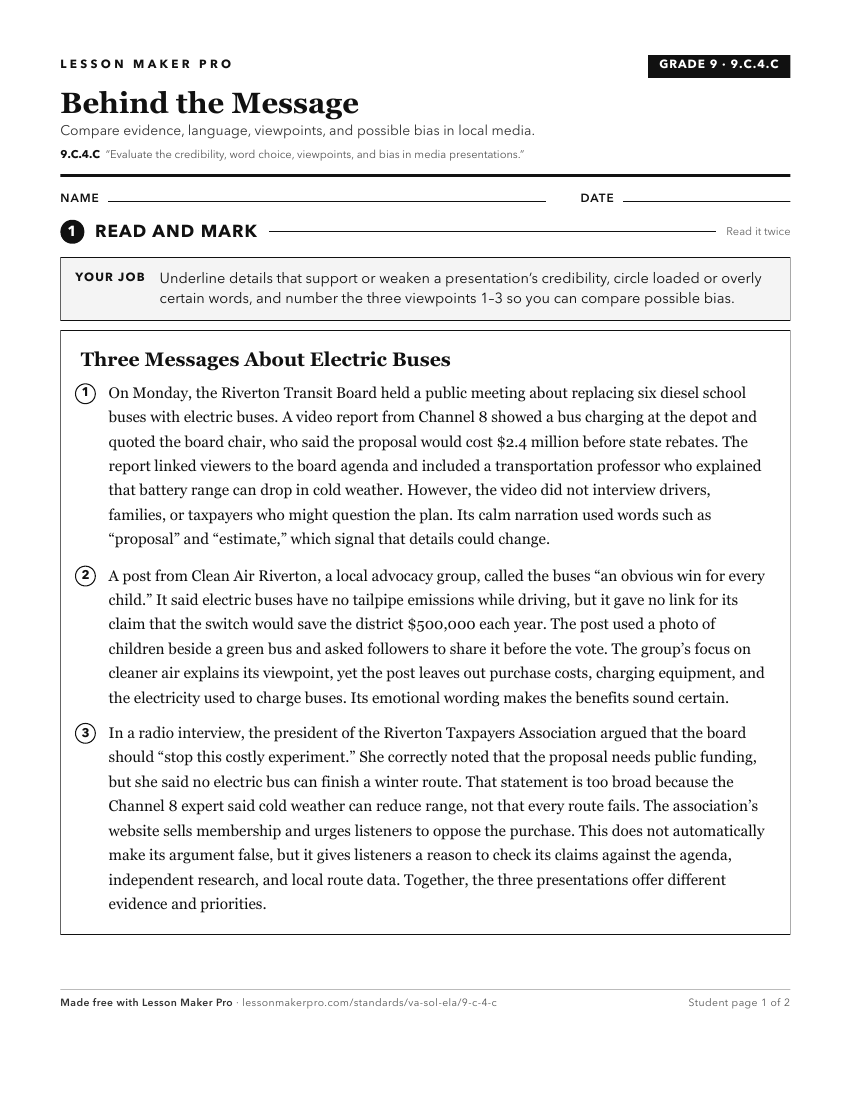
A ready-to-print activity worksheet aligned to 9.C.4.C, with an answer key for the teacher on its own page. No account needed.
PDF, US Letter, prints cleanly in black and white.
Download the worksheetKeep exploring
Related Standards
- 11.C.4.C
Analyze, compare, and contrast visual and verbal media messages for content (e.g., word choice and choice of information), intent (e.g., persuasive techniques),...
- 10.C.4.D
Evaluate the motives (e.g., social, commercial, and political) behind media messages used to determine author’s purpose, factual content, opinion, and/or possib...
- 7.C.4.B
Analyze media messages for facts, opinions, persuasive messages, word choice, and viewpoint.
- 10.C.4.B
Analyze, compare, and contrast visual and verbal media messages for content (e.g., word choice and choice of information), intent (e.g., persuasive techniques, ...
Turn this exact standard into a lesson
Grade, subject, topic, and the complete standard are prefilled. Create one free, no account needed.
Also for this standard:Make a WorksheetMake a QuizMake a Sub Lesson