Virginia SOL 5.C.4.B
The Standard
Identify the purpose, intended audience, and credibility of information (e.g., auditory, visual, and written media messages) being presented.
Virginia Standards of Learning for English · Examining Media Messages
Teacher's field guide
What This Standard Means
What Students Need to Do
- Students examine audio, visual, and written messages to determine why each was made, who it targets, and whether it is trustworthy. They cite clues such as word choice, images, author, date, source, and evidence.
What Mastery Looks Like
- Given an advertisement, news clip, or infographic, students can state its purpose, audience, and level of credibility. They support each judgment with details from the message and its source.
Common Misconceptions
- Students often confuse a message’s topic with its purpose or assume the audience is everyone. They may treat polished graphics, popularity, or confident language as proof that a source is credible.
How to Assess It
- Display an advertisement with an author, date, image, and claim. Ask students to name its purpose, audience, and credibility, with one clue supporting each answer.
Lesson moves
Ways to Teach It
In groups, sort printed ads, news headlines, and public service posters by purpose, then label audience and credibility clues.
Play a short school announcement and ask, “Who is meant to act, why, and which details make it trustworthy?”
Run Credibility Detective: teams earn points by finding authors, dates, evidence, loaded words, and missing sources on sample webpages.
Compare a product package claim with a consumer review and test report, then decide which source would best guide a purchase.
Free download
Printable 5.C.4.B Worksheet
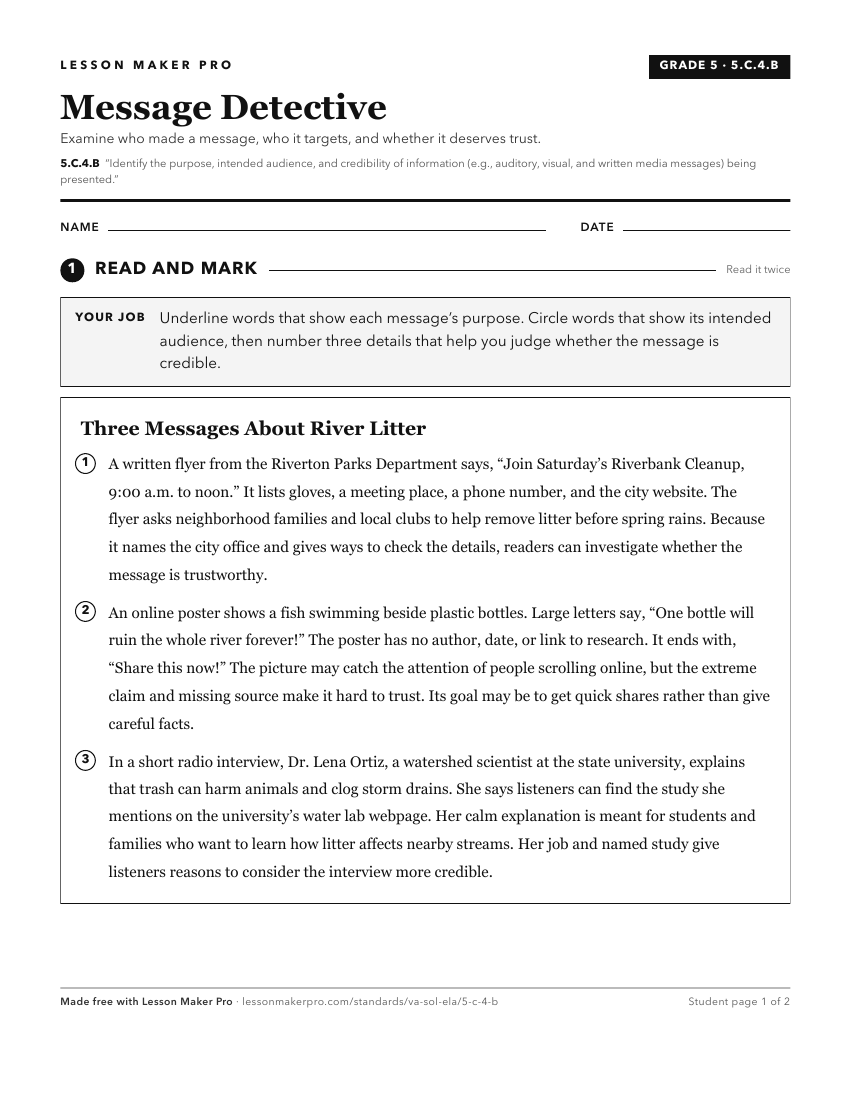
A ready-to-print activity worksheet aligned to 5.C.4.B, with an answer key for the teacher on its own page. No account needed.
PDF, US Letter, prints cleanly in black and white.
Download the worksheetKeep exploring
Related Standards
- 7.C.4.C
Compare and contrast the effectiveness of techniques in auditory, visual, and written media messages (e.g., authorship, format, content, purpose) on the intende...
- 4.C.4.A
Differentiate between auditory, visual, and written media messages (e.g., videos, podcasts, print advertisements) and their purposes (to explain, to inform, to ...
- 9.C.4.A
Determine the purpose of the media message and its effect on the audience.
- 12.C.4.B
Analyze and critique the effectiveness of media messages by evaluating the purpose, evidence, and clarity for specific purposes with targeted audiences.
Turn this exact standard into a lesson
Grade, subject, topic, and the complete standard are prefilled. Create one free, no account needed.
Also for this standard:Make a WorksheetMake a QuizMake a Sub Lesson