Virginia SOL 10.RV.1.F
The Standard
Explain the meaning of literary and classical allusions and figurative language in context and analyze their roles in texts.
Virginia Standards of Learning for English · Vocabulary Development and Word Analysis
Teacher's field guide
What This Standard Means
What Students Need to Do
- Students determine what literary references and nonliteral phrases mean within a passage. They use context and background knowledge to explain how each choice shapes meaning, tone, character, or theme.
What Mastery Looks Like
- Students can paraphrase an allusion or figurative phrase and cite context clues that support their reading. They explain why the author used it and how it affects tone, character, theme, or meaning.
Common Misconceptions
- Students may read figurative phrases literally or identify a metaphor without explaining its meaning. They may treat an allusion as an ordinary detail and miss how it shapes tone, character, or theme.
How to Assess It
- Give students the sentence, “By hiding one small mistake, Lena opened Pandora’s box.” Ask them to explain the reference and its effect on the reader’s expectations.
Lesson moves
Ways to Teach It
Give pairs allusion cards, context cards, and effect cards to match, then ask them to defend each match with one text clue.
Discuss why an author might describe an ambitious character as Icarus, then write two sentences explaining the warning created by that reference.
Run a context clue relay where teams identify each phrase, paraphrase its meaning, and name its effect before moving stations.
Collect headlines, advertisements, or song lyrics using phrases like Achilles’ heel, then analyze what each reference helps the audience understand.
Free download
Printable 10.RV.1.F Worksheet
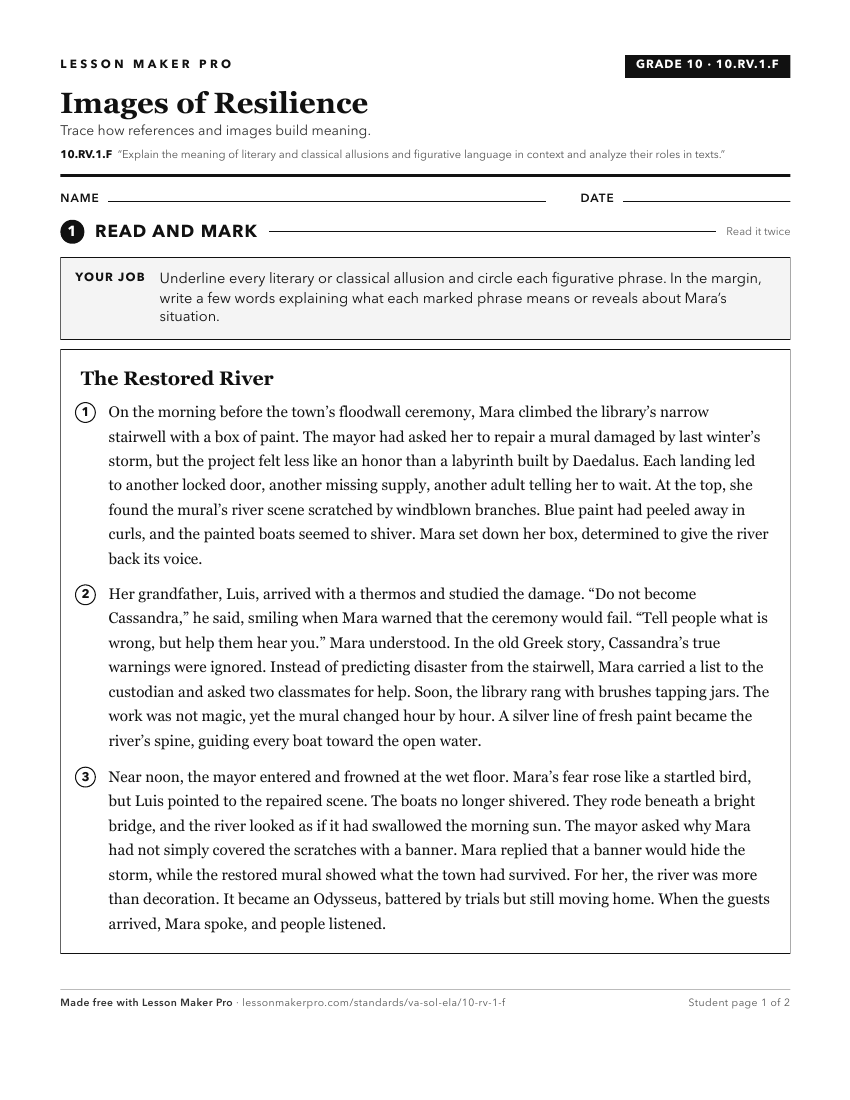
A ready-to-print activity worksheet aligned to 10.RV.1.F, with an answer key for the teacher on its own page. No account needed.
PDF, US Letter, prints cleanly in black and white.
Download the worksheetKeep exploring
Related Standards
- 10.RL.2.B
Analyze how authors use literary devices and figurative language, including allusion, allegory, and paradox to impact the meaning of the text.
- 12.RV.1.F
Interpret the meaning of figurative language and literary and classical allusions and analyze their role in texts.
- 11.RV.1.F
Explain the meaning of figurative language and literary and classical allusions and analyze their role in texts.
- 9.RV.1.F
The 9th Grade version of this standard.
Turn this exact standard into a lesson
Grade, subject, topic, and the complete standard are prefilled. Create one free, no account needed.
Also for this standard:Make a WorksheetMake a QuizMake a Sub Lesson