TEKS Math 2.11.C
The Standard
distinguish between a deposit and a withdrawal
Texas Essential Knowledge and Skills for Mathematics
Teacher's field guide
What This Standard Means
What Students Need to Do
- Students decide whether a bank account gains or loses money in a given situation. They label money added as a deposit and money removed as a withdrawal.
What Mastery Looks Like
- Students correctly label bank account actions as deposits or withdrawals. They explain that one adds money to the account and the other removes money.
Common Misconceptions
- Students may think getting cash from an ATM is a deposit because money goes into their hands. They may also reverse the terms or focus on spending instead of what happens to the bank account.
How to Assess It
- Exit ticket: Label each action as deposit or withdrawal: add birthday money, take out cash, add allowance, remove money to buy lunch. Explain one answer.
Lesson moves
Ways to Teach It
Give pairs a paper bank account and counters, then read action cards while students add or remove counters and name each transaction.
Ask, “Maya puts $5 into her account, then takes out $2. Which action is a deposit, and which is a withdrawal?”
Students sort picture cards into two hoops labeled “money added” and “money removed,” then check a partner’s choices.
Show a simple bank statement, and have students circle deposits in green and withdrawals in red.
Free download
Printable 2.11.C Worksheet
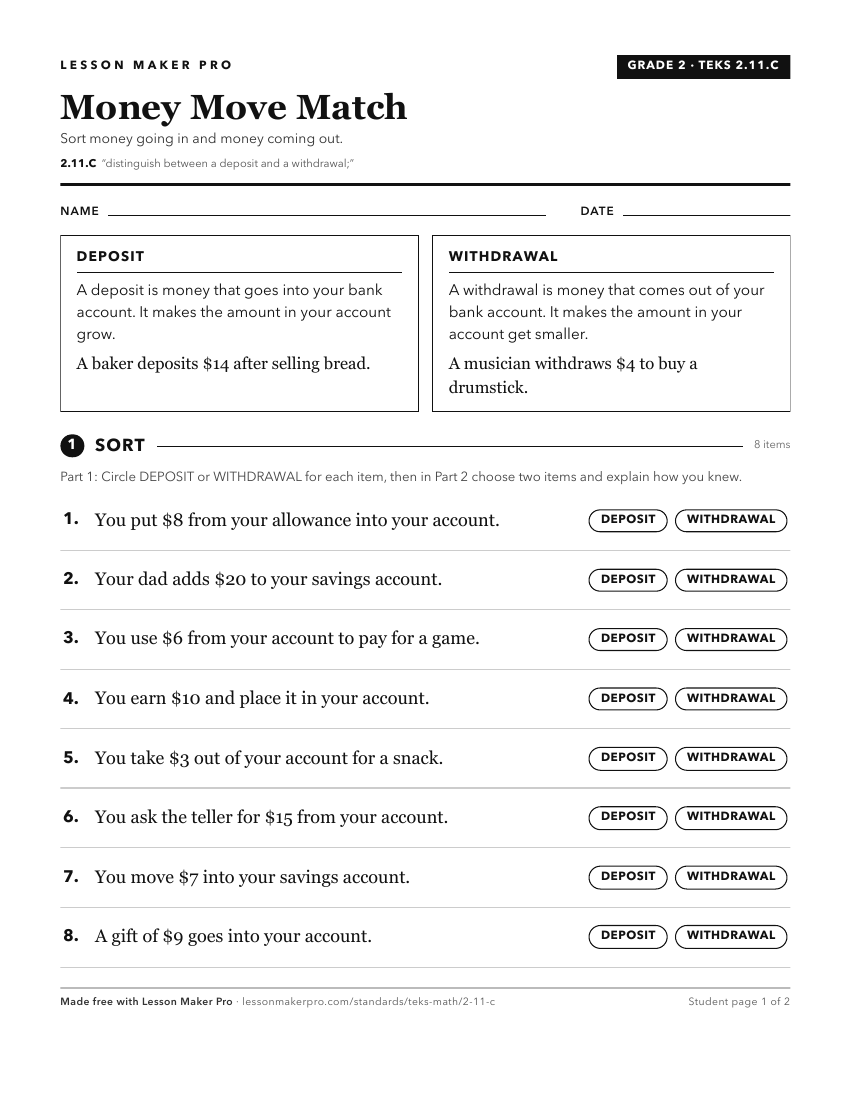
A ready-to-print activity worksheet aligned to 2.11.C, with an answer key for the teacher on its own page. No account needed.
PDF, US Letter, prints cleanly in black and white.
Download the worksheetKeep exploring
Related Standards
- 6.14.B
distinguish between debit cards and credit cards
- 6.14.C
balance a check register that includes deposits, withdrawals, and transfers
- 6.14.A
compare the features and costs of a checking account and a debit card offered by different local financial institutions
- 1.9.C
distinguish between spending and saving
Turn this exact standard into a lesson
Grade, subject, topic, and the complete standard are prefilled. Create one free, no account needed.
Also for this standard:Make a WorksheetMake a QuizMake a Sub Lesson