NGSS 5-ESS2-1
The Standard
Develop a model using an example to describe ways the geosphere, biosphere, hydrosphere, and/or atmosphere interact.
Next Generation Science Standards
Teacher's field guide
What This Standard Means
What Students Need to Do
- Students build or draw a model showing how two Earth systems affect each other in a specific place or event. They use arrows, labels, and a short explanation to show movement or change.
What Mastery Looks Like
- A student can choose two relevant systems, represent each one accurately, and use labeled arrows to show their interaction. The student can explain what causes a change and what happens next.
Common Misconceptions
- Students may treat the four systems as separate lists rather than connected systems. They may misclassify parts, such as placing plants in the geosphere because they grow in soil. They may draw arrows without naming what moves or changes.
How to Assess It
- Exit ticket: Draw a model showing how a mountain range affects moving air and cloud formation. Label the geosphere and atmosphere, then add arrows and one cause-and-effect sentence.
Lesson moves
Ways to Teach It
Build a sloped soil tray, spray water at the top, and sketch how runoff changes the land.
Study before-and-after photos of riverbank erosion, then explain how moving water changed the land using two system names.
Sort event cards by the two systems involved, then race to draw a labeled interaction model for each card.
Use a local flood map to predict which landforms are most affected by rising water, then explain the interaction.
Free download
Printable 5-ESS2-1 Worksheet
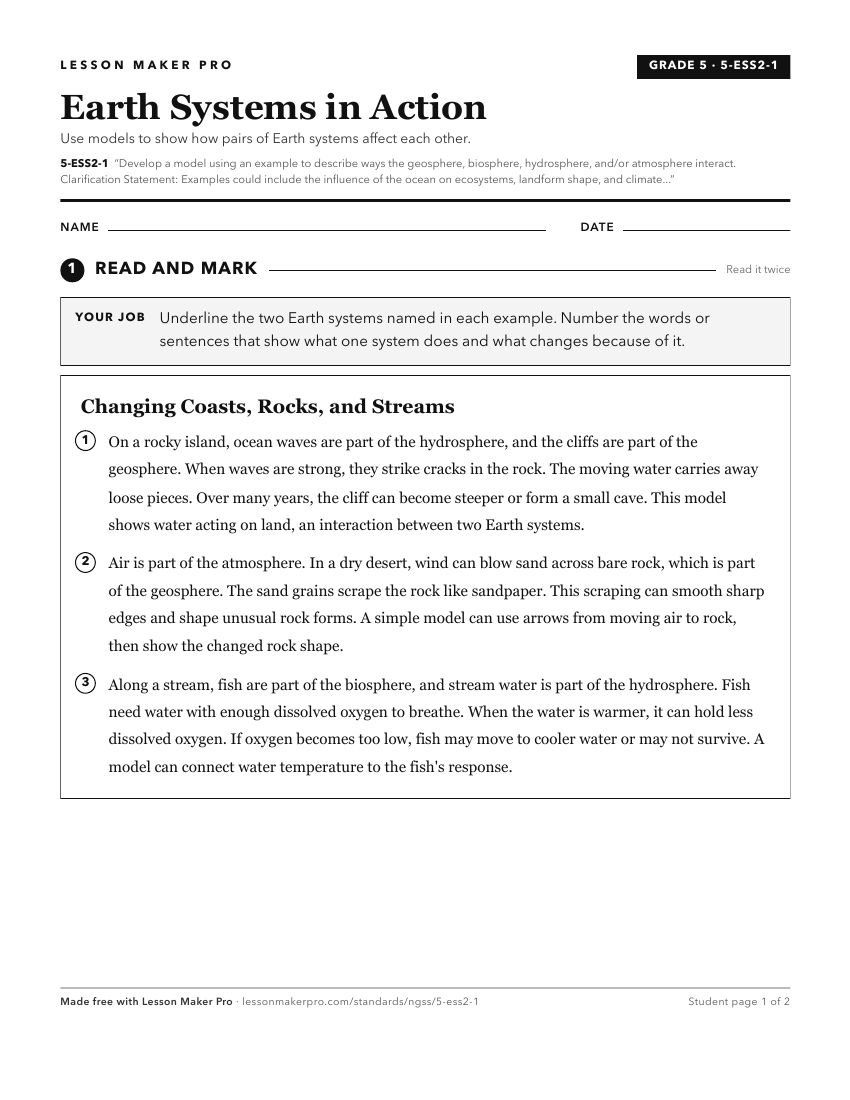
A ready-to-print activity worksheet aligned to 5-ESS2-1, with an answer key for the teacher on its own page. No account needed.
PDF, US Letter, prints cleanly in black and white.
Download the worksheetLearning progression
Where This Standard Sits
See the whole path on the Earth & Space Science progression map.
What This Unlocks
Mastery here sets students up for these next.
Keep exploring
Related Standards
- HS-LS2-5
Develop a model to illustrate the role of photosynthesis and cellular respiration in the cycling of carbon among the biosphere, atmosphere, hydrosphere, and geo...
- MS-ESS2-4
Develop a model to describe the cycling of water through Earth's systems driven by energy from the sun and the force of gravity.
- HS-ESS2-6
Develop a quantitative model to describe the cycling of carbon among the hydrosphere, atmosphere, geosphere, and biosphere.
- 5-LS2-1
Develop a model to describe the movement of matter among plants, animals, decomposers, and the environment.
Turn this exact standard into a lesson
Grade, subject, topic, and the complete standard are prefilled. Create one free, no account needed.
Also for this standard:Make a WorksheetMake a QuizMake a Sub Lesson