NGSS 1-PS4-3
The Standard
Plan and conduct an investigation to determine the effect of placing objects made with different materials in the path of a beam of light.
Next Generation Science Standards
Teacher's field guide
What This Standard Means
What Students Need to Do
- Students predict what will happen when light meets different materials, then test their ideas with a flashlight. They observe whether light passes through, is blocked, or bounces away.
What Mastery Looks Like
- Students can carry out a fair flashlight test and record what they observe. They can explain whether a material lets most, some, or no light through, or reflects the light.
Common Misconceptions
- Students may think all light passes through clear objects perfectly. They may also confuse reflected light with light passing through an object, or call every dark area a shadow.
How to Assess It
- Give students clear plastic, wax paper, cardboard, and a mirror. Ask them to predict and record what happens when a flashlight shines on each material.
Lesson moves
Ways to Teach It
Shine a flashlight through clear plastic, wax paper, cardboard, and foil, then sort each material by what happens to the light.
Ask, “Which material would make the best window, lampshade, or blackout curtain, and what evidence supports your choice?”
Play Light Sort by giving pairs material cards to place under lets through, blocks, or reflects.
Examine classroom windows, curtains, mirrors, and walls, then name how each material affects sunlight or lamp light.
Free download
Printable 1-PS4-3 Worksheet
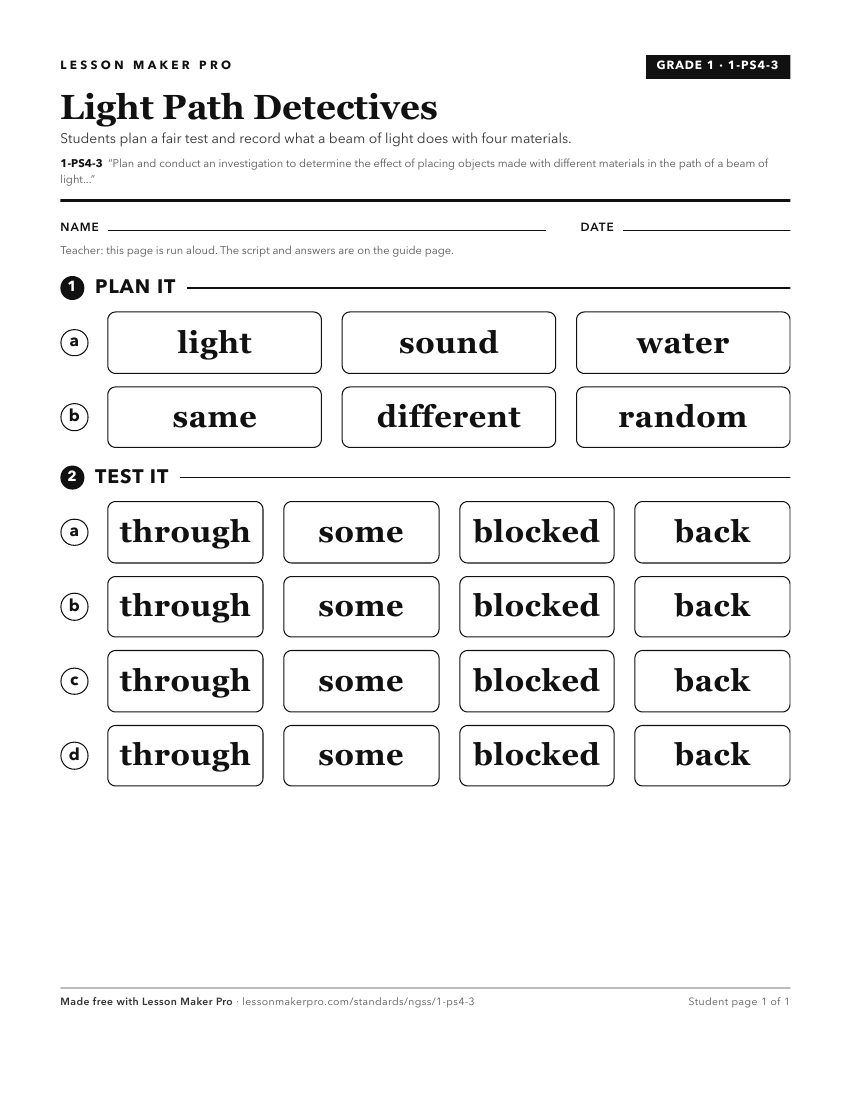
A ready-to-print activity worksheet aligned to 1-PS4-3, with an answer key for the teacher on its own page. No account needed.
PDF, US Letter, prints cleanly in black and white.
Download the worksheetKeep exploring
Related Standards
- K-PS2-1
Plan and conduct an investigation to compare the effects of different strengths or different directions of pushes and pulls on the motion of an object.
- 2-PS1-1
Plan and conduct an investigation to describe and classify different kinds of materials by their observable properties.
- 3-PS2-1
Plan and conduct an investigation to provide evidence of the effects of balanced and unbalanced forces on the motion of an object.
- 1-PS4-1
Plan and conduct investigations to provide evidence that vibrating materials can make sound and that sound can make materials vibrate.
Turn this exact standard into a lesson
Grade, subject, topic, and the complete standard are prefilled. Create one free, no account needed.
Also for this standard:Make a WorksheetMake a QuizMake a Sub Lesson