Georgia 4.P.ST.1.b
The Standard
Consider how context impacts the purposes of the author and the audience. (I/C)
Georgia's K-12 English Language Arts Standards · Practices (P) · Situating Texts
Teacher's field guide
What This Standard Means
What Students Need to Do
- Students identify clues about when, where, and for whom a text was written. They explain how those details shape the writer's goal and choices.
What Mastery Looks Like
- Students can name the intended reader and the writer's goal using evidence from the text. They can explain how a change in time, place, or reader would change the message.
Common Misconceptions
- Students may confuse the topic with the writer's goal. They may assume every text is meant for everyone or mention background details without connecting them to the text.
How to Assess It
- Give students this prompt: “A principal emails families before a snowstorm. Who is the audience, why was the message sent now, and which clues support your answer?”
Lesson moves
Ways to Teach It
Give pairs a birthday invitation, weather alert, toy ad, and diary entry to label by situation, reader, and writer's goal.
Discuss how a playground safety poster would change for first graders versus parents, then write one sentence explaining each version's goal.
Play Context Match: teams pair text cards with audience and situation cards, then defend each match with evidence.
Examine a current school flyer and explain how the event date, intended families, and school needs shape its wording and purpose.
Free download
Printable 4.P.ST.1.b Worksheet
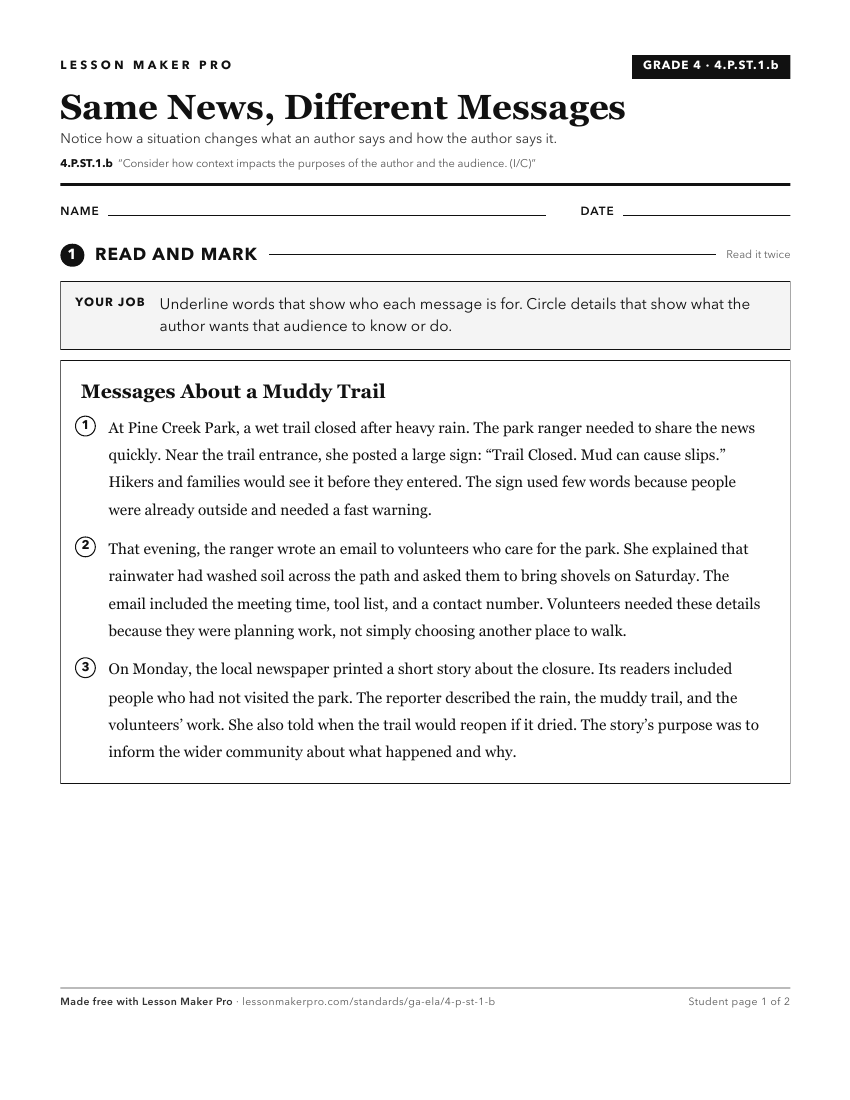
A ready-to-print activity worksheet aligned to 4.P.ST.1.b, with an answer key for the teacher on its own page. No account needed.
PDF, US Letter, prints cleanly in black and white.
Download the worksheetKeep exploring
Related Standards
Turn this exact standard into a lesson
Grade, subject, topic, and the complete standard are prefilled. Create one free, no account needed.
Also for this standard:Make a WorksheetMake a QuizMake a Sub Lesson