Florida B.E.S.T. ELA.4.R.1.4
The Standard
Explain how rhyme and structure create meaning in a poem.
Florida B.E.S.T. Standards for English Language Arts
Teacher's field guide
What This Standard Means
What Students Need to Do
- Students find rhyming words and notice how lines, stanzas, repetition, and line length organize a poem. They explain how those choices shape mood, pace, emphasis, or message.
What Mastery Looks Like
- Students accurately identify rhyming words, rhyme patterns, stanzas, repetition, and changes in line length. They use details from the poem to explain how those choices highlight ideas, control pace, or create a mood.
Common Misconceptions
- Students may think rhyme is only decoration or that every poem must rhyme. They may name stanzas, repeated lines, or rhyme patterns without explaining how those choices affect mood, pace, emphasis, or ideas.
How to Assess It
- Give students an eight-line poem. Ask them to circle rhyming words, mark stanza breaks, and explain how one rhyme and one structural choice shape the poem’s mood or message.
Lesson moves
Ways to Teach It
Cut apart a short poem, have pairs arrange its lines into stanzas, then explain how their arrangement changes emphasis or pace.
Read two versions with different stanza breaks, then write which feels faster or more serious and cite one structural clue.
Play a matching game using cards with poem features, examples, and effects such as repetition, emphasis, short lines, and quick pace.
Compare a playground chant or advertising jingle with a poem, noting how rhyme makes certain words or ideas easier to remember.
Free download
Printable ELA.4.R.1.4 Worksheet
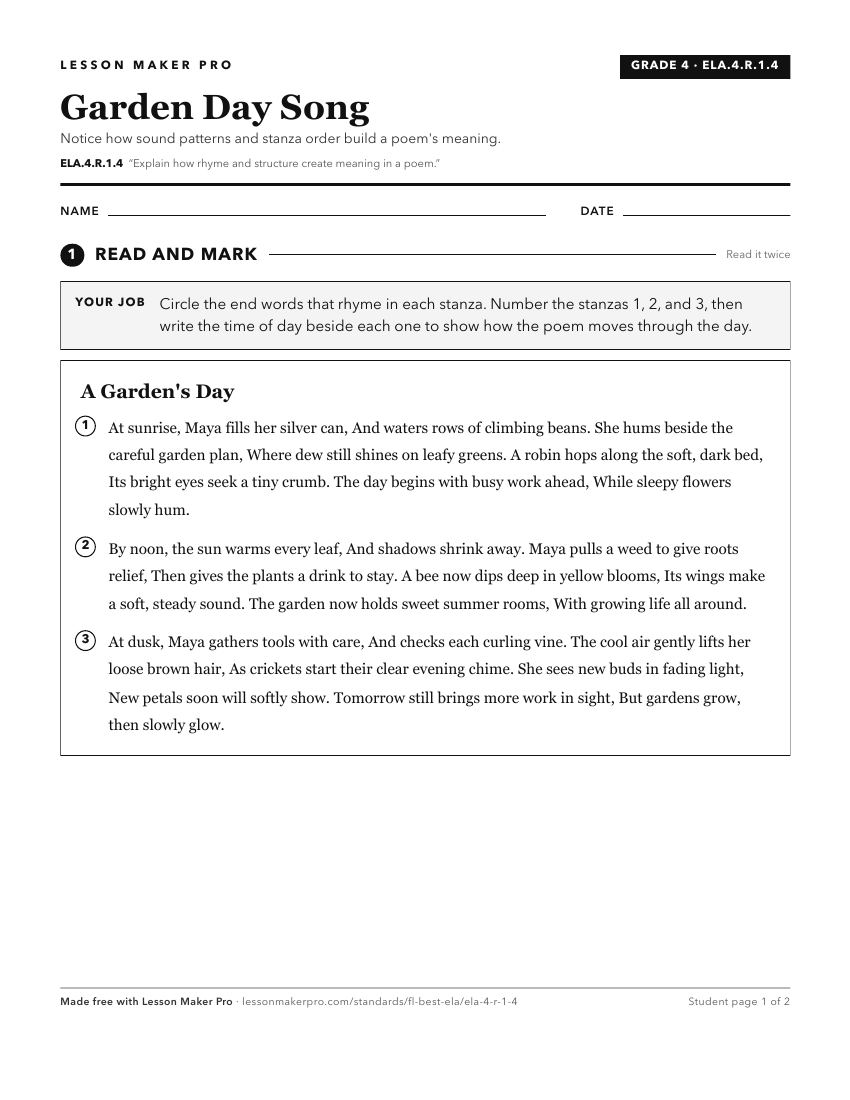
A ready-to-print activity worksheet aligned to ELA.4.R.1.4, with an answer key for the teacher on its own page. No account needed.
PDF, US Letter, prints cleanly in black and white.
Download the worksheetKeep exploring
Related Standards
Turn this exact standard into a lesson
Grade, subject, topic, and the complete standard are prefilled. Create one free, no account needed.
Also for this standard:Make a WorksheetMake a QuizMake a Sub Lesson