CCSS.
The Standard
Analyze how a modern work of fiction draws on themes, patterns of events, or character types from myths, traditional stories, or religious works such as the Bible, including describing how the material is rendered new.
Common Core State Standards for English Language Arts · Reading Standards for Literature
Teacher's field guide
What This Standard Means
What Students Need to Do
- Students identify a theme, event pattern, or character type that a modern story borrows from an older source. They use details from both texts to explain what the author kept, changed, and made new.
What Mastery Looks Like
- Students make a clear, evidence-based comparison between the two works. They explain how changes in setting, character, conflict, or outcome reshape the borrowed material and affect meaning.
Common Misconceptions
- Students may treat any small similarity as proof of borrowing, or summarize both plots without analyzing the connection. They may also name a reference but fail to explain how the modern author changes its meaning.
How to Assess It
- Give students one short myth excerpt and one modern fiction excerpt. Ask them to identify one borrowed element, cite evidence from both, and explain how it was changed.
Lesson moves
Ways to Teach It
Give pairs character and event cards from an older tale and a modern story, then have them match parallels and label each change.
Use the prompt: Which change to the original story most affects its message, and what evidence from both texts supports your answer?
Play Retelling Match by having teams connect anonymous plot summaries to source tales and justify each match with two specific similarities.
Compare a familiar superhero origin story with a Greek hero myth, then list how modern values change the hero’s choices and consequences.
Free download
Printable RL.8.9 Worksheet
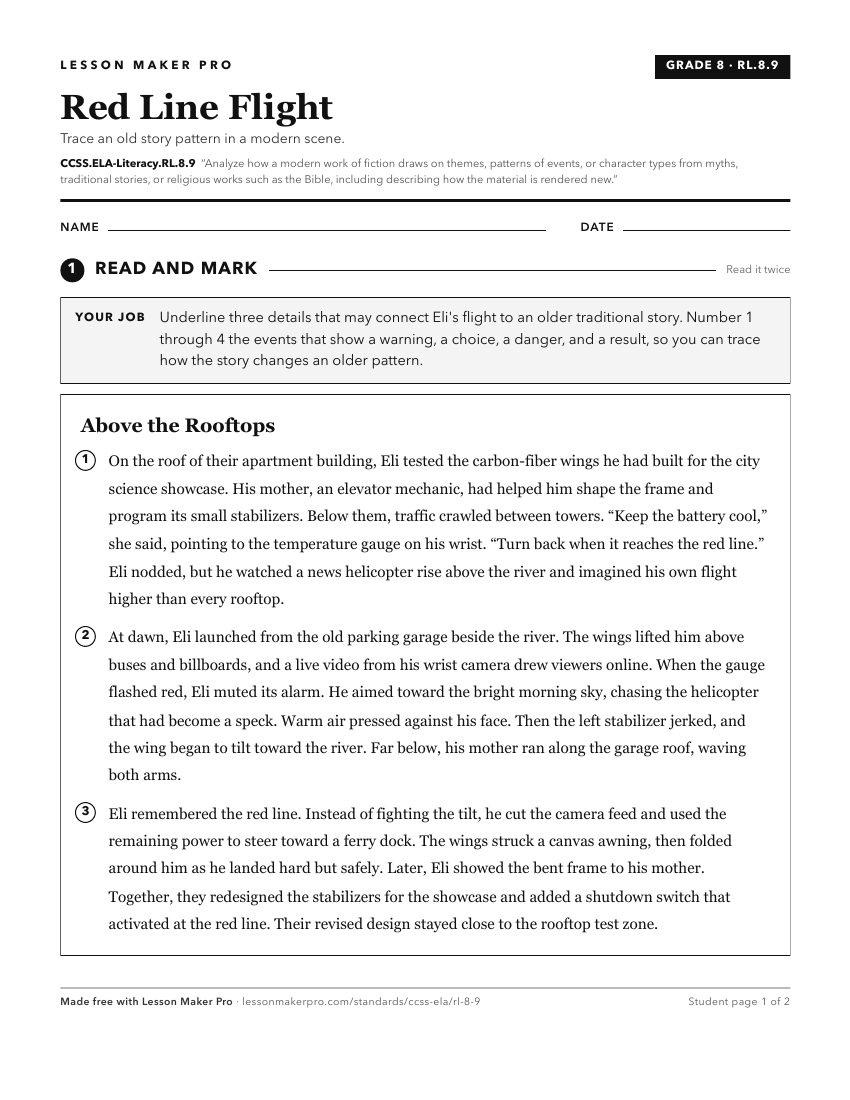
A ready-to-print activity worksheet aligned to CCSS.ELA-Literacy.RL.8.9, with an answer key for the teacher on its own page. No account needed.
PDF, US Letter, prints cleanly in black and white.
Download the worksheetLearning progression
Where This Standard Sits
See the whole path on the Reading: Literature progression map.
Before This Standard
If students are struggling here, check these first.
What This Unlocks
Mastery here sets students up for these next.
Keep exploring
Related Standards
- CCSS.ELA-Literacy.W.8.9a
Apply grade 8 Reading standards to literature (e.g., "Analyze how a modern work of fiction draws on themes, patterns of events, or character types from myths, t...
- CCSS.ELA-Literacy.RL.4.9
Compare and contrast the treatment of similar themes and topics (e.g., opposition of good and evil) and patterns of events (e.g., the quest) in stories, myths, ...
- CCSS.ELA-Literacy.RL.3.2
Recount stories, including fables, folktales, and myths from diverse cultures; determine the central message, lesson, or moral and explain how it is conveyed th...
Turn this exact standard into a lesson
Grade, subject, topic, and the complete standard are prefilled. Create one free, no account needed.
Also for this standard:Make a WorksheetMake a QuizMake a Sub Lesson