CCSS.
The Standard
Compare and contrast the treatment of similar themes and topics (e.g., opposition of good and evil) and patterns of events (e.g., the quest) in stories, myths, and traditional literature from different cultures.
Common Core State Standards for English Language Arts · Reading Standards for Literature
Teacher's field guide
What This Standard Means
What Students Need to Do
- Students read two stories from different cultures and find a shared message, topic, or plot pattern. They explain how each author develops it through characters, events, and outcomes.
What Mastery Looks Like
- Students clearly state a shared message or plot pattern in two works. They use accurate details from both texts to explain a meaningful similarity and difference.
Common Misconceptions
- Students may name a broad topic, such as courage, instead of stating a message about it. They may compare surface details while ignoring how each plot develops the message.
How to Assess It
- Give students two short folktales from different cultures. Ask them to state one shared message, then cite one event from each tale that develops it differently.
Lesson moves
Ways to Teach It
Give pairs event cards from two folktales to sort into shared plot stages, then mark where the stories differ.
Ask students to write: How do the heroes face similar problems, and what different lessons do their choices teach?
Play Theme Match by having teams pair theme statements with evidence cards from two myths and defend each match.
Compare two cultural versions of Cinderella, noting how each version reflects local values, customs, and ideas about fairness.
Free download
Printable RL.4.9 Worksheet
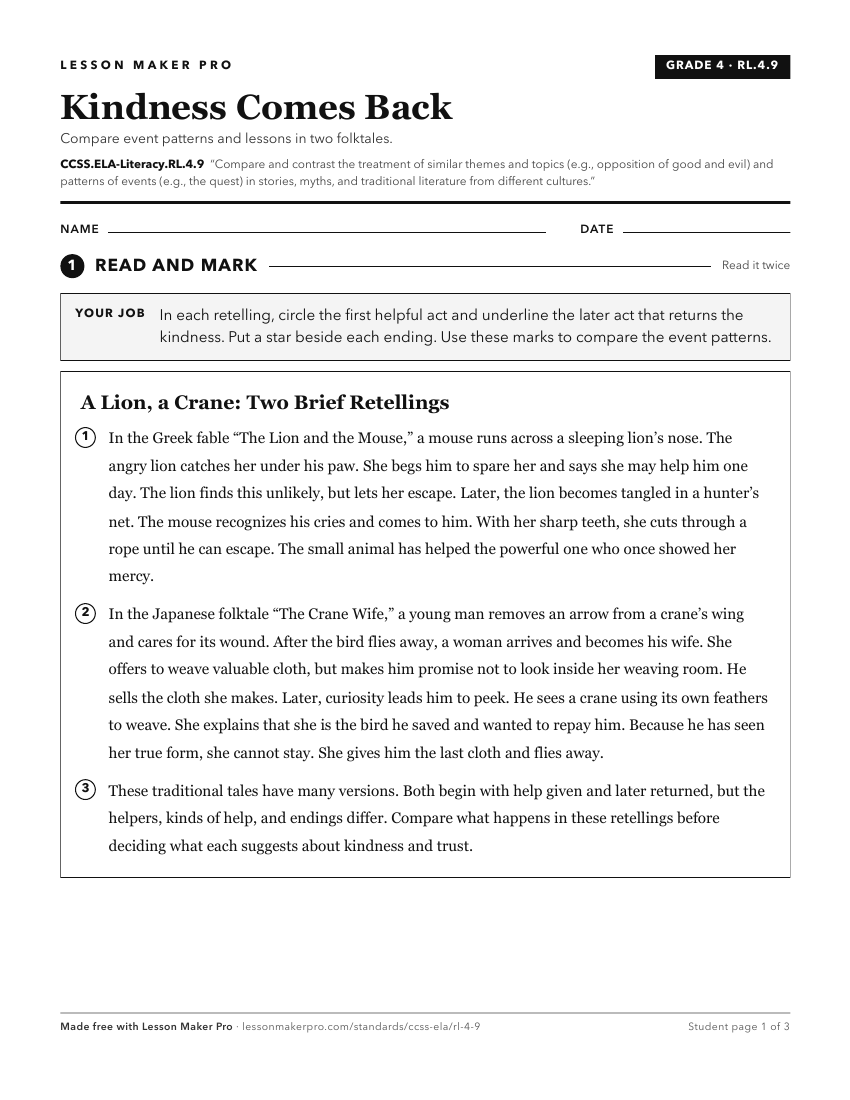
A ready-to-print activity worksheet aligned to CCSS.ELA-Literacy.RL.4.9, with an answer key for the teacher on its own page. No account needed.
PDF, US Letter, prints cleanly in black and white.
Download the worksheetLearning progression
Where This Standard Sits
See the whole path on the Reading: Literature progression map.
Before This Standard
If students are struggling here, check these first.
What This Unlocks
Mastery here sets students up for these next.
Keep exploring
Related Standards
Turn this exact standard into a lesson
Grade, subject, topic, and the complete standard are prefilled. Create one free, no account needed.
Also for this standard:Make a WorksheetMake a QuizMake a Sub Lesson