CCSS.
The Standard
Recount stories, including fables, folktales, and myths from diverse cultures; determine the central message, lesson, or moral and explain how it is conveyed through key details in the text.
Common Core State Standards for English Language Arts · Reading Standards for Literature
Teacher's field guide
What This Standard Means
What Students Need to Do
- Students retell a story in a clear order, focusing on the main events. They identify the lesson and explain how specific events, choices, or consequences reveal it.
What Mastery Looks Like
- Students give an accurate retelling with the characters, major events, problem, and resolution in order. They state a clear lesson and connect it to two relevant story details.
Common Misconceptions
- Students may name a topic, such as friendship, instead of stating a lesson about friendship. They may include every event in the retelling or choose a lesson without supporting details.
How to Assess It
- Use this exit ticket after a short story: “What lesson does the story teach, and which two details reveal it?”
Lesson moves
Ways to Teach It
Print six event cards from a familiar fable, then have pairs order them and place two supporting events beneath a written moral.
After reading, ask, “What lesson could the main character teach us, and which choice in the story proves it?”
Play Moral Match: teams pair brief story summaries with lesson cards, then earn a point by citing one matching detail.
Have students describe a time when a story’s lesson, such as honesty or patience, could guide a choice at school.
Free download
Printable RL.3.2 Worksheet
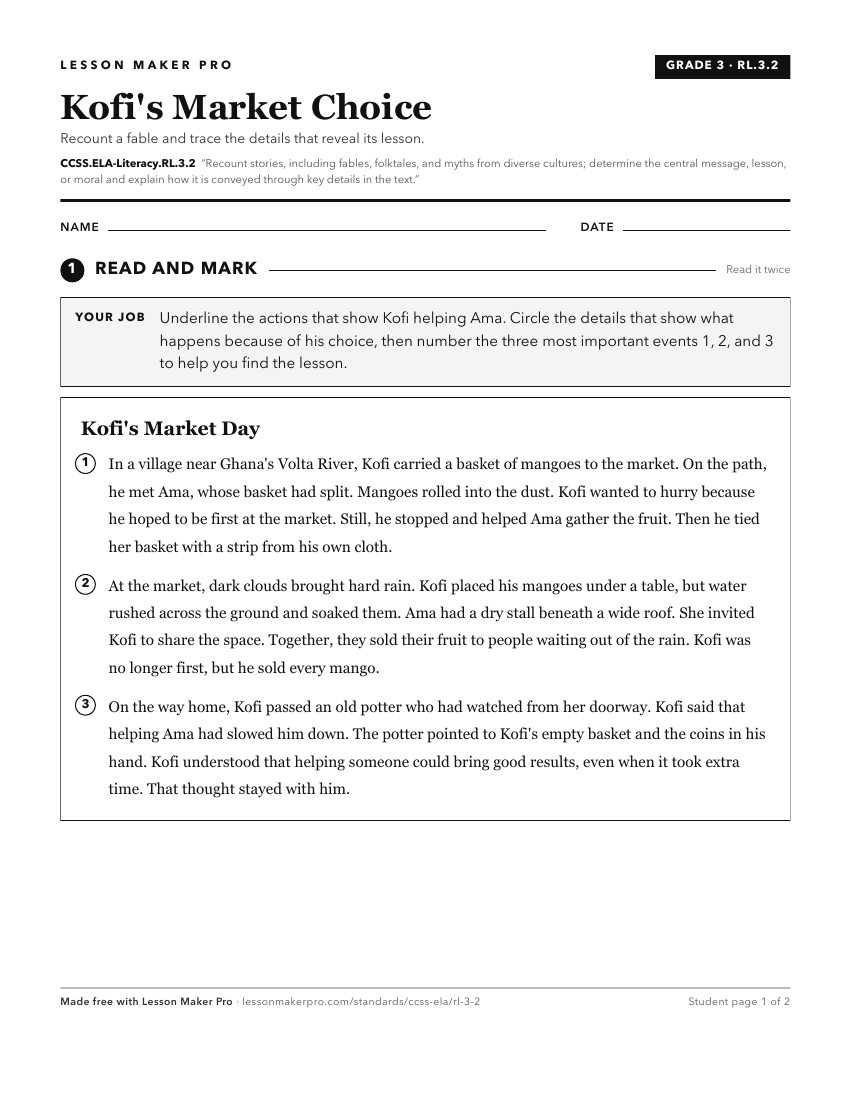
A ready-to-print activity worksheet aligned to CCSS.ELA-Literacy.RL.3.2, with an answer key for the teacher on its own page. No account needed.
PDF, US Letter, prints cleanly in black and white.
Download the worksheetLearning progression
Where This Standard Sits
See the whole path on the Reading: Literature progression map.
Before This Standard
If students are struggling here, check these first.
What This Unlocks
Mastery here sets students up for these next.
Keep exploring
Related Standards
- CCSS.ELA-Literacy.RI.3.2
Determine the main idea of a text; recount the key details and explain how they support the main idea.
- CCSS.ELA-Literacy.RL.1.2
Retell stories, including key details, and demonstrate understanding of their central message or lesson.
- CCSS.ELA-Literacy.RI.1.2
Identify the main topic and retell key details of a text.
Turn this exact standard into a lesson
Grade, subject, topic, and the complete standard are prefilled. Create one free, no account needed.
Also for this standard:Make a WorksheetMake a QuizMake a Sub Lesson