CCSS.
The Standard
Demonstrate knowledge of eighteenth-, nineteenth- and early-twentieth-century foundational works of American literature, including how two or more texts from the same period treat similar themes or topics.
Common Core State Standards for English Language Arts · Reading Standards for Literature
Teacher's field guide
What This Standard Means
What Students Need to Do
- Students recognize major American authors, works, and literary periods from the 1700s through the early 1900s. They compare how works from one period develop a shared theme or topic.
What Mastery Looks Like
- Students place major authors and works in the correct literary period. They make a clear comparison and support it with relevant details from both texts.
Common Misconceptions
- Students may compare only plot, characters, or setting instead of tracing a shared theme. They may also assume works from the same period present one unified view of American life.
How to Assess It
- Give excerpts from Whitman and Dickinson. Ask: How does each speaker view individuality, and which detail from each excerpt supports your comparison?
Lesson moves
Ways to Teach It
Give groups author, date, excerpt, and event cards to sort into a timeline, then justify each match with textual clues.
Ask students to write: How do Whitman and Dickinson present individuality differently, and what words create each view?
Run an evidence-match relay where teams pair theme claims with quotations from two Progressive Era texts and explain each pairing.
Have students compare Gatsby's version of success with a current social media success post, noting who is excluded from each vision.
Free download
Printable RL.11-12.9 Worksheet
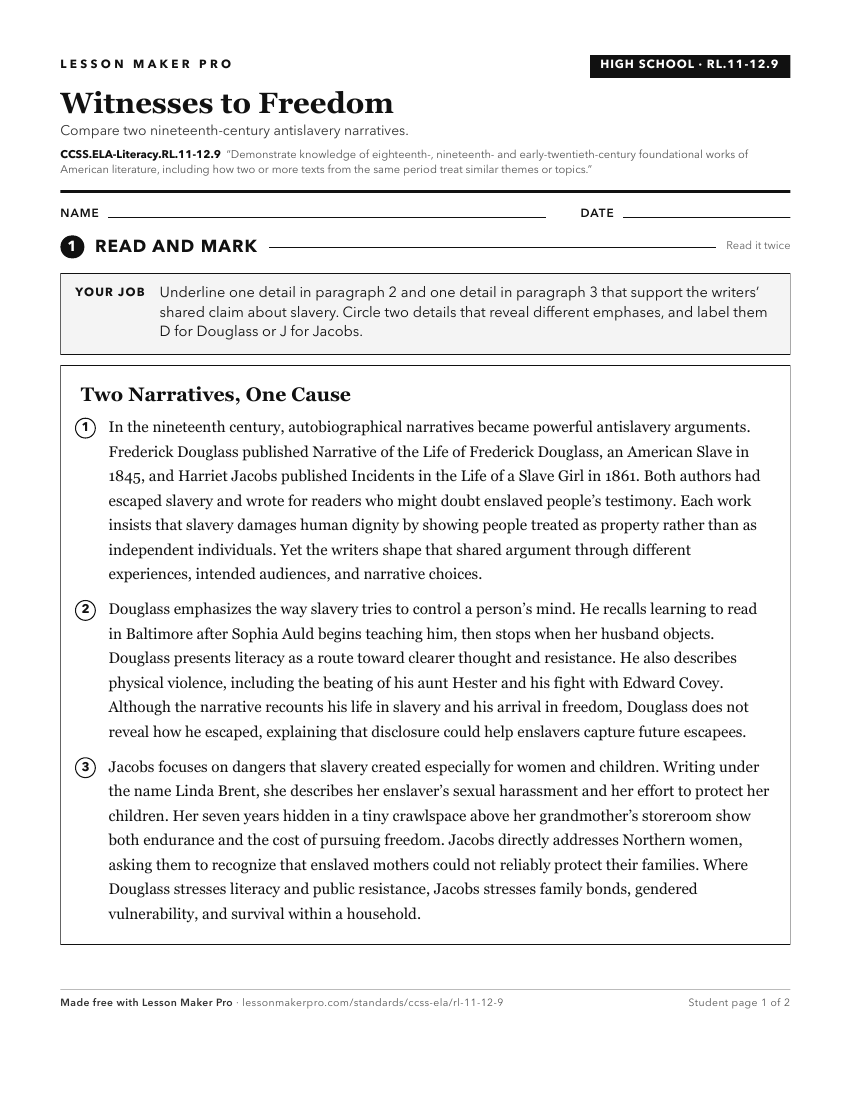
A ready-to-print activity worksheet aligned to CCSS.ELA-Literacy.RL.11-12.9, with an answer key for the teacher on its own page. No account needed.
PDF, US Letter, prints cleanly in black and white.
Download the worksheetLearning progression
Where This Standard Sits
See the whole path on the Reading: Literature progression map.
Before This Standard
If students are struggling here, check these first.
Keep exploring
Related Standards
- CCSS.ELA-Literacy.W.11-12.9a
Apply grades 11—12 Reading standards to literature (e.g., "Demonstrate knowledge of eighteenth-, nineteenth- and early-twentieth-century foundational works of A...
- CCSS.ELA-Literacy.CCRA.R.9
Analyze how two or more texts address similar themes or topics in order to build knowledge or to compare the approaches the authors take.
- CCSS.ELA-Literacy.RI.11-12.9
Analyze seventeenth-, eighteenth-, and nineteenth-century foundational U.S. documents of historical and literary significance (including The Declaration of Inde...
- CCSS.ELA-Literacy.RL.6.9
Compare and contrast texts in different forms or genres (e.g., stories and poems; historical novels and fantasy stories) in terms of their approaches to similar...
Turn this exact standard into a lesson
Grade, subject, topic, and the complete standard are prefilled. Create one free, no account needed.
Also for this standard:Make a WorksheetMake a QuizMake a Sub Lesson