CCSS.
The Standard
Identify words with inconsistent but common spelling-sound correspondences.
Common Core State Standards for English Language Arts
Teacher's field guide
What This Standard Means
What Students Need to Do
- Students read common words whose letters do not make the sound expected from a familiar phonics pattern. They notice the unusual part and remember the word’s correct pronunciation.
What Mastery Looks Like
- A student reads words such as said, have, does, and were accurately and quickly. The student can point to the unexpected letters and give the correct pronunciation without using a picture.
Common Misconceptions
- Students may read said to rhyme with paid, have to rhyme with gave, or does to rhyme with goes. They may assume the same letter pattern always makes the same sound.
How to Assess It
- Give this exit ticket: “Read said, paid, have, gave, does, and goes. Circle the word in each pair with the unexpected pronunciation, then read it aloud.”
Lesson moves
Ways to Teach It
Give pairs of word cards, such as said and paid, and have students sort them by whether the shared spelling makes the same sound.
Ask students to explain why said and paid do not rhyme, then underline the letters tied to each vowel sound.
Play word detective: show a word, let partners predict its pronunciation, then award a point for reading it correctly and naming the surprising part.
Use the lunch menu or morning message, and have students circle common words whose pronunciation does not match the pattern they first expect.
Free download
Printable RF.2.3e Worksheet
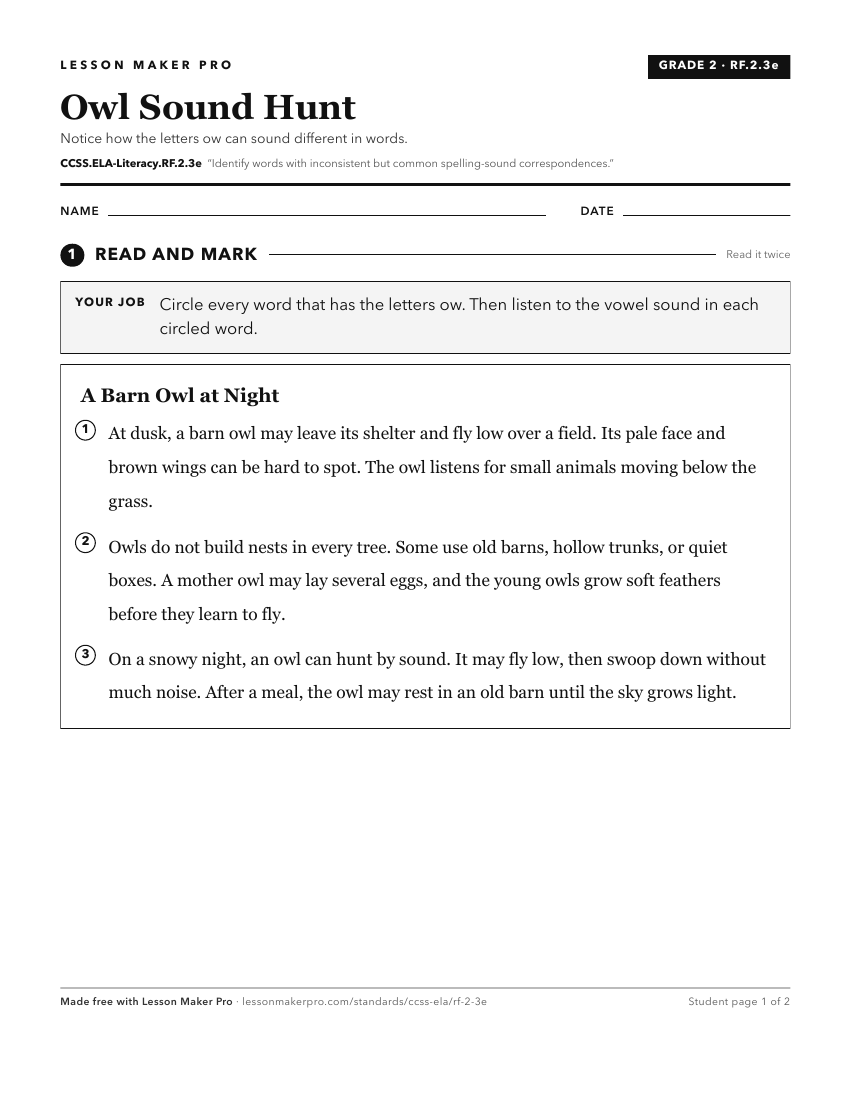
A ready-to-print activity worksheet aligned to CCSS.ELA-Literacy.RF.2.3e, with an answer key for the teacher on its own page. No account needed.
PDF, US Letter, prints cleanly in black and white.
Download the worksheetLearning progression
Where This Standard Sits
Before This Standard
If students are struggling here, check these first.
Keep exploring
Related Standards
- CCSS.ELA-Literacy.L.1.2d
Use conventional spelling for words with common spelling patterns and for frequently occurring irregular words.
- CCSS.ELA-Literacy.RF.K.3d
Distinguish between similarly spelled words by identifying the sounds of the letters that differ.
- CCSS.ELA-Literacy.RF.1.3a
Know the spelling-sound correspondences for common consonant digraphs.
- CCSS.ELA-Literacy.RF.2.3b
Know spelling-sound correspondences for additional common vowel teams.
Turn this exact standard into a lesson
Grade, subject, topic, and the complete standard are prefilled. Create one free, no account needed.
Also for this standard:Make a WorksheetMake a QuizMake a Sub Lesson