CCSS.
The Standard
- CCSS.ELA-Literacy.RF.1.4
- Read with sufficient accuracy and fluency to support comprehension.
Read grade-level text with purpose and understanding.
Common Core State Standards for English Language Arts
Teacher's field guide
What This Standard Means
What Students Need to Do
- Students read first-grade stories and informational passages for a clear reason, such as finding an answer or retelling events. They show understanding by explaining key details.
What Mastery Looks Like
- A student reads a familiar first-grade passage accurately and at a pace that supports meaning. After reading, the student states the main idea or retells key events.
Common Misconceptions
- Some students think fast reading is good reading, even when they miss meaning. Others focus so hard on sounding out words that they cannot explain what happened.
How to Assess It
- Give students a short first-grade passage to read aloud. Ask, “Who or what is this mostly about, and what happened?”
Lesson moves
Ways to Teach It
Give pairs sentence strips from a short story to arrange in order, then read the completed story aloud and explain it.
After a shared reading, ask students to write or tell one sentence explaining what the author wanted readers to learn.
Play Stop and Retell, where students read to a marked spot, pause, and tell a partner what has happened.
Read a simple classroom direction card, such as steps for feeding a class pet, then have students follow the directions.
Free download
Printable RF.1.4a Worksheet
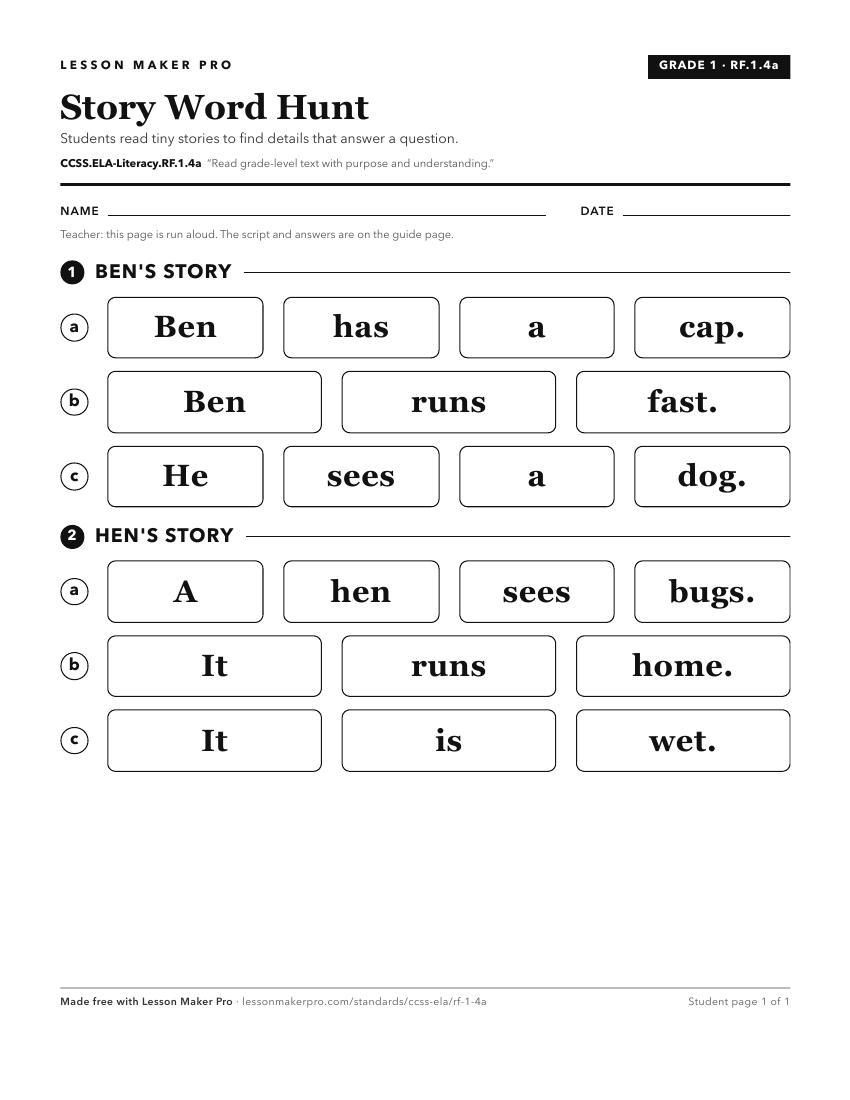
A ready-to-print activity worksheet aligned to CCSS.ELA-Literacy.RF.1.4a, with an answer key for the teacher on its own page. No account needed.
PDF, US Letter, prints cleanly in black and white.
Download the worksheetKeep exploring
Related Standards
Turn this exact standard into a lesson
Grade, subject, topic, and the complete standard are prefilled. Create one free, no account needed.
Also for this standard:Make a WorksheetMake a QuizMake a Sub Lesson