Virginia SOL 5.DSR.D
The Standard
Regularly engage in reading a series of conceptually related texts organized around topics of study to build knowledge and vocabulary (These texts should be at a range of complexity levels so students can read the texts independently, with peers, or with modest support.). Use this background knowledge as context for new learning (Deep Reading on Topics to Build Knowledge and Vocabulary K-12).
Virginia Standards of Learning for English · The student will build knowledge and comprehension skills from reading a range of challenging, content-rich texts. This includes fluently reading and gathering evidence from grade-level complex texts, reading widely on topics to gain purposeful knowledge and vocabulary, and using reading strategies when comprehension breaks down.
Teacher's field guide
What This Standard Means
What Students Need to Do
- Students gather facts, ideas, and topic words from several texts about one subject. They connect learning across texts and use earlier reading to understand a new text.
What Mastery Looks Like
- A student can explain how a new text adds to or changes prior understanding, citing details from more than one source. The student accurately uses newly learned terms when speaking or writing about the topic.
Common Misconceptions
- Students may treat each text as separate and repeat facts without linking them. They may assume a familiar word has the same meaning in every text, or rely on prior beliefs when the text offers stronger evidence.
How to Assess It
- Give students a brief new passage related to two texts already read. Ask, “What earlier knowledge helped you understand this passage, and what new detail did you learn?”
Lesson moves
Ways to Teach It
Have pairs sort evidence cards from three weather texts into shared ideas, new details, and contradictions, then explain one connection.
Ask students to write, “How did the second text change or sharpen your thinking about the topic?” and cite both texts.
Play Vocabulary Connections: teams match topic terms to definitions, examples, and source sentences, earning a point only when they explain each match.
Read a local news article, city webpage, and infographic about water use, then create a family water-saving guide using evidence from all three.
Free download
Printable 5.DSR.D Worksheet
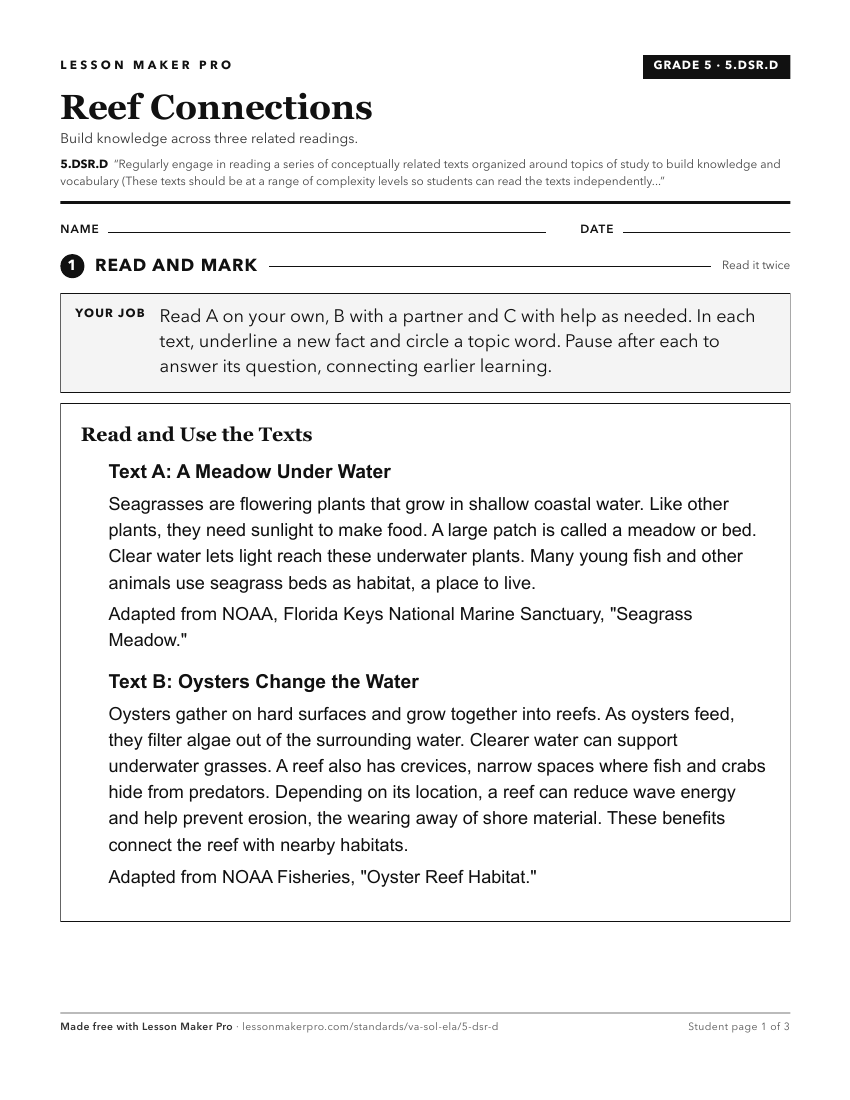
A ready-to-print activity worksheet aligned to 5.DSR.D, with an answer key for the teacher on its own page. No account needed.
PDF, US Letter, prints cleanly in black and white.
Download the worksheetKeep exploring
Related Standards
- 8.DSR.D
Regularly engage in reading a series of conceptually related texts organized around topics of study to build knowledge and vocabulary. (These texts should be at...
- 9.DSR.D
Regularly engage in reading a series of conceptually related texts organized around topics of study to build knowledge and vocabulary (These texts should be at ...
- 4.DSR.D
The 4th Grade version of this standard.
- 10.DSR.D
Regularly engage in reading a series of conceptually related texts organized around topics of study to build knowledge and vocabulary (These texts should be at ...
Turn this exact standard into a lesson
Grade, subject, topic, and the complete standard are prefilled. Create one free, no account needed.
Also for this standard:Make a WorksheetMake a QuizMake a Sub Lesson