Virginia SOL 10.RI.3.B
The Standard
Analyze multiple texts addressing the same topic to determine how authors reach similar or different conclusions.
Virginia Standards of Learning for English · Integration of Concepts
Teacher's field guide
What This Standard Means
What Students Need to Do
- Students compare the claims, evidence, reasoning, and viewpoints in several texts about one issue. They explain what leads writers to agree, partly agree, or reach different conclusions.
What Mastery Looks Like
- Students can state each writer’s conclusion accurately. They can trace how specific claims, evidence, assumptions, or viewpoints lead the writers toward agreement or disagreement.
Common Misconceptions
- Students may compare only the topics or opinions, not the evidence and reasoning behind them. They may also assume different conclusions mean one writer is automatically wrong.
How to Assess It
- Give students two short excerpts about school start times. Ask them to name each conclusion and identify one difference in evidence or reasoning that shaped it.
Lesson moves
Ways to Teach It
Cut two articles into claim, evidence, and reasoning strips, then have groups sort and arrange each writer’s argument on chart paper.
Ask students to write: Which writer makes the stronger case, and what specific evidence or reasoning creates that advantage?
Play Conclusion Match, where teams match anonymous evidence cards to the writer most likely to use them and explain each choice.
Compare two news reports about a local policy, noting how source choices and priorities shape each report’s conclusion.
Free download
Printable 10.RI.3.B Worksheet
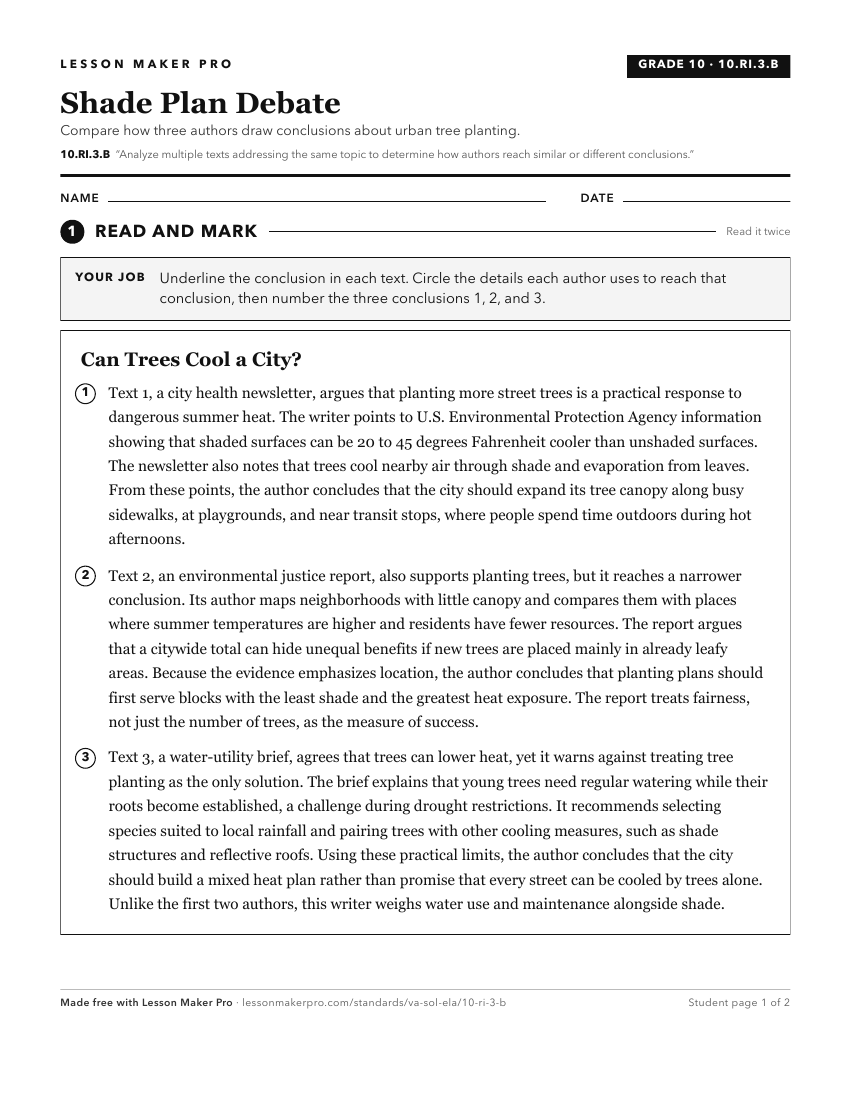
A ready-to-print activity worksheet aligned to 10.RI.3.B, with an answer key for the teacher on its own page. No account needed.
PDF, US Letter, prints cleanly in black and white.
Download the worksheetKeep exploring
Related Standards
- 1.RI.3.A
Identify basic similarities in and differences between two texts on the same topic.
- 11.RI.3.A
Analyze information within and between paired passages for similar and conflicting ideas and how authors reach similar or different conclusions.
- 8.RI.3.B
Compare and contrast how two or more authors present conflicting information on the same topic by assessing where the texts disagree in reasoning and evidence.
- 12.RI.3.A
Evaluate texts with differing points of view on the same or similar events or issues by assessing claims, reasoning, evidence, and connections to other works or...
Turn this exact standard into a lesson
Grade, subject, topic, and the complete standard are prefilled. Create one free, no account needed.
Also for this standard:Make a WorksheetMake a QuizMake a Sub Lesson