NGSS MS-ESS3-4
The Standard
Construct an argument supported by evidence for how increases in human population and per-capita consumption of natural resources impact Earth's systems.
Next Generation Science Standards
Teacher's field guide
What This Standard Means
What Students Need to Do
- Students examine data about population growth and resource use per person. They build an evidence-based argument connecting those trends to measurable changes in Earth's land, water, air, or living systems.
What Mastery Looks Like
- Students use population and per-person consumption data to make a clear claim about changes to land, water, air, or living things. They cite relevant evidence and explain how it supports the claim without turning a policy opinion into a scientific conclusion.
Common Misconceptions
- Students may assume population size alone determines resource use and ignore differences in use per person. They may treat correlation as proof of cause or name only effects on people. Some assume science chooses the best policy rather than providing evidence for decisions.
How to Assess It
- Give students graphs of population, water use per person, and reservoir levels. Ask them to write one claim about the reservoir, cite two data points, and explain the link.
Lesson moves
Ways to Teach It
Use beans and cups to model a shared resource as group size and each person's daily allotment increase.
Write a claim explaining whether population growth or higher use per person has a greater effect on freshwater supplies.
Play a data-card matching game linking population and consumption trends to likely changes in land, water, air, or ecosystems.
Compare local water-use and population records, then identify one change residents or officials could consider.
Free download
Printable MS-ESS3-4 Worksheet
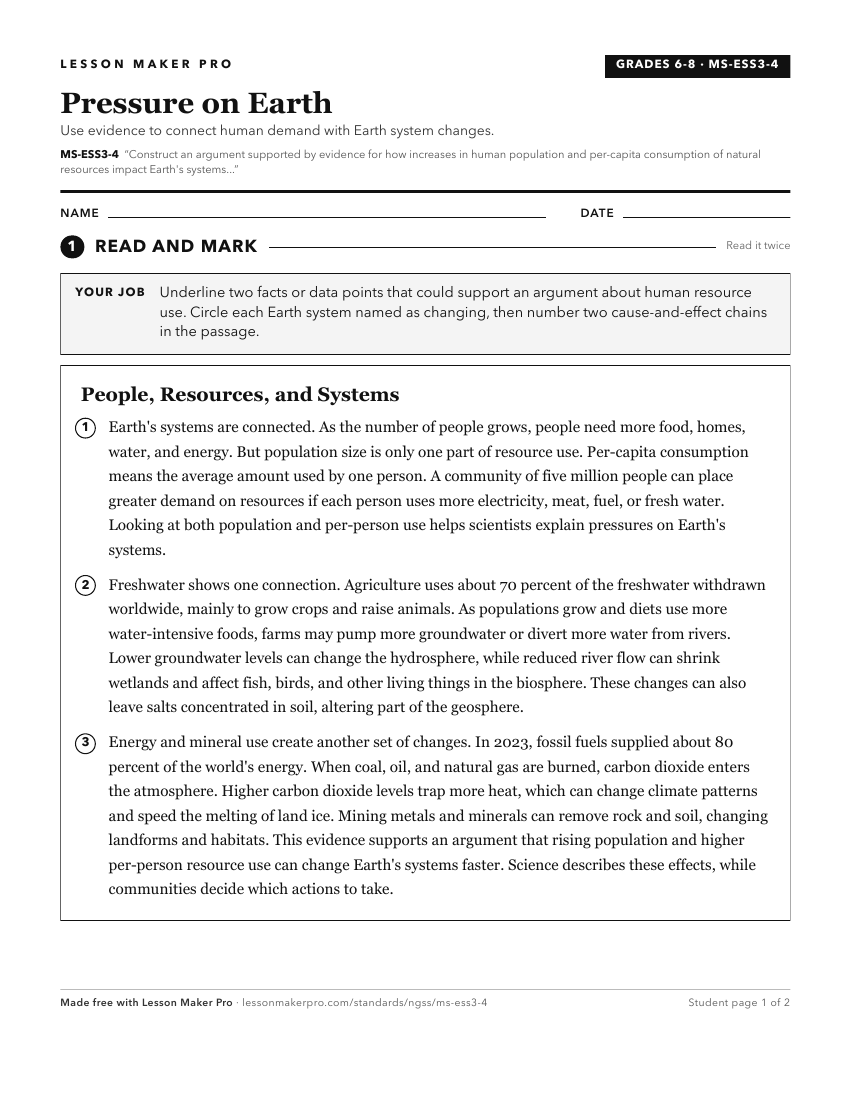
A ready-to-print activity worksheet aligned to MS-ESS3-4, with an answer key for the teacher on its own page. No account needed.
PDF, US Letter, prints cleanly in black and white.
Download the worksheetLearning progression
Where This Standard Sits
See the whole path on the Earth & Space Science progression map.
What This Unlocks
Mastery here sets students up for these next.
- HS-ESS3-4
Understanding how population and resource use harm Earth systems helps students judge whether technologies actually reduce those human impacts.
- HS-ESS3-3
Students extend population and resource consumption impact evidence into modeling how resource management affects human sustainability and biodiversity.
Keep exploring
Related Standards
- HS-ESS3-1
Construct an explanation based on evidence for how the availability of natural resources, occurrence of natural hazards, and changes in climate have influenced ...
- MS-LS2-4
Construct an argument supported by empirical evidence that changes to physical or biological components of an ecosystem affect populations.
- HS-ESS2-7
Construct an argument based on evidence about the simultaneous coevolution of Earth systems and life on Earth.
- K-ESS2-2
Construct an argument supported by evidence for how plants and animals (including humans) can change the environment to meet their needs.
Turn this exact standard into a lesson
Grade, subject, topic, and the complete standard are prefilled. Create one free, no account needed.
Also for this standard:Make a WorksheetMake a QuizMake a Sub Lesson