CCSS.
The Standard
Write narratives to develop real or imagined experiences or events using effective technique, well-chosen details, and well-structured event sequences.
Common Core State Standards for English Language Arts · Writing Standards
Teacher's field guide
What This Standard Means
What Students Need to Do
- Students shape real or imagined events into a clear, purposeful sequence. They use dialogue, pacing, description, precise language, and reflection to develop characters and experiences. They close with an ending that fits what happened.
What Mastery Looks Like
- The reader can follow when and where events happen, who is involved, and what changes. Dialogue, pacing, description, and reflection develop the characters and situation. The ending grows naturally from the events.
Common Misconceptions
- Students may list events without shaping a clear conflict or turning point. They may add dialogue or description that does not reveal character or move the action. Endings are often abrupt, repetitive, or disconnected from the experience.
How to Assess It
- Use this exit ticket: Write a 200-word scene in which a character faces an unexpected problem. Include purposeful dialogue, clear sequencing, sensory detail, and an ending that follows from the events.
Lesson moves
Ways to Teach It
Give pairs six event cards from a scrambled scene; students arrange them, add transitions, and explain how the order builds tension.
Prompt students to write the same missed-bus scene twice, once as comedy and once as suspense, then discuss which details create each effect.
Play Dialogue Doctor: teams revise flat dialogue cards so each exchange reveals character, creates conflict, or moves the action forward.
Have students turn a school event into a first-person magazine story with a strong opening, selected details, and a reflective ending.
Free download
Printable W.9-10.3 Worksheet
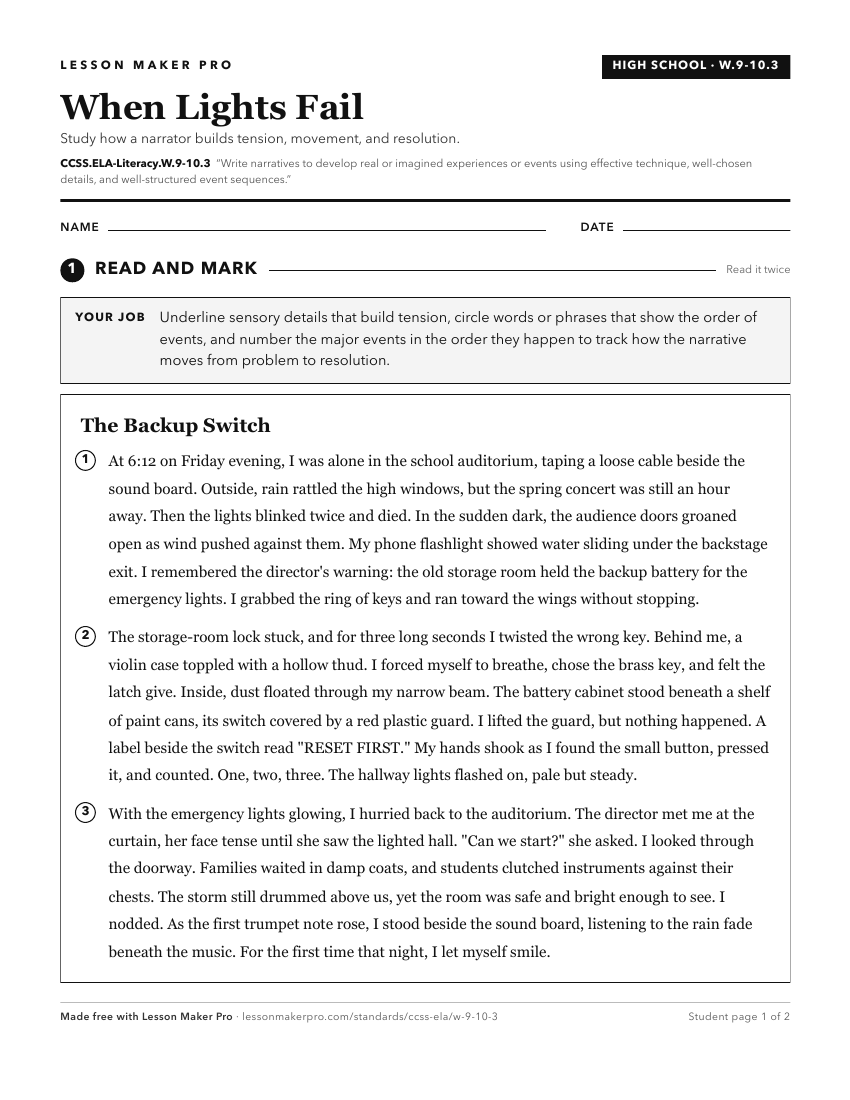
A ready-to-print activity worksheet aligned to CCSS.ELA-Literacy.W.9-10.3, with an answer key for the teacher on its own page. No account needed.
PDF, US Letter, prints cleanly in black and white.
Download the worksheetBefore This Standard
If students are struggling here, check these first.
What This Unlocks
Mastery here sets students up for these next.
Keep exploring
Related Standards
Turn this exact standard into a lesson
Grade, subject, topic, and the complete standard are prefilled. Create one free, no account needed.
Also for this standard:Make a WorksheetMake a QuizMake a Sub Lesson