CCSS.
The Standard
Develop claim(s) and counterclaims fairly, supplying evidence for each while pointing out the strengths and limitations of both in a manner that anticipates the audience's knowledge level and concerns.
Common Core State Standards for English Language Arts
Teacher's field guide
What This Standard Means
What Students Need to Do
- Students build an argument around a clear position and a serious opposing position. They support both sides, explain strengths and limits, and address what readers know or may question.
What Mastery Looks Like
- A strong response gives the claim and counterclaim fair attention. The student selects reliable evidence, explains its value and limits, and answers likely reader questions or concerns.
Common Misconceptions
- Students may mention a counterclaim only to dismiss it without evidence. They may choose weak evidence for the opposing view, list facts without explanation, or assume readers share their background knowledge.
How to Assess It
- Give students two short source excerpts about later school start times. Ask them to write a claim and counterclaim, support each, and name one limitation of each position.
Lesson moves
Ways to Teach It
Give groups claim, counterclaim, evidence, and limitation cards to sort into a balanced argument about school uniforms.
Ask students to write what a skeptical parent might question about an argument for less homework, then draft a response.
Play Evidence Match by having teams pair source excerpts with claims or counterclaims and justify each match.
Analyze two public service messages for the same issue, then explain how each addresses its audience’s knowledge and concerns.
Free download
Printable W.9-10.1b Worksheet
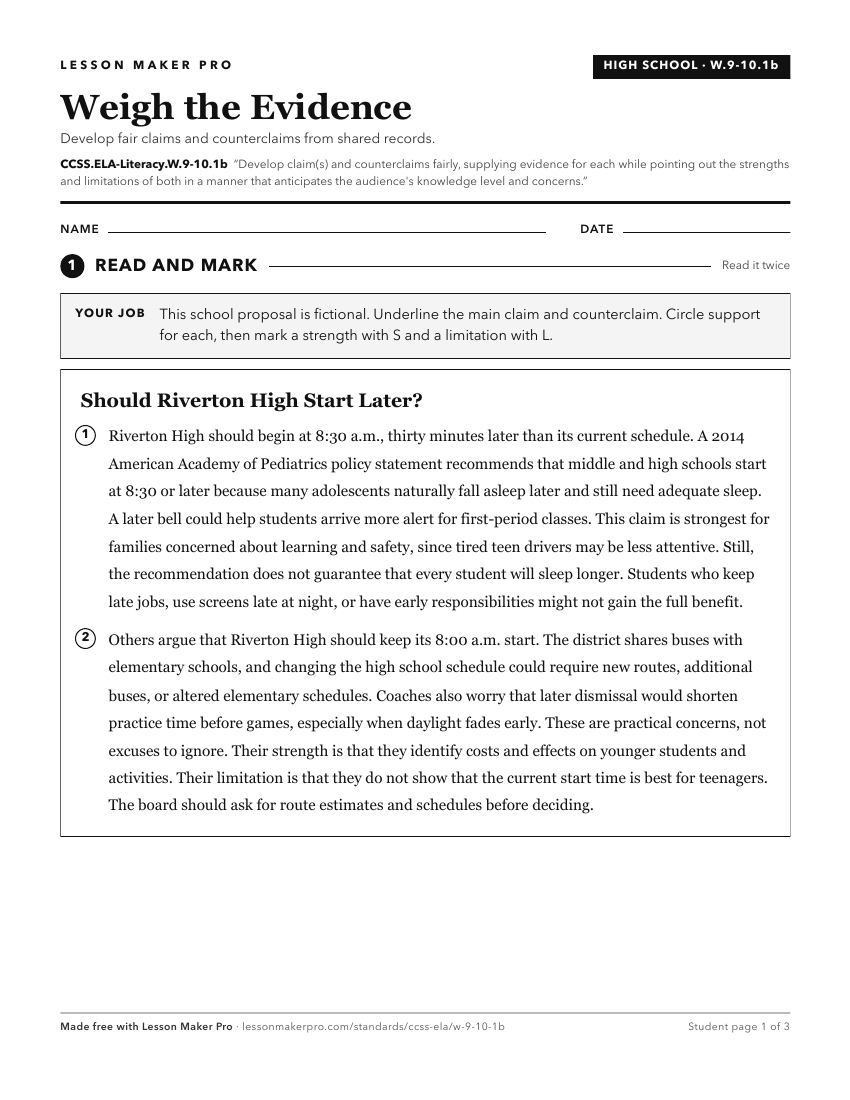
A ready-to-print activity worksheet aligned to CCSS.ELA-Literacy.W.9-10.1b, with an answer key for the teacher on its own page. No account needed.
PDF, US Letter, prints cleanly in black and white.
Download the worksheetLearning progression
Where This Standard Sits
Before This Standard
If students are struggling here, check these first.
What This Unlocks
Mastery here sets students up for these next.
Keep exploring
Related Standards
- CCSS.ELA-Literacy.WHST.11-12.1b
Develop claim(s) and counterclaims fairly and thoroughly, supplying the most relevant data and evidence for each while pointing out the strengths and limitation...
- CCSS.ELA-Literacy.WHST.11-12.1a
Introduce precise, knowledgeable claim(s), establish the significance of the claim(s), distinguish the claim(s) from alternate or opposing claims, and create an...
- CCSS.ELA-Literacy.WHST.9-10.1b
Develop claim(s) and counterclaims fairly, supplying data and evidence for each while pointing out the strengths and limitations of both claim(s) and countercla...
Turn this exact standard into a lesson
Grade, subject, topic, and the complete standard are prefilled. Create one free, no account needed.
Also for this standard:Make a WorksheetMake a QuizMake a Sub Lesson