CCSS.
The Standard
Develop claim(s) and counterclaims fairly, supplying data and evidence for each while pointing out the strengths and limitations of both claim(s) and counterclaims in a discipline-appropriate form and in a manner that anticipates the audience's knowledge level and concerns.
Common Core State Standards for English Language Arts
Teacher's field guide
What This Standard Means
What Students Need to Do
- Students make a clear claim and present a credible opposing position. They support both sides with relevant facts, examples, or data. They judge what each side does well and poorly for a specific audience and subject.
What Mastery Looks Like
- Students choose strong evidence and explain how it supports each position. They represent the opposing view accurately, then weigh what each side proves and cannot prove. Their wording, detail, and format fit the subject and readers.
Common Misconceptions
- Students may turn the counterclaim into an obviously weak position or give it no evidence. They may list data without explaining what it proves or where it falls short. They may use unexplained technical terms or ignore concerns readers are likely to raise.
How to Assess It
- Give students four short source excerpts on later school start times. Ask for a school board paragraph with a claim, a fair counterclaim, evidence for both, and one weakness of each.
Lesson moves
Ways to Teach It
Give groups evidence cards from a shared topic to sort under claim and counterclaim, then label each source’s strength and limitation.
Ask students to write what a skeptical parent would question about their claim, then draft a fair response using evidence.
Play Evidence Match: teams pair facts with claims or counterclaims and earn a point only after explaining the connection.
Have students write a brief city council memo about a local policy, using public data and addressing one likely concern.
Free download
Printable WHST.9-10.1b Worksheet
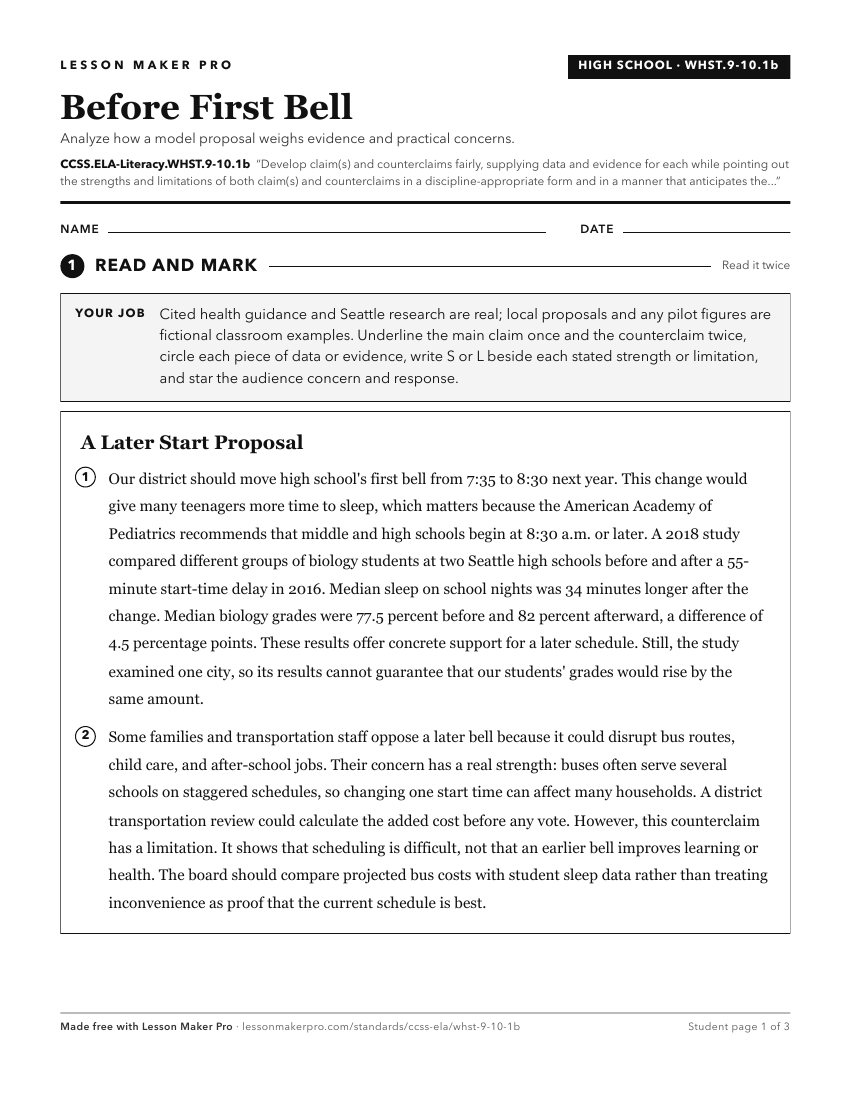
A ready-to-print activity worksheet aligned to CCSS.ELA-Literacy.WHST.9-10.1b, with an answer key for the teacher on its own page. No account needed.
PDF, US Letter, prints cleanly in black and white.
Download the worksheetLearning progression
Where This Standard Sits
What This Unlocks
Mastery here sets students up for these next.
Keep exploring
Related Standards
- CCSS.ELA-Literacy.W.9-10.1b
Develop claim(s) and counterclaims fairly, supplying evidence for each while pointing out the strengths and limitations of both in a manner that anticipates the...
- CCSS.ELA-Literacy.W.11-12.1b
Develop claim(s) and counterclaims fairly and thoroughly, supplying the most relevant evidence for each while pointing out the strengths and limitations of both...
- CCSS.ELA-Literacy.WHST.11-12.1a
Introduce precise, knowledgeable claim(s), establish the significance of the claim(s), distinguish the claim(s) from alternate or opposing claims, and create an...
Turn this exact standard into a lesson
Grade, subject, topic, and the complete standard are prefilled. Create one free, no account needed.
Also for this standard:Make a WorksheetMake a QuizMake a Sub Lesson