CCSS.
The Standard
Use narrative techniques, such as dialogue, pacing, description, reflection, and multiple plot lines, to develop experiences, events, and/or characters.
Common Core State Standards for English Language Arts
Teacher's field guide
What This Standard Means
What Students Need to Do
- Students shape a narrative by choosing techniques that serve a clear purpose. They use dialogue, pacing, description, reflection, and connected plot lines to reveal character, build tension, and make events meaningful.
What Mastery Looks Like
- A strong writer controls scene length, selects telling details, and writes dialogue that reveals conflict or motive. The writer connects plot lines clearly and uses reflection without stopping the action.
Common Misconceptions
- Students may add dialogue that only delivers facts, slow every moment with equal detail, or confuse reflection with a summary of events. Multiple plot lines may feel unrelated, and description may list details without revealing mood or character.
How to Assess It
- Exit ticket: Write 150 words about a missed bus. Include dialogue that reveals conflict, one slowed moment, and one reflective sentence, then label each choice.
Lesson moves
Ways to Teach It
Cut a short scene into strips, then have pairs reorder it and add one detail or line of dialogue to improve pacing.
Write about a moment when silence changed a relationship, then underline where dialogue, description, and reflection reveal the change.
Play Pacing Switch: students rewrite the same event in 30 words, then 120 words, and compare what each version emphasizes.
Analyze a podcast story or profile article, marking how the writer uses scene, reflection, and parallel story lines to hold attention.
Free download
Printable W.11-12.3b Worksheet
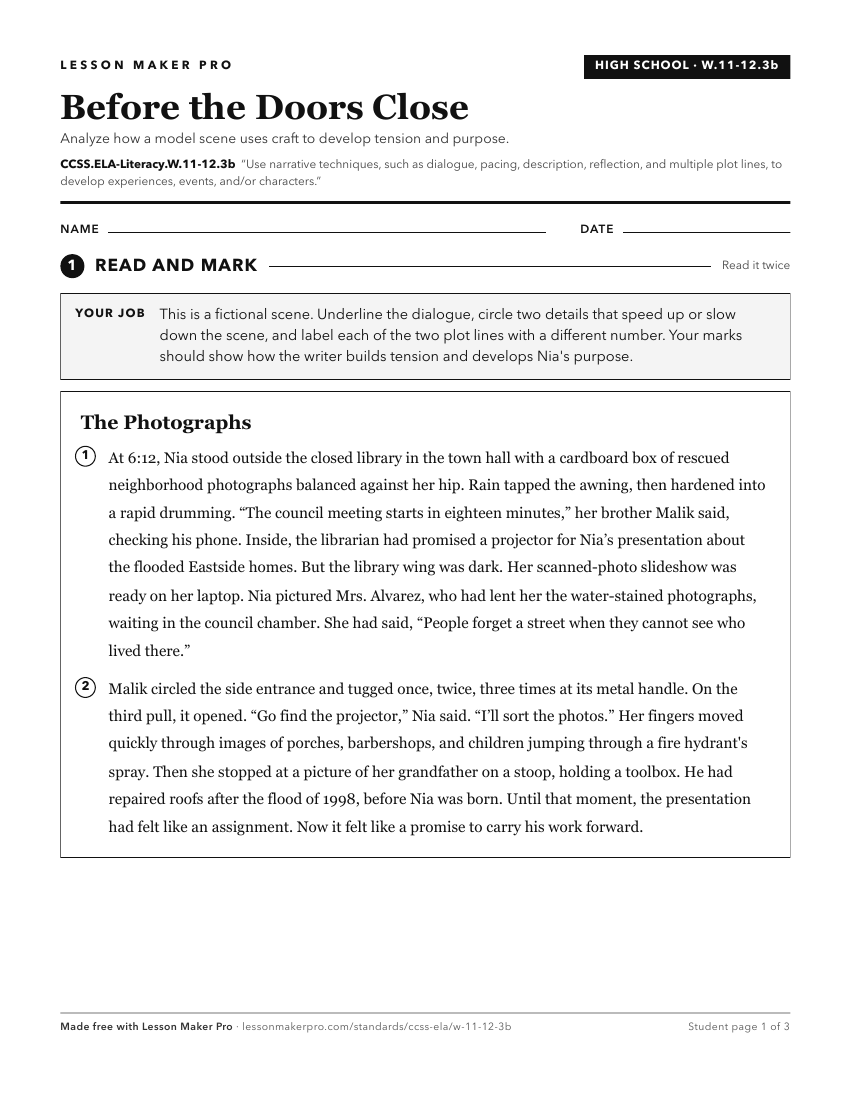
A ready-to-print activity worksheet aligned to CCSS.ELA-Literacy.W.11-12.3b, with an answer key for the teacher on its own page. No account needed.
PDF, US Letter, prints cleanly in black and white.
Download the worksheetLearning progression
Where This Standard Sits
Before This Standard
If students are struggling here, check these first.
Keep exploring
Related Standards
- CCSS.ELA-Literacy.W.7.3b
Use narrative techniques, such as dialogue, pacing, and description, to develop experiences, events, and/or characters.
- CCSS.ELA-Literacy.W.8.3b
Use narrative techniques, such as dialogue, pacing, description, and reflection, to develop experiences, events, and/or characters.
- CCSS.ELA-Literacy.W.6.3b
Use narrative techniques, such as dialogue, pacing, and description, to develop experiences, events, and/or characters.
Turn this exact standard into a lesson
Grade, subject, topic, and the complete standard are prefilled. Create one free, no account needed.
Also for this standard:Make a WorksheetMake a QuizMake a Sub Lesson