CCSS.
The Standard
Use narrative techniques, such as dialogue, pacing, and description, to develop experiences, events, and/or characters.
Common Core State Standards for English Language Arts
Teacher's field guide
What This Standard Means
What Students Need to Do
- Students build a narrative scene with purposeful dialogue, well-chosen details, and changes in speed. They use these choices to show what happens and help readers understand the characters.
What Mastery Looks Like
- Students write scenes where dialogue sounds natural and reveals feelings, motives, or conflict. They slow down key moments, move quickly through less important events, and choose details that make characters and settings clear.
Common Misconceptions
- Students may use dialogue only to give information, rather than reveal character or move the action. They may rush every event at the same speed or add long descriptions that do not support the scene.
How to Assess It
- Exit ticket: Expand “Maya opened the envelope and learned she had won” into six sentences using dialogue, sensory details, and a slowed key moment. Check whether each technique strengthens the scene.
Lesson moves
Ways to Teach It
Give pairs a plain three-sentence scene, then have them add dialogue cards, sensory detail cards, and pacing notes to strengthen it.
Ask students to explain which moment in a familiar story deserves the most space, then write that moment as a focused paragraph.
Play Scene Revision Relay, where teams rotate through drafts and add one strong line of dialogue, one detail, or one pacing change.
Have students turn a real school moment, such as missing the bus, into a scene that builds tension before the outcome.
Free download
Printable W.6.3b Worksheet
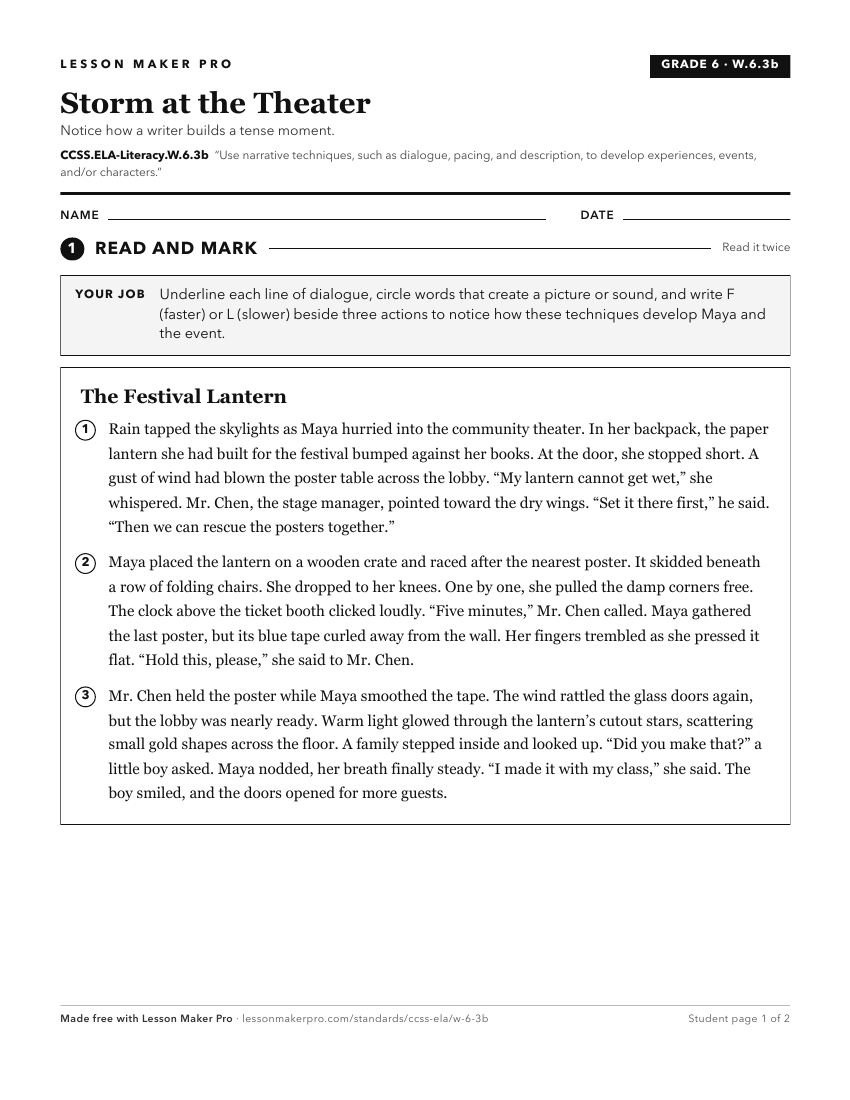
A ready-to-print activity worksheet aligned to CCSS.ELA-Literacy.W.6.3b, with an answer key for the teacher on its own page. No account needed.
PDF, US Letter, prints cleanly in black and white.
Download the worksheetLearning progression
Where This Standard Sits
Before This Standard
If students are struggling here, check these first.
What This Unlocks
Mastery here sets students up for these next.
Keep exploring
Related Standards
- CCSS.ELA-Literacy.W.8.3b
Use narrative techniques, such as dialogue, pacing, description, and reflection, to develop experiences, events, and/or characters.
- CCSS.ELA-Literacy.W.11-12.3b
Use narrative techniques, such as dialogue, pacing, description, reflection, and multiple plot lines, to develop experiences, events, and/or characters.
Turn this exact standard into a lesson
Grade, subject, topic, and the complete standard are prefilled. Create one free, no account needed.
Also for this standard:Make a WorksheetMake a QuizMake a Sub Lesson