CCSS.
The Standard
Respond thoughtfully to diverse perspectives, summarize points of agreement and disagreement, and, when warranted, qualify or justify their own views and understanding and make new connections in light of the evidence and reasoning presented.
Common Core State Standards for English Language Arts
Teacher's field guide
What This Standard Means
What Students Need to Do
- Students listen closely to classmates, identify where ideas align or conflict, and respond to the reasoning behind each view. They revise, narrow, or defend their position using evidence from the discussion.
What Mastery Looks Like
- A student can accurately state another speaker’s claim before replying. The student names agreements and disagreements, cites specific evidence, and explains how the conversation changed or strengthened their thinking.
Common Misconceptions
- Students may treat disagreement as a personal attack or reply without representing the other view accurately. They may agree or disagree without reasons, ignore evidence, or refuse to adjust an overbroad claim.
How to Assess It
- After a discussion, give this exit ticket: Name one point of agreement, one disagreement, and one idea you revised. Cite the comment or evidence that influenced you.
Lesson moves
Ways to Teach It
Give groups claim and evidence cards to sort into agreement, disagreement, and changed-thinking columns, then explain each placement.
Ask, “Which classmate’s reasoning changed, narrowed, or strengthened your view, and what specific point caused that shift?”
Run a discussion relay where each student must summarize the previous speaker accurately before adding evidence or a qualified response.
Compare two reviews of the same product, then write a recommendation that acknowledges shared points, conflicts, and the stronger evidence.
Free download
Printable SL.9-10.1d Worksheet
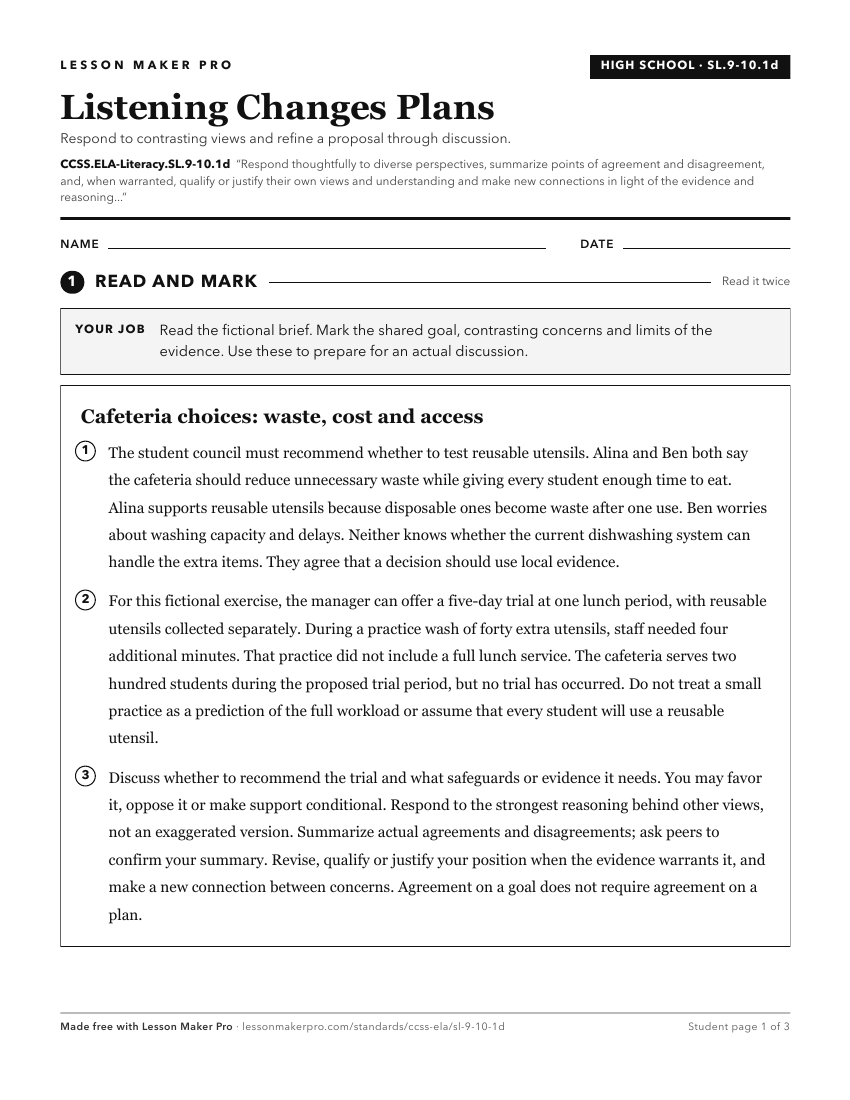
A ready-to-print activity worksheet aligned to CCSS.ELA-Literacy.SL.9-10.1d, with an answer key for the teacher on its own page. No account needed.
PDF, US Letter, prints cleanly in black and white.
Download the worksheetLearning progression
Where This Standard Sits
Before This Standard
If students are struggling here, check these first.
What This Unlocks
Mastery here sets students up for these next.
Keep exploring
Related Standards
- CCSS.ELA-Literacy.SL.11-12.1c
Propel conversations by posing and responding to questions that probe reasoning and evidence; ensure a hearing for a full range of positions on a topic or issue...
- CCSS.ELA-Literacy.SL.8.1c
Pose questions that connect the ideas of several speakers and respond to others' questions and comments with relevant evidence, observations, and ideas.
Turn this exact standard into a lesson
Grade, subject, topic, and the complete standard are prefilled. Create one free, no account needed.
Also for this standard:Make a WorksheetMake a QuizMake a Sub Lesson