CCSS.
The Standard
Propel conversations by posing and responding to questions that probe reasoning and evidence; ensure a hearing for a full range of positions on a topic or issue; clarify, verify, or challenge ideas and conclusions; and promote divergent and creative perspectives.
Common Core State Standards for English Language Arts
Teacher's field guide
What This Standard Means
What Students Need to Do
- Students move a group discussion forward by asking questions that test reasoning and evidence. They invite overlooked viewpoints, check understanding, challenge conclusions respectfully, and make room for original ideas.
What Mastery Looks Like
- A student asks focused follow-up questions, cites what a speaker said, and requests evidence when needed. The student brings quieter or missing viewpoints into the discussion and challenges conclusions respectfully.
Common Misconceptions
- Students may think any question moves a discussion forward, even when it repeats information or changes the subject. They may attack the speaker instead of challenging the reasoning. Some invite different views but fail to examine the evidence behind them.
How to Assess It
- Give students a six-line discussion transcript. Ask them to write the next response, including one evidence question and one invitation for a missing viewpoint.
Lesson moves
Ways to Teach It
Give groups claim, evidence, and viewpoint cards, then have them build a discussion sequence that includes clarification, challenge, and an overlooked position.
Discuss whether schools should limit phone use, requiring each speaker to question a previous reason before adding a new point.
Play Follow-Up Ladder, where teams earn points for questions that clarify, verify evidence, challenge reasoning, or introduce a new perspective.
Watch a short school board clip, then identify which voices were heard, which were missing, and what follow-up question was needed.
Free download
Printable SL.11-12.1c Worksheet
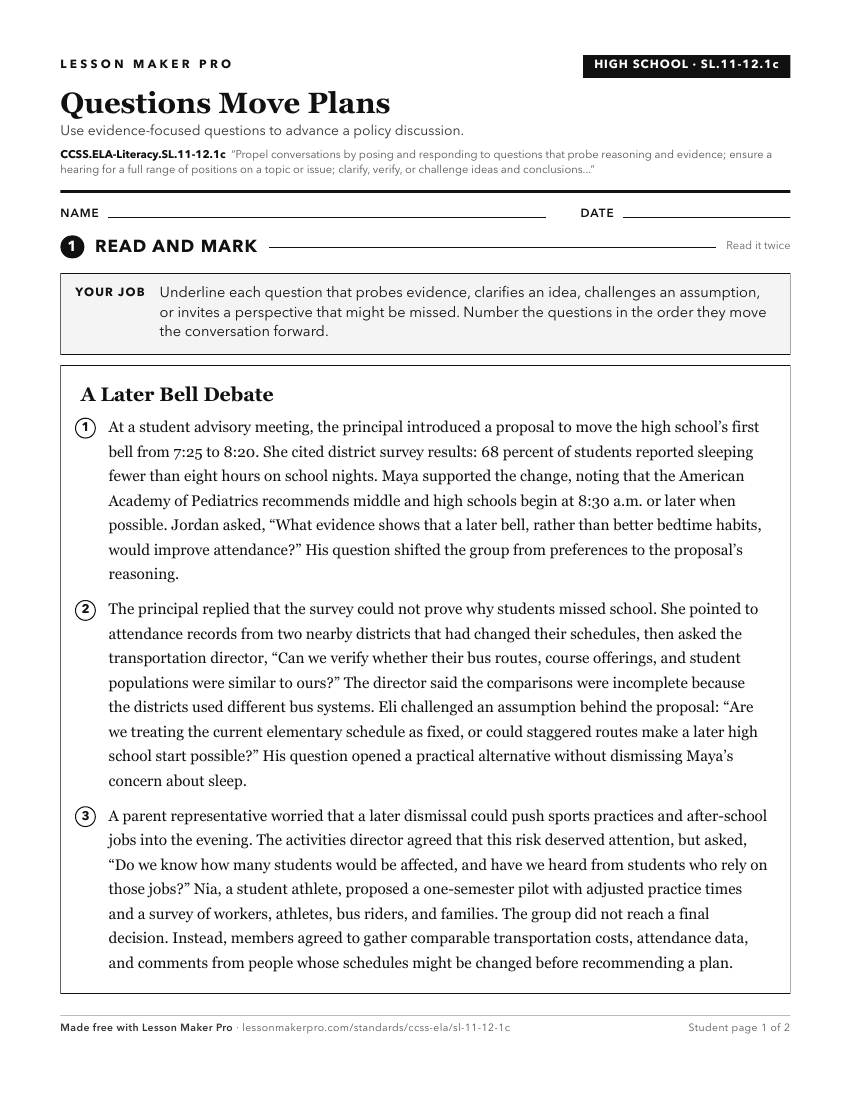
A ready-to-print activity worksheet aligned to CCSS.ELA-Literacy.SL.11-12.1c, with an answer key for the teacher on its own page. No account needed.
PDF, US Letter, prints cleanly in black and white.
Download the worksheetLearning progression
Where This Standard Sits
Before This Standard
If students are struggling here, check these first.
Keep exploring
Related Standards
- CCSS.ELA-Literacy.SL.7.1c
Pose questions that elicit elaboration and respond to others' questions and comments with relevant observations and ideas that bring the discussion back on topi...
- CCSS.ELA-Literacy.SL.8.1c
Pose questions that connect the ideas of several speakers and respond to others' questions and comments with relevant evidence, observations, and ideas.
- CCSS.ELA-Literacy.SL.9-10.1d
Respond thoughtfully to diverse perspectives, summarize points of agreement and disagreement, and, when warranted, qualify or justify their own views and unders...
Turn this exact standard into a lesson
Grade, subject, topic, and the complete standard are prefilled. Create one free, no account needed.
Also for this standard:Make a WorksheetMake a QuizMake a Sub Lesson