CCSS.
The Standard
Interpret figures of speech (e.g., euphemism, oxymoron) in context and analyze their role in the text.
Common Core State Standards for English Language Arts
Teacher's field guide
What This Standard Means
What Students Need to Do
- Students spot words or phrases that carry a meaning beyond the literal one. They use context to explain the meaning and analyze how the wording affects tone, emphasis, or reader response.
What Mastery Looks Like
- Students accurately recognize euphemisms, oxymorons, and other nonliteral phrases. They cite context clues, explain the intended meaning, and connect the phrase to tone or purpose.
Common Misconceptions
- Students may read every phrase literally or label a figure without explaining its meaning. They may treat oxymorons as writing mistakes and miss how euphemisms soften, hide, or reshape an idea.
How to Assess It
- Use this exit ticket: “The company called the layoffs a workforce adjustment.” Identify the figure, explain its meaning, and describe its effect on tone.
Lesson moves
Ways to Teach It
Give pairs sentence strips to sort as literal, euphemism, or oxymoron, then underline context clues and label each phrase’s effect.
Ask students to compare “fired” and “let go,” then write which phrase a manager might choose and why.
Run a context clue relay where teams identify each figure, paraphrase it, and earn a point for explaining its effect.
Project four headlines or advertisements, then have students mark softened or contradictory language and explain how it shapes audience response.
Free download
Printable L.9-10.5a Worksheet
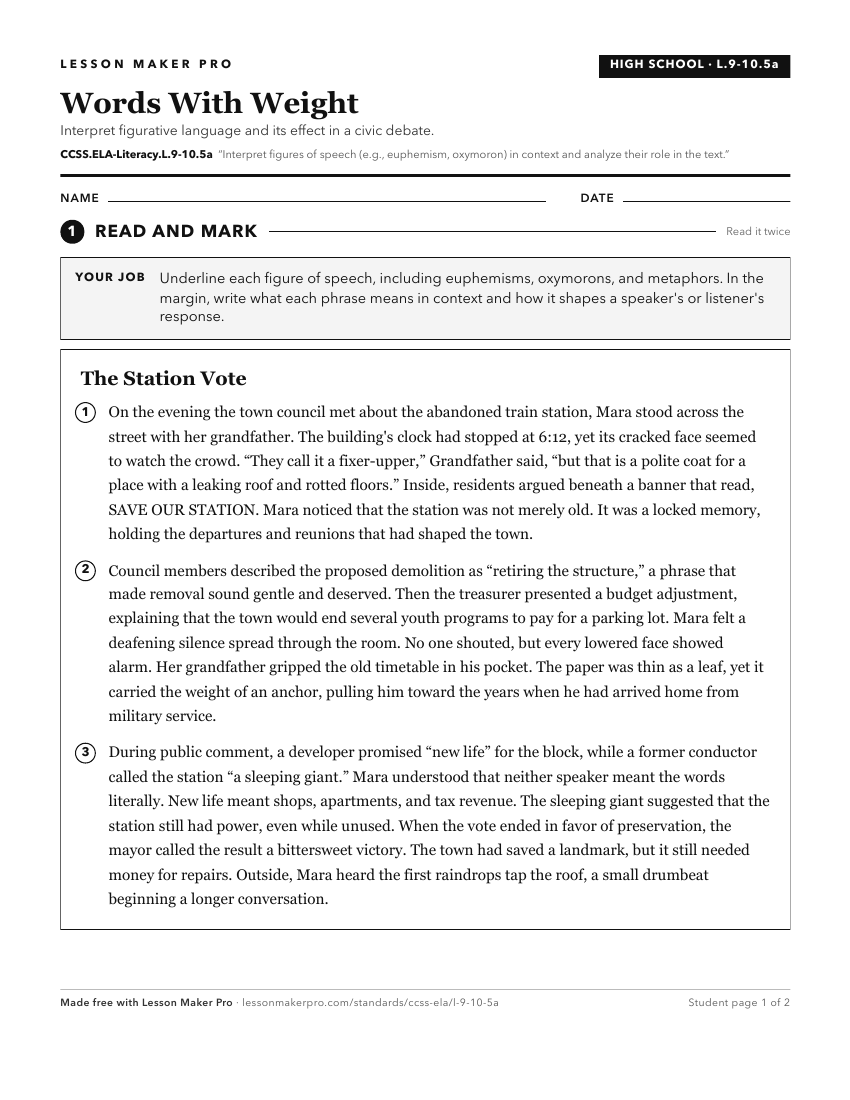
A ready-to-print activity worksheet aligned to CCSS.ELA-Literacy.L.9-10.5a, with an answer key for the teacher on its own page. No account needed.
PDF, US Letter, prints cleanly in black and white.
Download the worksheetLearning progression
Where This Standard Sits
Before This Standard
If students are struggling here, check these first.
What This Unlocks
Mastery here sets students up for these next.
Keep exploring
Related Standards
Turn this exact standard into a lesson
Grade, subject, topic, and the complete standard are prefilled. Create one free, no account needed.
Also for this standard:Make a WorksheetMake a QuizMake a Sub Lesson