CCSS.
The Standard
Interpret figures of speech (e.g., hyperbole, paradox) in context and analyze their role in the text.
Common Core State Standards for English Language Arts
Teacher's field guide
What This Standard Means
What Students Need to Do
- Students identify when a writer uses hyperbole, paradox, or another figure of speech rather than literal wording. They use nearby details to explain the intended meaning and its effect on tone, emphasis, characterization, or theme.
What Mastery Looks Like
- Students can paraphrase a figurative phrase accurately and cite context that supports their reading. They can explain why the writer chose that phrase and describe a specific effect on the reader or text.
Common Misconceptions
- Students often label any unusual phrase as figurative, or confuse hyperbole with metaphor and paradox with simple contradiction. They may explain meaning but skip the effect, or name an effect without using context as evidence.
How to Assess It
- Exit ticket: Read, “After the final bell, Luis faced a mountain of homework, so he dropped his bag and canceled his plans.” Explain the phrase’s meaning and effect, using one detail as evidence.
Lesson moves
Ways to Teach It
Give pairs sentence strips with literal statements, hyperbole, and paradox; students sort them, then add sticky notes explaining each figurative effect.
Ask when an exaggeration can reveal truth better than a literal statement, then have students defend an example from a class text.
Play Context Clue Relay: teams match figurative phrases to short passages, identify each type, and earn a point for explaining its effect.
Students collect one exaggerated advertisement or paradoxical slogan, then annotate its intended meaning and explain how it influences an audience.
Free download
Printable L.11-12.5a Worksheet
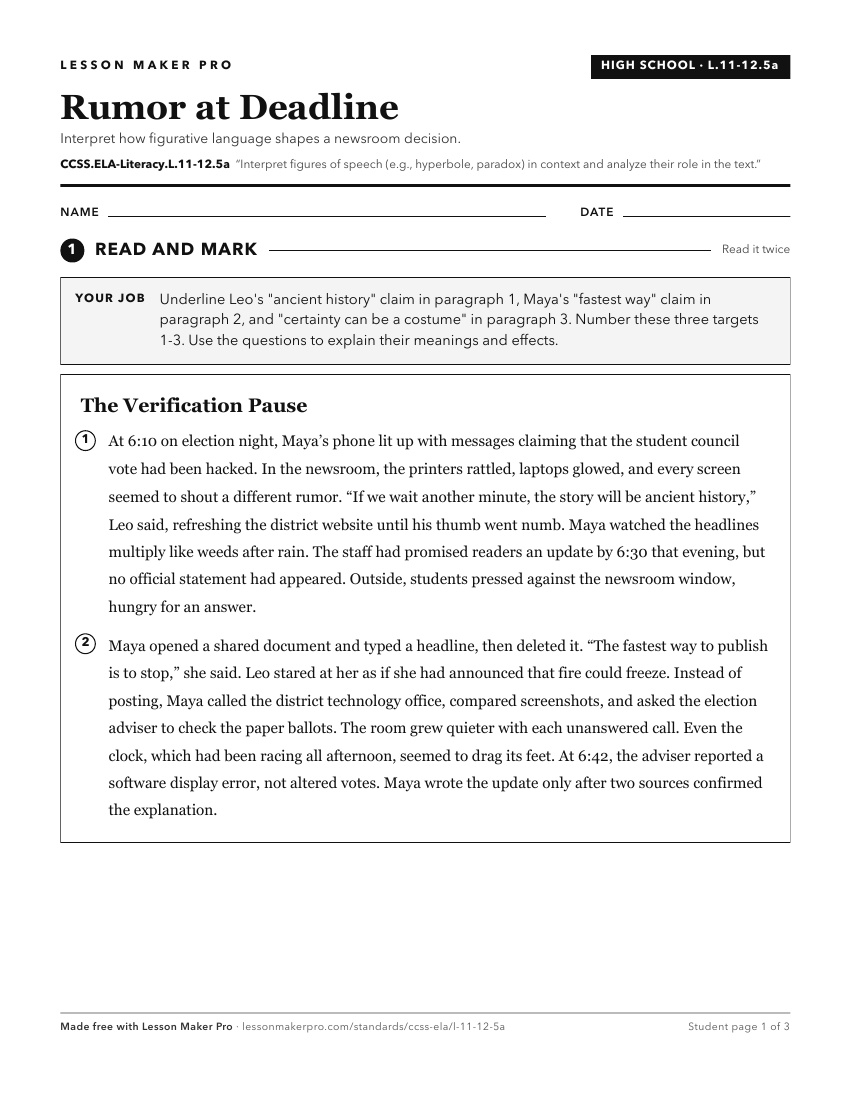
A ready-to-print activity worksheet aligned to CCSS.ELA-Literacy.L.11-12.5a, with an answer key for the teacher on its own page. No account needed.
PDF, US Letter, prints cleanly in black and white.
Download the worksheetLearning progression
Where This Standard Sits
Before This Standard
If students are struggling here, check these first.
Keep exploring
Related Standards
Turn this exact standard into a lesson
Grade, subject, topic, and the complete standard are prefilled. Create one free, no account needed.
Also for this standard:Make a WorksheetMake a QuizMake a Sub Lesson