CCSS.
The Standard
Interpret figures of speech (e.g. verbal irony, puns) in context.
Common Core State Standards for English Language Arts
Teacher's field guide
What This Standard Means
What Students Need to Do
- Students recognize when a speaker means something different from the literal words or when a word has two meanings. They use context to explain the intended meaning and effect.
What Mastery Looks Like
- A student can mark the words that carry a second or opposite meaning in a short passage. They can use context clues to explain the intended meaning and its humorous or critical effect.
Common Misconceptions
- Students may treat every joke as a pun or label all verbal irony as sarcasm. They may rely on literal definitions and ignore clues from the situation or tone.
How to Assess It
- Use this exit ticket: “During a downpour, Maya said, ‘Perfect weather for a picnic.’ What does she mean, and which detail proves it?”
Lesson moves
Ways to Teach It
Give pairs sentence strips with literal statements, verbal irony, and puns, then have them sort and defend each choice.
Ask students to explain how changing the context could make the sentence “That went well” sincere or ironic.
Play a context clue challenge where teams interpret a pun or ironic line and earn points for citing exact evidence.
Analyze puns and ironic slogans from advertisements, headlines, or product names, then discuss how the wordplay shapes audience response.
Free download
Printable L.8.5a Worksheet
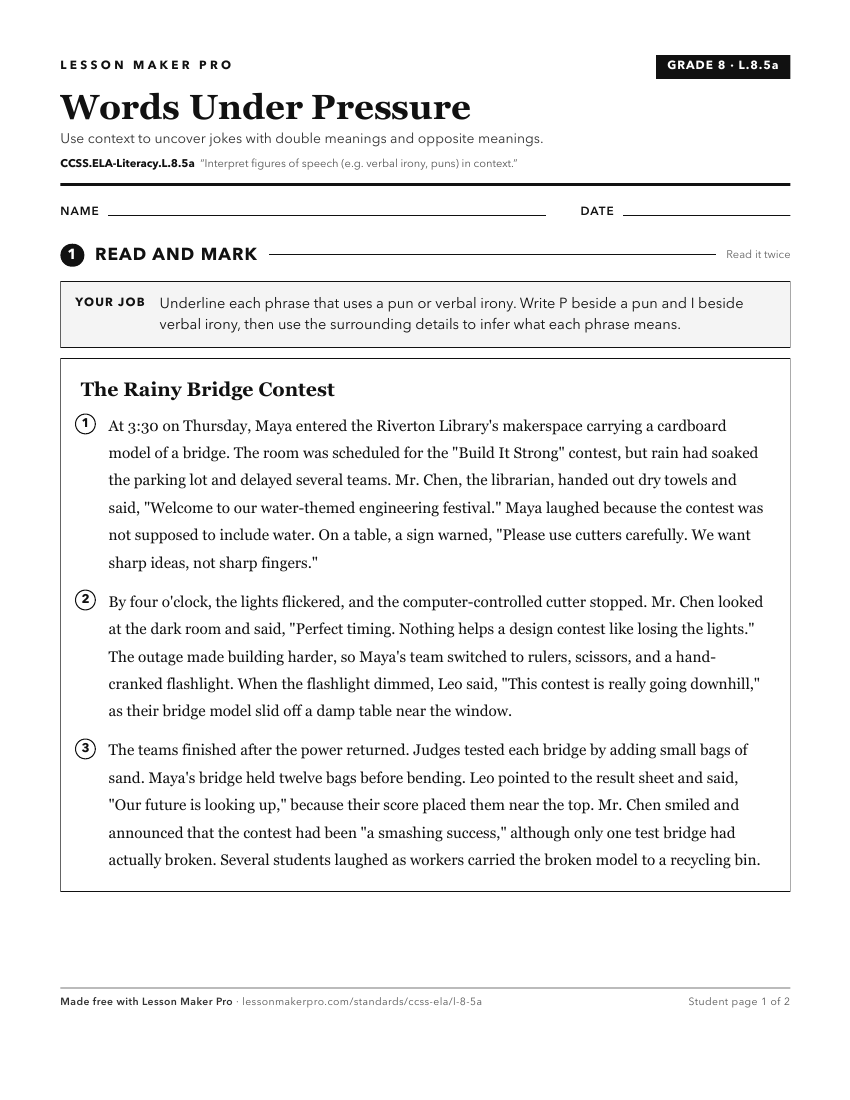
A ready-to-print activity worksheet aligned to CCSS.ELA-Literacy.L.8.5a, with an answer key for the teacher on its own page. No account needed.
PDF, US Letter, prints cleanly in black and white.
Download the worksheetLearning progression
Where This Standard Sits
Before This Standard
If students are struggling here, check these first.
What This Unlocks
Mastery here sets students up for these next.
Keep exploring
Related Standards
Turn this exact standard into a lesson
Grade, subject, topic, and the complete standard are prefilled. Create one free, no account needed.
Also for this standard:Make a WorksheetMake a QuizMake a Sub Lesson