CCSS.
The Standard
Explain the meaning of simple similes and metaphors (e.g., as pretty as a picture) in context.
Common Core State Standards for English Language Arts
Teacher's field guide
What This Standard Means
What Students Need to Do
- Students recognize simple similes and metaphors in sentences or short passages. They explain what is being compared and use nearby clues to tell what the comparison means.
What Mastery Looks Like
- Students spot similes and metaphors in a passage and name the two things being compared. They use context clues to explain the intended meaning in their own words.
Common Misconceptions
- Students may treat figurative comparisons as literal facts. They may also think every sentence using “like” or “as” is a simile, or confuse similes with metaphors.
How to Assess It
- Give students: “After the long hike, my backpack was a boulder.” Ask them to explain the comparison and what it shows about the backpack.
Lesson moves
Ways to Teach It
Give pairs comparison cards and meaning cards, then have them match each figurative phrase to its intended meaning.
Ask students to explain what “The classroom was a zoo” suggests and identify details that could support that meaning.
Play figurative language charades, where students act out a simile or metaphor while classmates guess and explain it.
Collect figurative comparisons from songs, ads, or sports reports, then discuss what each one helps the audience picture.
Free download
Printable L.4.5a Worksheet
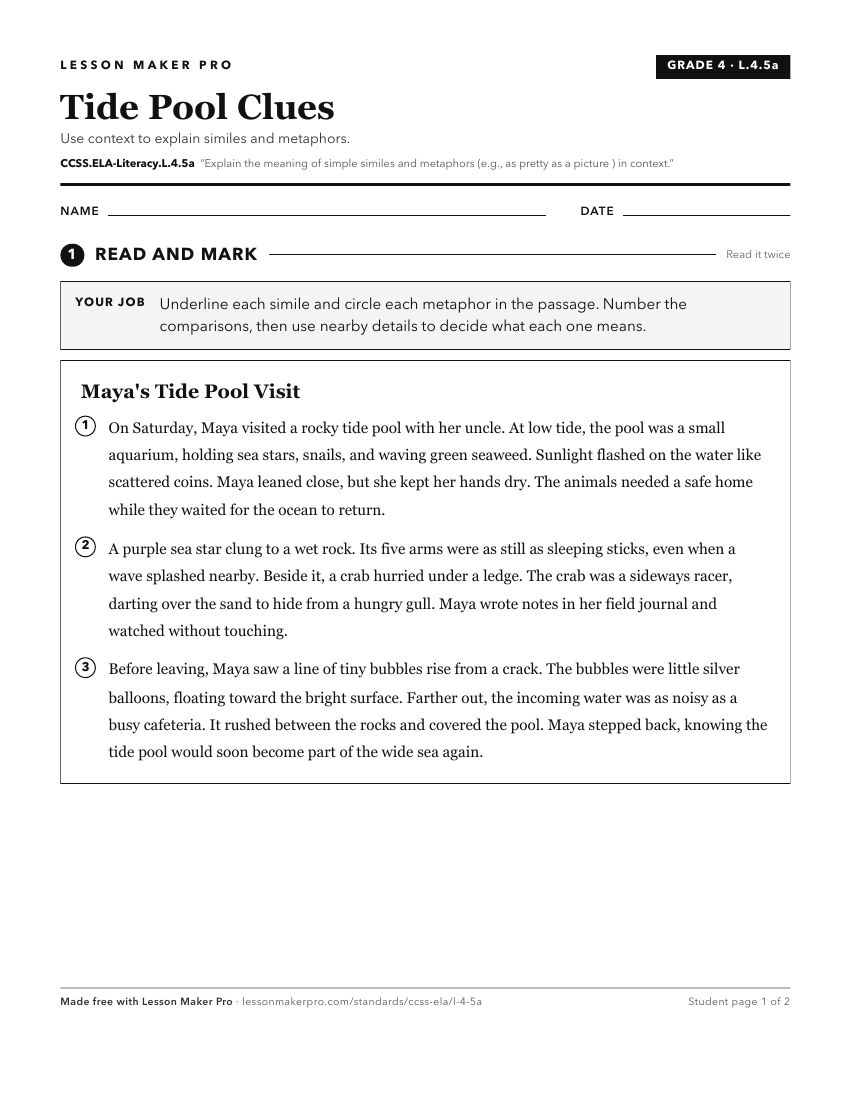
A ready-to-print activity worksheet aligned to CCSS.ELA-Literacy.L.4.5a, with an answer key for the teacher on its own page. No account needed.
PDF, US Letter, prints cleanly in black and white.
Download the worksheetLearning progression
Where This Standard Sits
Before This Standard
If students are struggling here, check these first.
What This Unlocks
Mastery here sets students up for these next.
Keep exploring
Related Standards
- CCSS.ELA-Literacy.L.6.5a
Interpret figures of speech (e.g., personification) in context.
- CCSS.ELA-Literacy.L.6.5
Demonstrate understanding of figurative language, word relationships, and nuances in word meanings.
- CCSS.ELA-Literacy.RL.5.4
Determine the meaning of words and phrases as they are used in a text, including figurative language such as metaphors and similes.
Turn this exact standard into a lesson
Grade, subject, topic, and the complete standard are prefilled. Create one free, no account needed.
Also for this standard:Make a WorksheetMake a QuizMake a Sub Lesson