CCSS.
The Standard
Establish and maintain a formal style and objective tone while attending to the norms and conventions of the discipline in which they are writing.
Common Core State Standards for English Language Arts
Teacher's field guide
What This Standard Means
What Students Need to Do
- Students use precise, formal language and keep personal reactions or loaded wording out of academic writing. They match vocabulary, structure, evidence use, and citation practices to the subject area.
What Mastery Looks Like
- Students maintain a consistent, professional tone from introduction through conclusion. They use precise subject terms, present claims without emotional language, and follow expected citation and formatting practices.
Common Misconceptions
- Students may think formal writing must use long words, passive voice, or complicated sentences. They may also confuse objectivity with having no claim, or mix evidence with phrases such as “I feel” and “obviously.”
How to Assess It
- Give students an informal, opinion-heavy paragraph about a historical or scientific topic. Ask them to revise three sentences for formal style, objective tone, and subject-specific conventions.
Lesson moves
Ways to Teach It
Have pairs sort sentence strips into formal, informal, objective, and biased groups, then revise two sentences that fit multiple groups.
Ask students to compare a lab conclusion and a history paragraph, then list the tone and format choices each subject requires.
Run a tone-repair relay where teams replace slang, vague words, contractions, and emotional claims in short paragraphs.
Students rewrite a social media post about a local issue as a factual newspaper brief using sourced evidence and neutral language.
Free download
Printable WHST.9-10.1d Worksheet
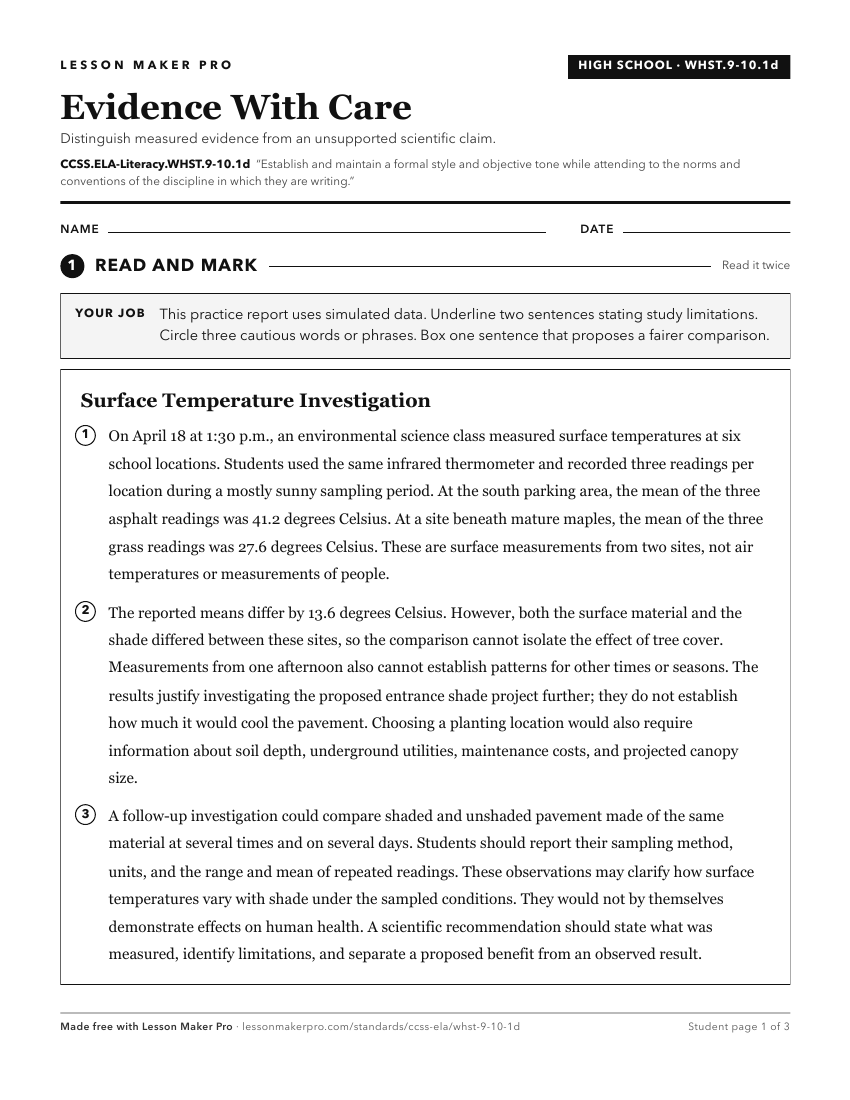
A ready-to-print activity worksheet aligned to CCSS.ELA-Literacy.WHST.9-10.1d, with an answer key for the teacher on its own page. No account needed.
PDF, US Letter, prints cleanly in black and white.
Download the worksheetLearning progression
Where This Standard Sits
What This Unlocks
Mastery here sets students up for these next.
Keep exploring
Related Standards
Turn this exact standard into a lesson
Grade, subject, topic, and the complete standard are prefilled. Create one free, no account needed.
Also for this standard:Make a WorksheetMake a QuizMake a Sub Lesson