CCSS.
The Standard
Establish and maintain a formal style and objective tone while attending to the norms and conventions of the discipline in which they are writing.
Common Core State Standards for English Language Arts
Teacher's field guide
What This Standard Means
What Students Need to Do
- Students write arguments in a formal style that fits the subject and audience. They maintain an objective, evidence-based tone and follow expected rules for wording, structure, and citation.
What Mastery Looks Like
- Students present a clear claim with measured, evidence-based language from beginning to end. They use precise terms, consistent sentence structure, and the citation or formatting conventions expected for the subject.
Common Misconceptions
- Students may think formal writing requires long sentences and inflated vocabulary. They may confuse an objective tone with avoiding a clear claim, or shift into slang and emotional language when responding to opposing views.
How to Assess It
- Exit ticket: Rewrite a casual, emotionally loaded argument paragraph for a school newspaper, keeping the claim while using formal language and an objective tone.
Lesson moves
Ways to Teach It
Sort sentence strips into formal, informal, objective, and biased groups, then revise two informal or biased sentences for an academic argument.
Compare two argument paragraphs and write three sentences explaining which better fits a history class, citing word choice and evidence use.
Run a tone-repair relay where teams replace slang, exaggeration, and unsupported judgments in sample claims without changing each claim’s meaning.
Write a one-paragraph recommendation to the principal about a school policy, using measured language, relevant evidence, and the school’s expected format.
Free download
Printable W.9-10.1d Worksheet
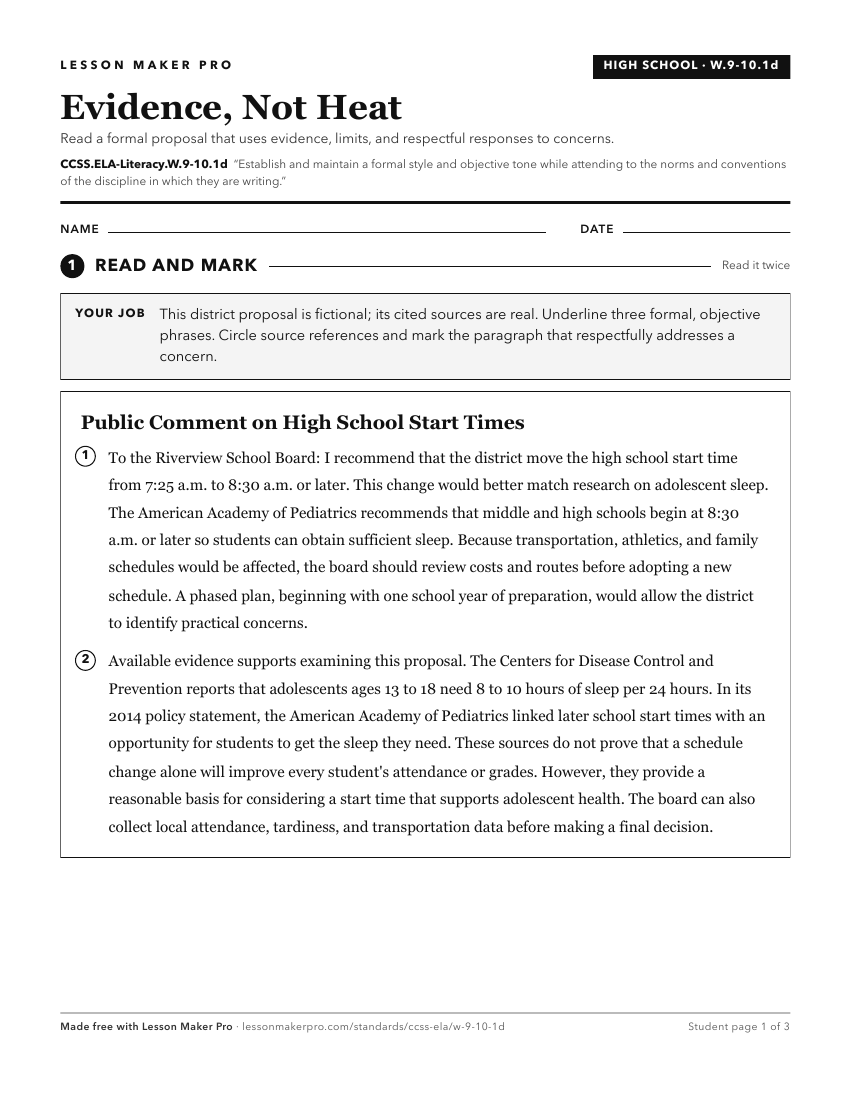
A ready-to-print activity worksheet aligned to CCSS.ELA-Literacy.W.9-10.1d, with an answer key for the teacher on its own page. No account needed.
PDF, US Letter, prints cleanly in black and white.
Download the worksheetLearning progression
Where This Standard Sits
Before This Standard
If students are struggling here, check these first.
What This Unlocks
Mastery here sets students up for these next.
Keep exploring
Related Standards
Turn this exact standard into a lesson
Grade, subject, topic, and the complete standard are prefilled. Create one free, no account needed.
Also for this standard:Make a WorksheetMake a QuizMake a Sub Lesson