CCSS.
The Standard
Use dialogue and descriptions of actions, thoughts, and feelings to develop experiences and events or show the response of characters to situations.
Common Core State Standards for English Language Arts
Teacher's field guide
What This Standard Means
What Students Need to Do
- Students add character speech and details about what characters do, think, and feel. These details should move the event forward and make each reaction clear.
What Mastery Looks Like
- A student can turn a flat event into a clear scene with speech, actions, thoughts, and feelings. The added details fit the situation and show how the character responds.
Common Misconceptions
- Students may name an emotion, such as “She was sad,” without showing it through words, thoughts, or actions. They may add dialogue that does not fit the event or forget to make the character’s response clear.
How to Assess It
- Use this exit ticket: “Mia opened the box and gasped.” Add dialogue, one action, and one thought or feeling that show why she reacted.
Lesson moves
Ways to Teach It
Give pairs dialogue, action, thought, and feeling cards; have them arrange four cards into a scene, then write it.
Ask, “How might a character respond after losing a class pet, and which details would make that response believable?”
Play Scene Builder: students draw a situation card and a reaction card, then write three lines using speech, action, and thought.
After a classroom surprise, students write a short eyewitness scene showing one person’s words, actions, and feelings.
Free download
Printable W.3.3b Worksheet
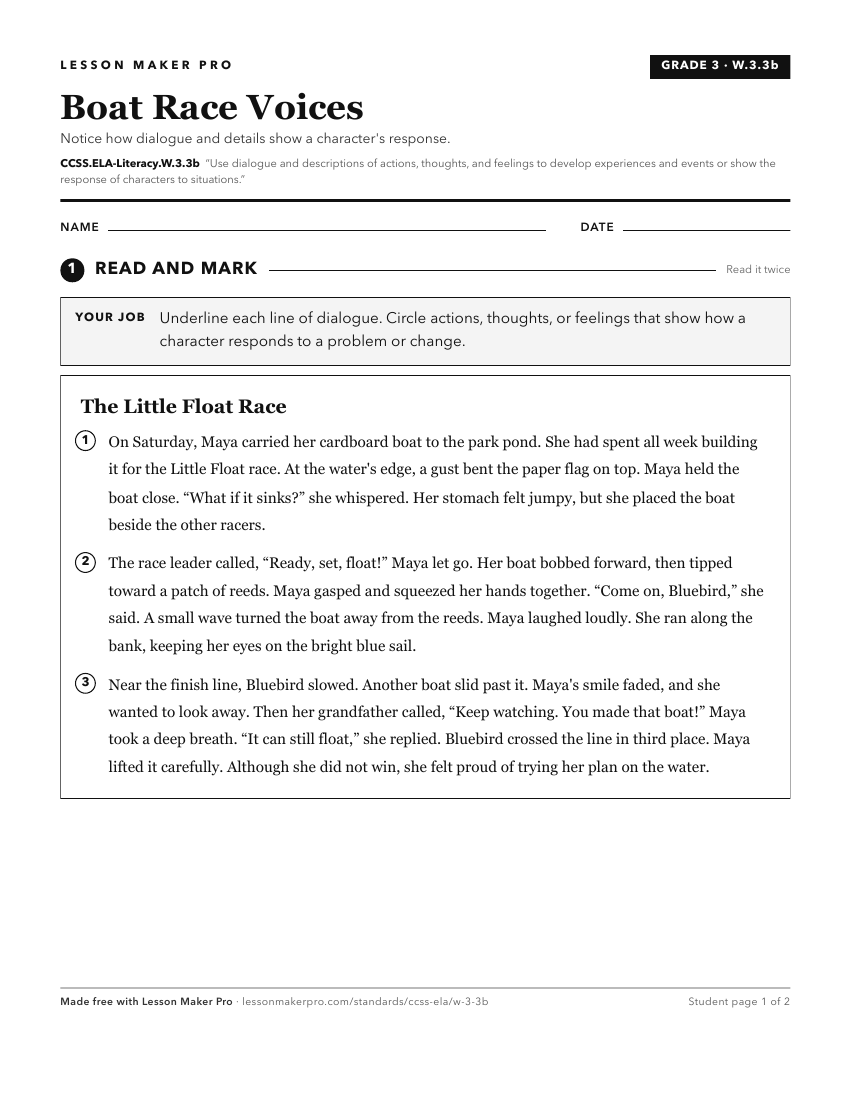
A ready-to-print activity worksheet aligned to CCSS.ELA-Literacy.W.3.3b, with an answer key for the teacher on its own page. No account needed.
PDF, US Letter, prints cleanly in black and white.
Download the worksheetLearning progression
Where This Standard Sits
What This Unlocks
Mastery here sets students up for these next.
Keep exploring
Related Standards
- CCSS.ELA-Literacy.W.5.3b
Use narrative techniques, such as dialogue, description, and pacing, to develop experiences and events or show the responses of characters to situations.
- CCSS.ELA-Literacy.W.8.3b
Use narrative techniques, such as dialogue, pacing, description, and reflection, to develop experiences, events, and/or characters.
- CCSS.ELA-Literacy.W.6.3b
Use narrative techniques, such as dialogue, pacing, and description, to develop experiences, events, and/or characters.
Turn this exact standard into a lesson
Grade, subject, topic, and the complete standard are prefilled. Create one free, no account needed.
Also for this standard:Make a WorksheetMake a QuizMake a Sub Lesson