CCSS.
The Standard
Explain their own ideas and understanding in light of the discussion.
Common Core State Standards for English Language Arts
Teacher's field guide
What This Standard Means
What Students Need to Do
- Students state what they think after a group conversation. They explain how a classmate's comment, question, or evidence supported or changed their thinking.
What Mastery Looks Like
- A student gives a clear idea, then links it to something said in the discussion. The student can name what became clearer, stayed the same, or changed and explain why.
Common Misconceptions
- Students may simply say, "I agree," or repeat a classmate's words without explaining their own thinking. They may share a new idea but never connect it to the discussion.
How to Assess It
- After a five-minute read-aloud discussion, give this exit ticket: "I think ____. Something said in our discussion that shaped my thinking was ____."
Lesson moves
Ways to Teach It
Give students two sticky notes labeled Before and After, then have them record how their thinking changed during a read-aloud discussion.
Ask, "Which classmate's idea helped you understand the character better, and what do you think now?"
Play Pass the Link: each student states an idea and connects it to the previous speaker using because, but, or so.
After groups choose a class job, have each student explain how the team's reasons shaped their final choice.
Free download
Printable SL.3.1d Worksheet
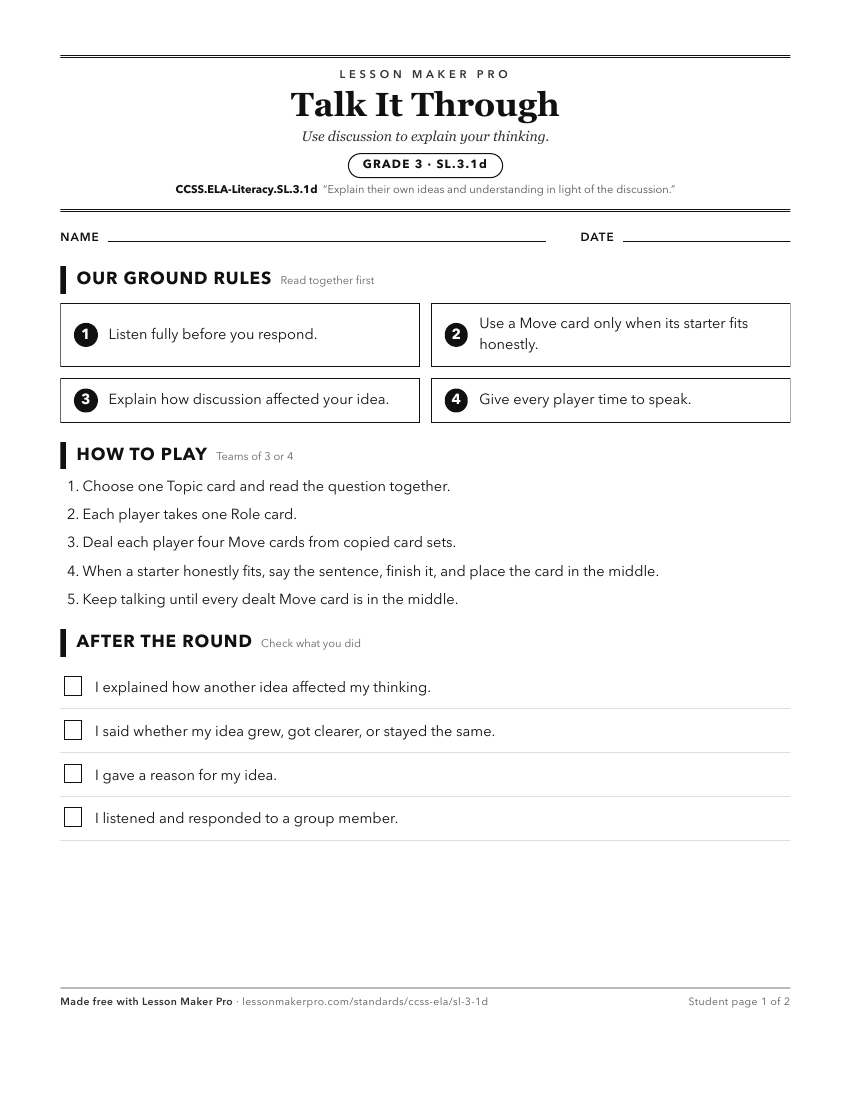
A ready-to-print activity worksheet aligned to CCSS.ELA-Literacy.SL.3.1d, with an answer key for the teacher on its own page. No account needed.
PDF, US Letter, prints cleanly in black and white.
Download the worksheetLearning progression
Where This Standard Sits
What This Unlocks
Mastery here sets students up for these next.
Keep exploring
Related Standards
- CCSS.ELA-Literacy.SL.5.1d
Review the key ideas expressed and draw conclusions in light of information and knowledge gained from the discussions.
- CCSS.ELA-Literacy.SL.6.1d
Review the key ideas expressed and demonstrate understanding of multiple perspectives through reflection and paraphrasing.
- CCSS.ELA-Literacy.SL.9-10.1d
Respond thoughtfully to diverse perspectives, summarize points of agreement and disagreement, and, when warranted, qualify or justify their own views and unders...
Turn this exact standard into a lesson
Grade, subject, topic, and the complete standard are prefilled. Create one free, no account needed.
Also for this standard:Make a WorksheetMake a QuizMake a Sub Lesson