CCSS.
The Standard
Build on others' talk in conversations by linking their comments to the remarks of others.
Common Core State Standards for English Language Arts
Teacher's field guide
What This Standard Means
What Students Need to Do
- Students listen closely to a classmate, then respond in a way that clearly connects to that classmate’s idea. They may add a detail, example, question, or different view while naming the idea they heard.
What Mastery Looks Like
- A student can say, “I agree with Lena’s point about the character because...” and add new reasoning. The student stays on topic and can explain how the response connects.
Common Misconceptions
- Students may repeat a classmate’s words without adding anything, or share a new idea that does not connect. They may say “I agree” but cannot explain what they agree with.
How to Assess It
- Give pairs this prompt: “Which classroom job helps our class most, and why?” Check whether each student names the partner’s idea and adds a reason or example.
Lesson moves
Ways to Teach It
Give groups paper strips, and have each child write one connected response before linking the strips into a conversation chain.
After a read-aloud, ask, “Which classmate’s idea changed or added to your thinking, and how?”
Play Conversation Connect: students draw a response-stem card, then use it to connect their comment to the previous speaker.
Have groups plan the best indoor recess activity, requiring each suggestion to connect to one already offered.
Free download
Printable SL.2.1b Worksheet
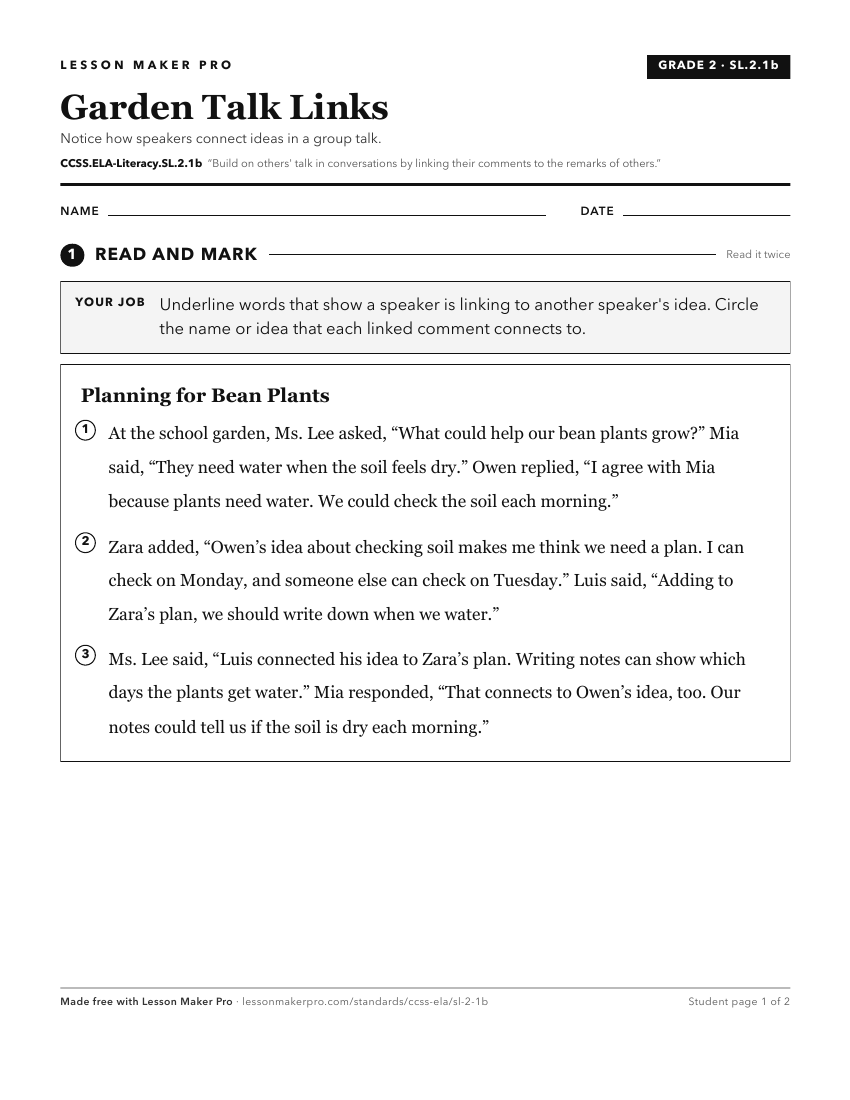
A ready-to-print activity worksheet aligned to CCSS.ELA-Literacy.SL.2.1b, with an answer key for the teacher on its own page. No account needed.
PDF, US Letter, prints cleanly in black and white.
Download the worksheetLearning progression
Where This Standard Sits
Before This Standard
If students are struggling here, check these first.
What This Unlocks
Mastery here sets students up for these next.
Keep exploring
Related Standards
- CCSS.ELA-Literacy.SL.5.1c
Pose and respond to specific questions by making comments that contribute to the discussion and elaborate on the remarks of others.
- CCSS.ELA-Literacy.SL.3.1c
Ask questions to check understanding of information presented, stay on topic, and link their comments to the remarks of others.
- CCSS.ELA-Literacy.SL.4.1c
Pose and respond to specific questions to clarify or follow up on information, and make comments that contribute to the discussion and link to the remarks of ot...
Turn this exact standard into a lesson
Grade, subject, topic, and the complete standard are prefilled. Create one free, no account needed.
Also for this standard:Make a WorksheetMake a QuizMake a Sub Lesson