CCSS.
The Standard
With prompting and support, compare and contrast the adventures and experiences of characters in familiar stories.
Common Core State Standards for English Language Arts · Reading Standards for Literature
Teacher's field guide
What This Standard Means
What Students Need to Do
- Students name what happens to characters in two familiar stories. With questions, pictures, or sentence frames, they tell one way the experiences are alike and one way they are different.
What Mastery Looks Like
- Given two familiar characters, students name one accurate similarity and one accurate difference between their experiences. They point to story events or pictures that support each comparison.
Common Misconceptions
- Students may compare how characters look instead of what happens to them. They may retell both stories without naming a similarity or difference. Some confuse the words same and different.
How to Assess It
- After reading Goldilocks and the Three Bears and Little Red Riding Hood, ask, "Name one experience both characters have and one experience that is different."
Lesson moves
Ways to Teach It
Give pairs picture cards from two familiar stories, then have them sort the events under Both, Story One, or Story Two.
Ask, "How did each character handle a problem?" Students draw one similarity and one difference, then explain their pictures to a partner.
Play Same or Different by reading two event cards while students hold up matching symbols and explain their choices.
Read two stories about doctor visits, then compare each character's experience with steps students know from a real checkup.
Free download
Printable RL.K.9 Worksheet
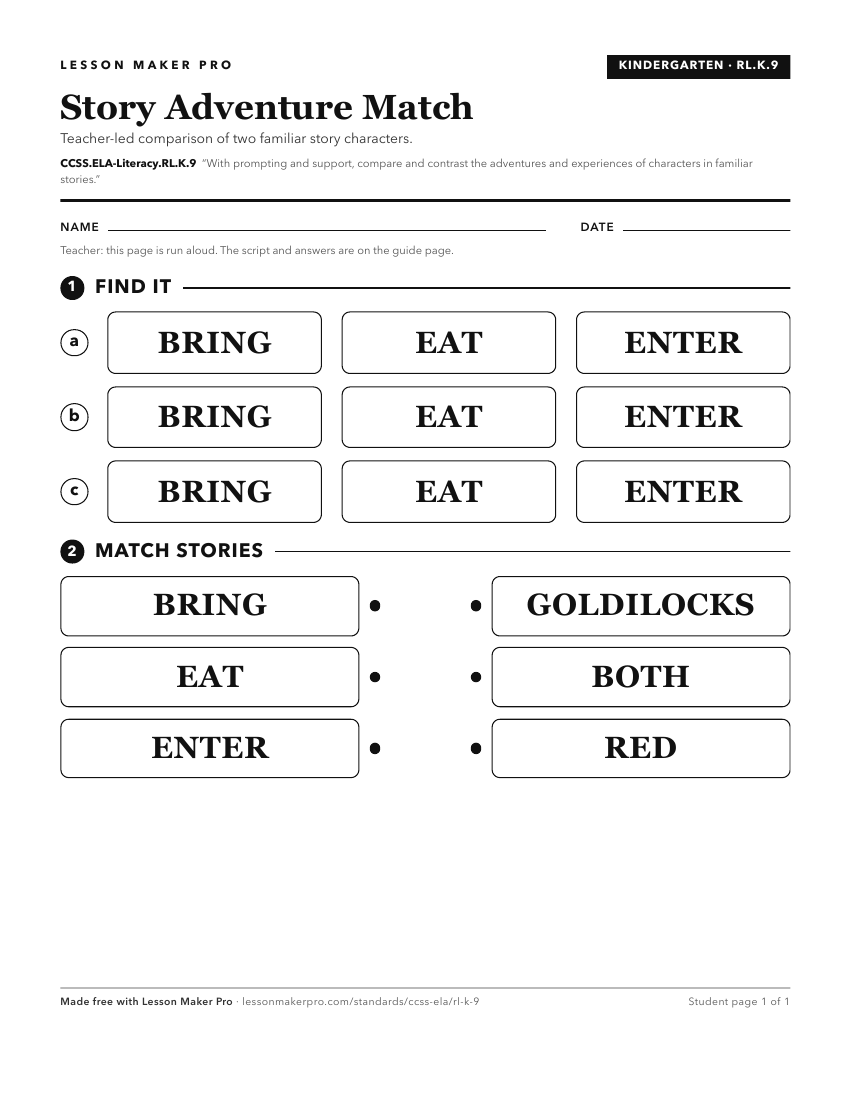
A ready-to-print activity worksheet aligned to CCSS.ELA-Literacy.RL.K.9, with an answer key for the teacher on its own page. No account needed.
PDF, US Letter, prints cleanly in black and white.
Download the worksheetLearning progression
Where This Standard Sits
See the whole path on the Reading: Literature progression map.
What This Unlocks
Mastery here sets students up for these next.
Keep exploring
Related Standards
- CCSS.ELA-Literacy.RL.K.2
With prompting and support, retell familiar stories, including key details.
- CCSS.ELA-Literacy.RL.K.3
With prompting and support, identify characters, settings, and major events in a story.
- CCSS.ELA-Literacy.RI.K.9
With prompting and support, identify basic similarities in and differences between two texts on the same topic (e.g., in illustrations, descriptions, or procedu...
Turn this exact standard into a lesson
Grade, subject, topic, and the complete standard are prefilled. Create one free, no account needed.
Also for this standard:Make a WorksheetMake a QuizMake a Sub Lesson