CCSS.
The Standard
Analyze how differences in the points of view of the characters and the audience or reader (e.g., created through the use of dramatic irony) create such effects as suspense or humor.
Common Core State Standards for English Language Arts · Reading Standards for Literature
Teacher's field guide
What This Standard Means
What Students Need to Do
- Students track what each character knows, believes, and expects, then compare it with what the reader or audience knows. They use that gap to explain why a scene feels tense, funny, or both.
What Mastery Looks Like
- Students can point to lines or events showing what a character believes and what the reader knows. They can explain how that gap builds suspense or humor and predict how the effect would change if the character knew the truth.
Common Misconceptions
- Students may only label first-person or third-person narration instead of comparing who knows what. They may call any surprise dramatic irony, even when the reader and character learn the news together. They often name suspense or humor without explaining which hidden fact causes that effect.
How to Assess It
- Exit ticket: Name one fact the reader knows but a character does not. Cite one detail and explain how the gap creates suspense or humor.
Lesson moves
Ways to Teach It
Give pairs fact cards from a scene, then have them sort each fact into character knows, reader knows, or both.
Ask students to write: What does the reader know that the character does not, and how does that gap shape your reaction?
Play Irony Detective: teams earn points by finding a knowledge gap, citing evidence, and naming its effect in brief scenes.
Show a movie trailer with hidden information, then discuss how editing lets viewers anticipate danger or laugh at a character’s mistake.
Free download
Printable RL.8.6 Worksheet
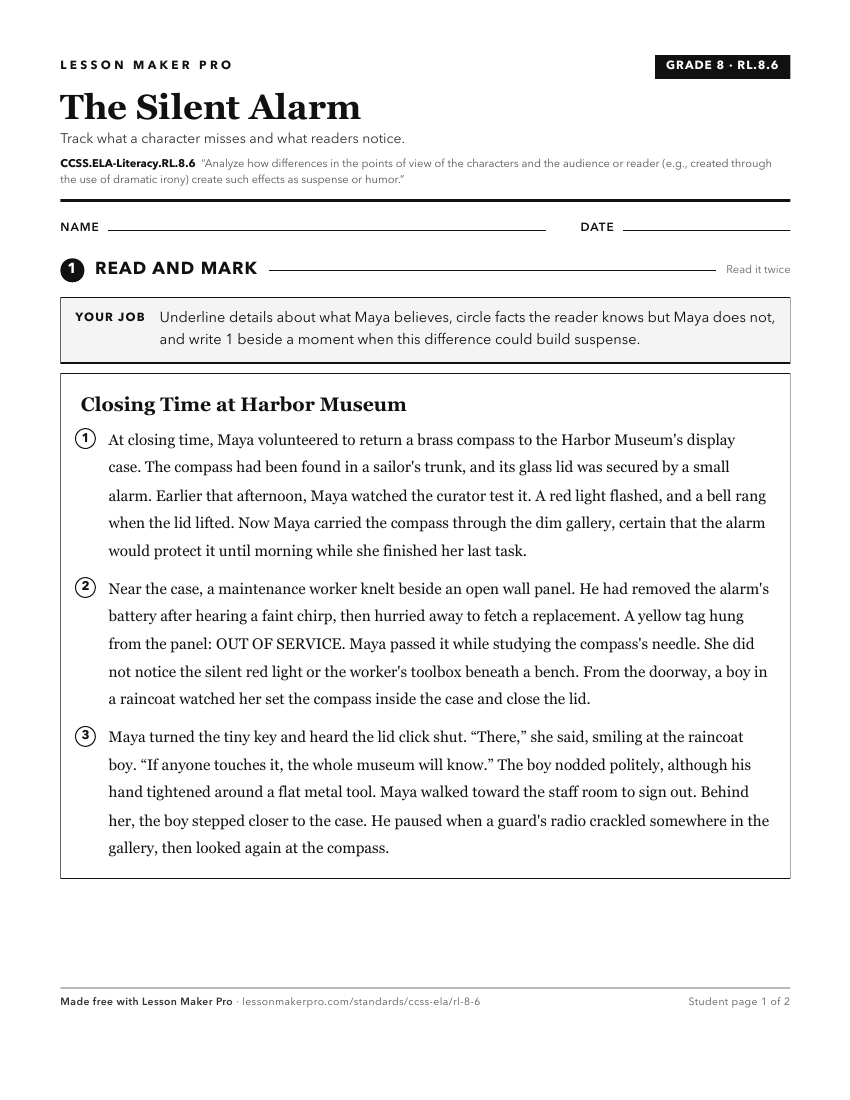
A ready-to-print activity worksheet aligned to CCSS.ELA-Literacy.RL.8.6, with an answer key for the teacher on its own page. No account needed.
PDF, US Letter, prints cleanly in black and white.
Download the worksheetLearning progression
Where This Standard Sits
See the whole path on the Reading: Literature progression map.
Before This Standard
If students are struggling here, check these first.
What This Unlocks
Mastery here sets students up for these next.
Keep exploring
Related Standards
- CCSS.ELA-Literacy.RL.9-10.5
Analyze how an author's choices concerning how to structure a text, order events within it (e.g., parallel plots), and manipulate time (e.g., pacing, flashbacks...
- CCSS.ELA-Literacy.RL.7.3
Analyze how particular elements of a story or drama interact (e.g., how setting shapes the characters or plot).
- CCSS.ELA-Literacy.RL.11-12.3
Analyze the impact of the author's choices regarding how to develop and relate elements of a story or drama (e.g., where a story is set, how the action is order...
Turn this exact standard into a lesson
Grade, subject, topic, and the complete standard are prefilled. Create one free, no account needed.
Also for this standard:Make a WorksheetMake a QuizMake a Sub Lesson