CCSS.
The Standard
Determine the meaning of words and phrases as they are used in a text, distinguishing literal from nonliteral language.
Common Core State Standards for English Language Arts · Reading Standards for Literature
Teacher's field guide
What This Standard Means
What Students Need to Do
- Students use nearby details to work out what unfamiliar words and phrases mean in a story. They decide whether language means exactly what it says or suggests another meaning.
What Mastery Looks Like
- Students explain an unfamiliar word or phrase using details from the passage. They tell whether a phrase describes something exact or expresses an intended meaning.
Common Misconceptions
- Students may read every phrase word for word, so “hold your horses” sounds like handling animals. They may also guess from one word instead of checking the surrounding sentences.
How to Assess It
- Give students: “After winning the race, Mia was on top of the world.” Ask what the phrase means, whether it is literal, and which clue supports the answer.
Lesson moves
Ways to Teach It
Give pairs phrase cards and picture cards; students match each phrase to its literal or intended meaning, then underline supporting clues.
Read “The classroom was a zoo” and ask students to write what happened, then cite one clue supporting their meaning.
Play Context Clue Detective: teams read short passages, choose a meaning, label it literal or nonliteral, and explain their clue.
Collect sayings from signs, songs, or family conversations, then have students explain what each speaker really means.
Free download
Printable RL.3.4 Worksheet
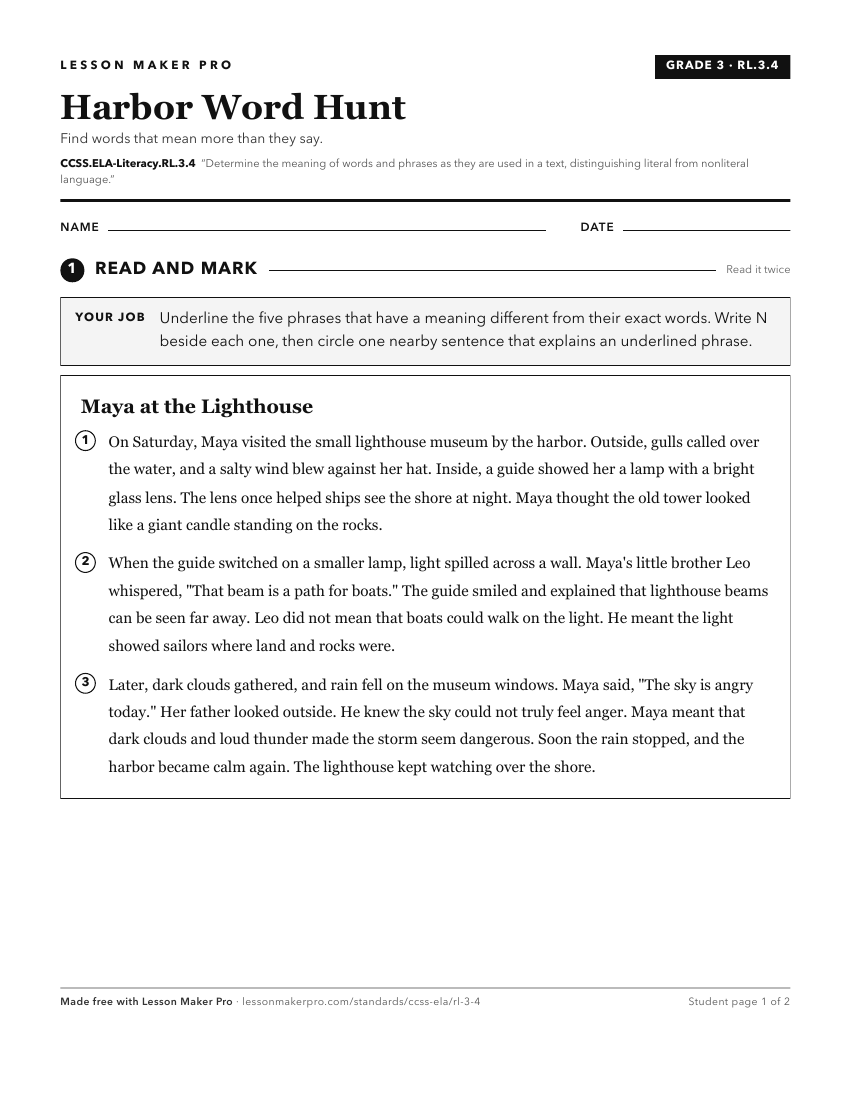
A ready-to-print activity worksheet aligned to CCSS.ELA-Literacy.RL.3.4, with an answer key for the teacher on its own page. No account needed.
PDF, US Letter, prints cleanly in black and white.
Download the worksheetLearning progression
Where This Standard Sits
See the whole path on the Reading: Literature progression map.
Before This Standard
If students are struggling here, check these first.
What This Unlocks
Mastery here sets students up for these next.
Keep exploring
Related Standards
- CCSS.ELA-Literacy.RI.8.4
Determine the meaning of words and phrases as they are used in a text, including figurative, connotative, and technical meanings; analyze the impact of specific...
- CCSS.ELA-Literacy.RL.5.4
Determine the meaning of words and phrases as they are used in a text, including figurative language such as metaphors and similes.
- CCSS.ELA-Literacy.RL.8.4
Determine the meaning of words and phrases as they are used in a text, including figurative and connotative meanings; analyze the impact of specific word choice...
- CCSS.ELA-Literacy.RI.6.4
Determine the meaning of words and phrases as they are used in a text, including figurative, connotative, and technical meanings.
Turn this exact standard into a lesson
Grade, subject, topic, and the complete standard are prefilled. Create one free, no account needed.
Also for this standard:Make a WorksheetMake a QuizMake a Sub Lesson