CCSS.
The Standard
Determine the meaning of words and phrases as they are used in a text, including figurative, connotative, and technical meanings; analyze the cumulative impact of specific word choices on meaning and tone (e.g., how the language of a court opinion differs from that of a newspaper).
Common Core State Standards for English Language Arts · Reading Standards for Informational Text
Teacher's field guide
What This Standard Means
What Students Need to Do
- Students use context to work out what unfamiliar or layered language means in a passage. They distinguish literal, figurative, connotative, and technical uses. They explain how several word choices work together to shape meaning and tone.
What Mastery Looks Like
- Students define unfamiliar language accurately and cite context clues that support each meaning. They explain how connotations and repeated wording create a specific tone. They can show how replacing key words would change the passage.
Common Misconceptions
- Students may stop at a dictionary definition instead of using the surrounding sentences. They may name a tone based only on the topic. They may discuss one striking word but miss the effect of repeated word choices.
How to Assess It
- Give students a short editorial paragraph with three words underlined. Ask: "What does each word mean here, and how do the three words work together to create tone?"
Lesson moves
Ways to Teach It
Give pairs printed excerpts and synonym cards, then have them replace key words and mark how each replacement changes tone.
Ask students to write: "Which three words most shape the author's attitude, and what attitude do they create together?"
Play Tone Detective by giving teams brief passages and requiring them to identify tone, highlight evidence, and define one key word.
Compare a court ruling and a news report about the same case, then list technical, neutral, and emotionally charged language.
Free download
Printable RI.9-10.4 Worksheet
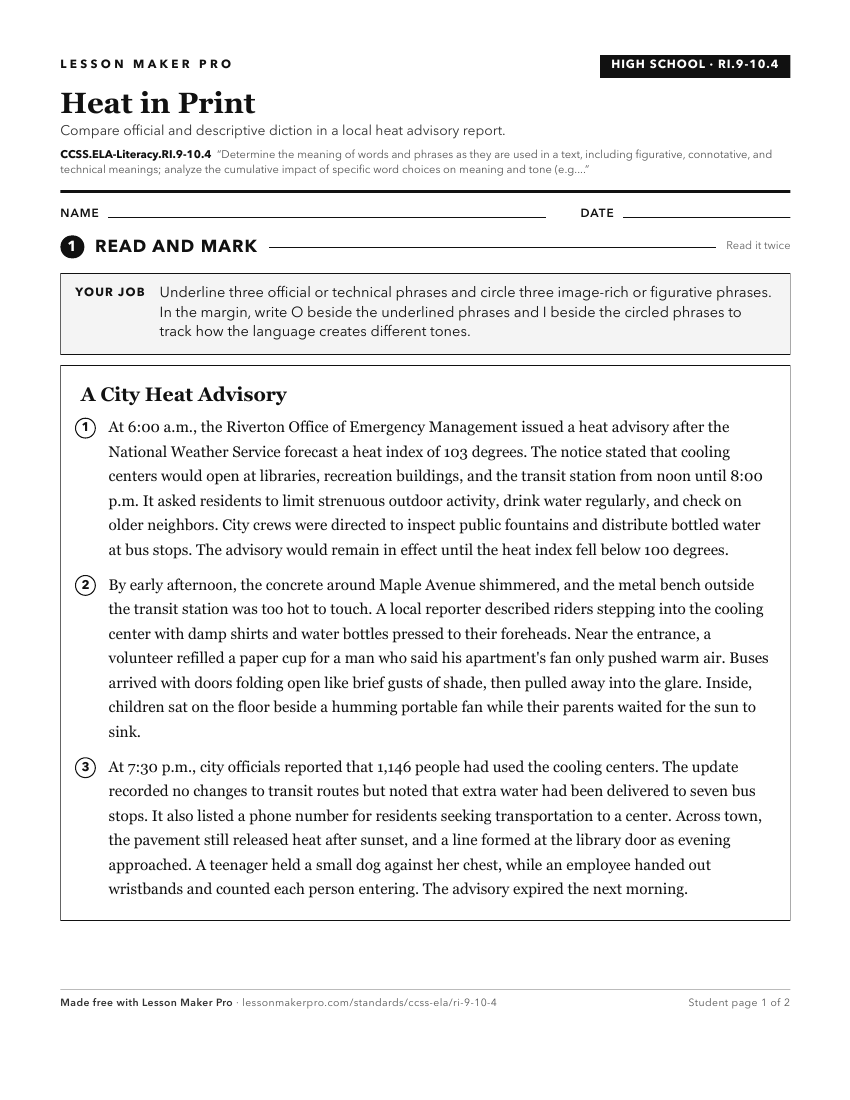
A ready-to-print activity worksheet aligned to CCSS.ELA-Literacy.RI.9-10.4, with an answer key for the teacher on its own page. No account needed.
PDF, US Letter, prints cleanly in black and white.
Download the worksheetLearning progression
Where This Standard Sits
See the whole path on the Reading: Informational Text progression map.
Before This Standard
If students are struggling here, check these first.
What This Unlocks
Mastery here sets students up for these next.
Keep exploring
Related Standards
- CCSS.ELA-Literacy.RL.6.4
Determine the meaning of words and phrases as they are used in a text, including figurative and connotative meanings; analyze the impact of a specific word choi...
- CCSS.ELA-Literacy.RI.7.4
Determine the meaning of words and phrases as they are used in a text, including figurative, connotative, and technical meanings; analyze the impact of a specif...
- CCSS.ELA-Literacy.RL.9-10.4
Determine the meaning of words and phrases as they are used in the text, including figurative and connotative meanings; analyze the cumulative impact of specifi...
Turn this exact standard into a lesson
Grade, subject, topic, and the complete standard are prefilled. Create one free, no account needed.
Also for this standard:Make a WorksheetMake a QuizMake a Sub Lesson