CCSS.
The Standard
Choose words and phrases for effect.
Common Core State Standards for English Language Arts
Teacher's field guide
What This Standard Means
What Students Need to Do
- Students select precise, vivid language that creates a clear picture, feeling, or tone. They explain how a word or phrase changes a reader’s response.
What Mastery Looks Like
- A student replaces vague words with specific verbs, adjectives, or short phrases that fit the purpose. The student can compare two options and explain which creates a clearer feeling or image.
Common Misconceptions
- Students may think longer words are always better. They may add too many adjectives or choose a synonym without checking its meaning and tone. They may identify vivid language but struggle to explain its impact.
How to Assess It
- Give students the sentence, “The dog went across the yard.” Ask them to rewrite it to create excitement, then explain one word choice.
Lesson moves
Ways to Teach It
Give students word cards for verbs and adjectives, then have them rebuild “The bird flew” to sound peaceful, frightening, or funny.
Compare “The rain fell” with “The rain hammered the roof,” then ask students how the second sentence changes the scene.
Play Verb Upgrade by drawing a common verb card, such as went, and earning points for precise replacements that fit a sentence.
Examine two cereal slogans, discuss how their wording attracts buyers, then have students write a slogan for a classroom snack.
Free download
Printable L.3.3a Worksheet
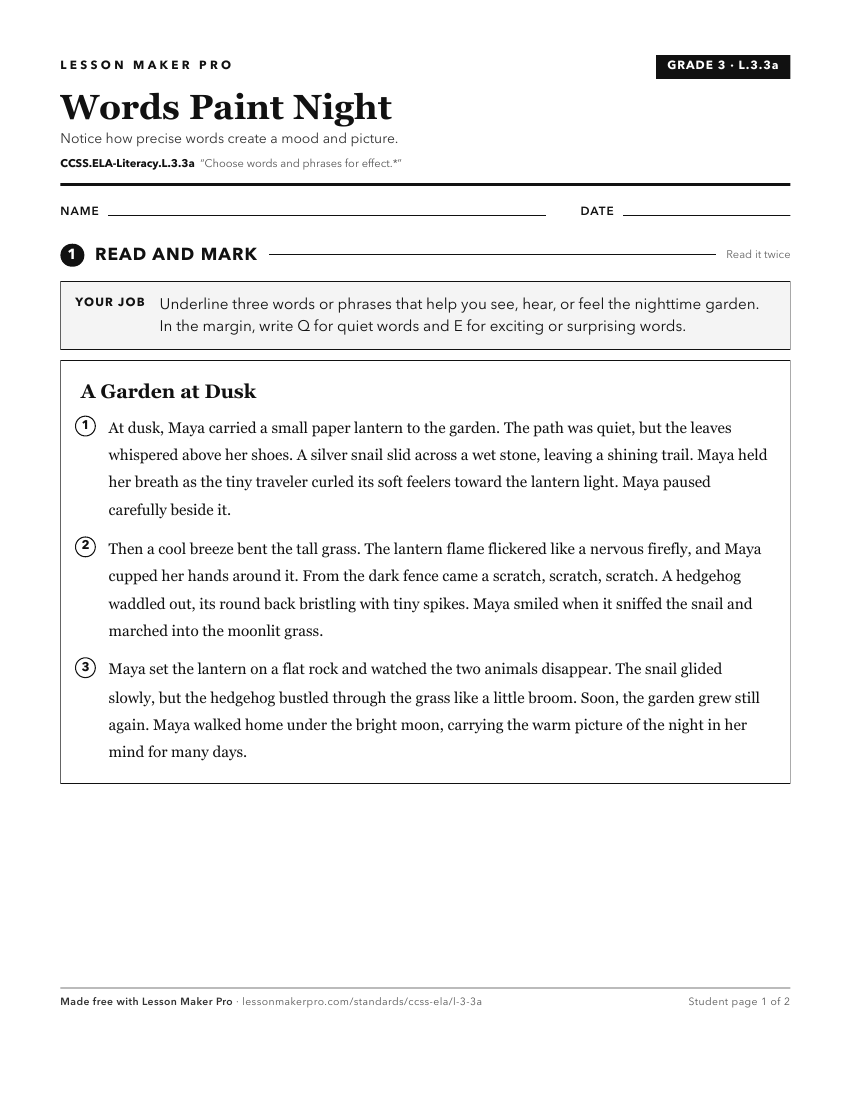
A ready-to-print activity worksheet aligned to CCSS.ELA-Literacy.L.3.3a, with an answer key for the teacher on its own page. No account needed.
PDF, US Letter, prints cleanly in black and white.
Download the worksheetLearning progression
Where This Standard Sits
Before This Standard
If students are struggling here, check these first.
What This Unlocks
Mastery here sets students up for these next.
Keep exploring
Related Standards
- CCSS.ELA-Literacy.L.4.3b
Choose punctuation for effect.
- CCSS.ELA-Literacy.W.7.3d
Use precise words and phrases, relevant descriptive details, and sensory language to capture the action and convey experiences and events.
- CCSS.ELA-Literacy.W.8.3d
Use precise words and phrases, relevant descriptive details, and sensory language to capture the action and convey experiences and events.
Turn this exact standard into a lesson
Grade, subject, topic, and the complete standard are prefilled. Create one free, no account needed.
Also for this standard:Make a WorksheetMake a QuizMake a Sub Lesson