CCSS.
The Standard
Establish and maintain a formal style.
Common Core State Standards for English Language Arts
Teacher's field guide
What This Standard Means
What Students Need to Do
- Students choose precise words, complete sentences, and an objective tone when writing academic arguments. They keep that tone consistent and avoid slang, casual phrasing, and chatty asides.
What Mastery Looks Like
- A student writes an evidence-based argument using precise words, complete sentences, and an objective tone. The tone stays consistent from the opening claim through the conclusion.
Common Misconceptions
- Students may think formal writing requires long sentences and complicated vocabulary. They may begin with an academic tone, then shift into slang, chatty comments, or direct address.
How to Assess It
- Exit ticket: Rewrite “School lunches are super gross, and you should totally fix them” as a formal claim with one supporting reason.
Lesson moves
Ways to Teach It
Have students sort sentence strips into formal and informal groups, then revise two informal sentences for an academic audience.
Compare two versions of the same claim and ask, “Which belongs in an academic argument, and what specific words create that tone?”
Play style detective with a short argument containing five informal phrases, asking pairs to find and replace each one.
Write a formal email to the principal recommending one school change, supported by a clear reason and one piece of evidence.
Free download
Printable WHST.6-8.1d Worksheet
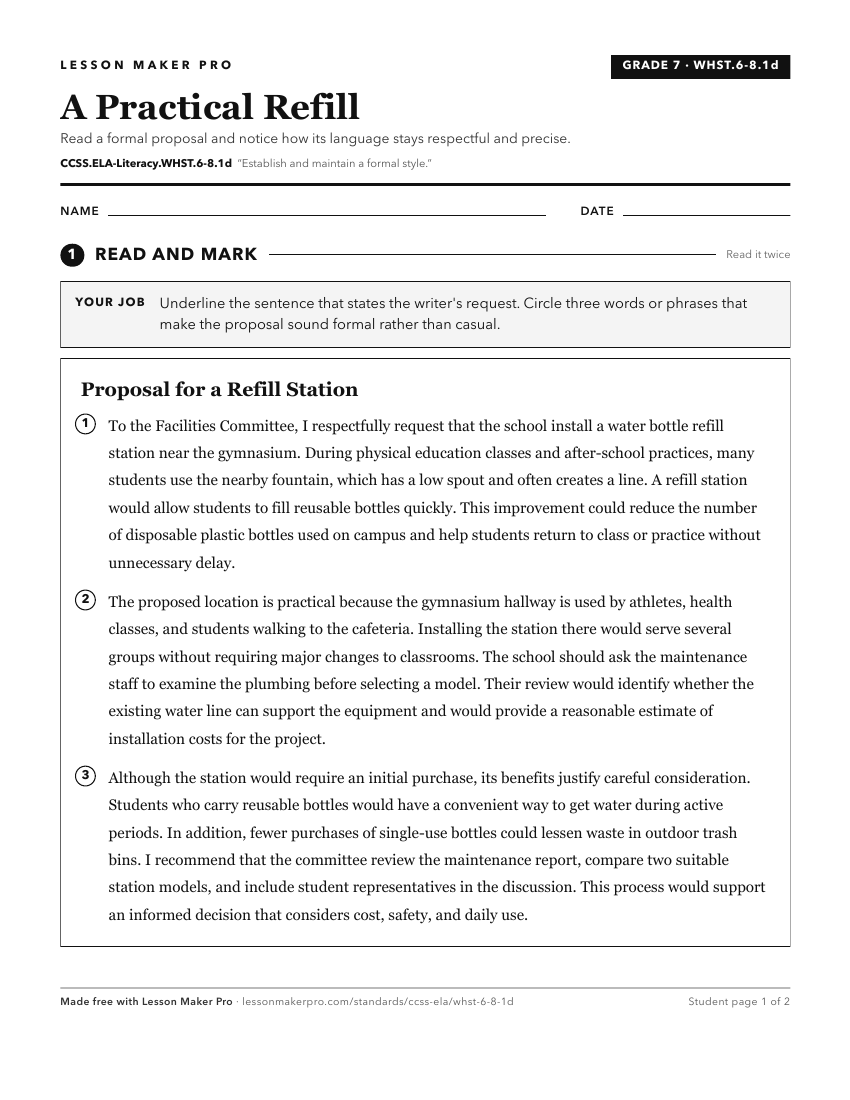
A ready-to-print activity worksheet aligned to CCSS.ELA-Literacy.WHST.6-8.1d, with an answer key for the teacher on its own page. No account needed.
PDF, US Letter, prints cleanly in black and white.
Download the worksheetKeep exploring
Related Standards
Turn this exact standard into a lesson
Grade, subject, topic, and the complete standard are prefilled. Create one free, no account needed.
Also for this standard:Make a WorksheetMake a QuizMake a Sub Lesson