CCSS.
The Standard
Use a variety of techniques to sequence events so that they build on one another to create a coherent whole and build toward a particular tone and outcome (e.g., a sense of mystery, suspense, growth, or resolution).
Common Core State Standards for English Language Arts
Teacher's field guide
What This Standard Means
What Students Need to Do
- Students choose an order for scenes that shapes how a reader feels and what the reader expects. They use pacing, transitions, flashbacks, foreshadowing, and selected details to connect events and lead to a planned ending.
What Mastery Looks Like
- A student can explain why each scene appears where it does, rather than simply placing events in time order. Their narrative controls pace, connects moments clearly, and reaches an ending that matches the intended mood or change.
Common Misconceptions
- Students may assume every narrative should be chronological, or use a flashback that interrupts rather than clarifies the plot. They may confuse adding more events with building tension, then rush the ending or leave transitions unclear.
How to Assess It
- Exit ticket: Order these events to build suspense: lights fail, a floorboard creaks, a shadow moves, the cat appears. Add two linking sentences.
Lesson moves
Ways to Teach It
Give pairs six scene cards from a short mystery; they reorder the cards, add one transition, and explain how the order increases suspense.
Ask students to compare a chronological opening with an in medias res opening and discuss which better creates curiosity and why.
Run a sequencing relay where teams arrange plot cards, then earn points by naming the effect of each placement.
Study the order of shots in a film trailer, then storyboard six shots that build toward a chosen reveal.
Free download
Printable W.11-12.3c Worksheet
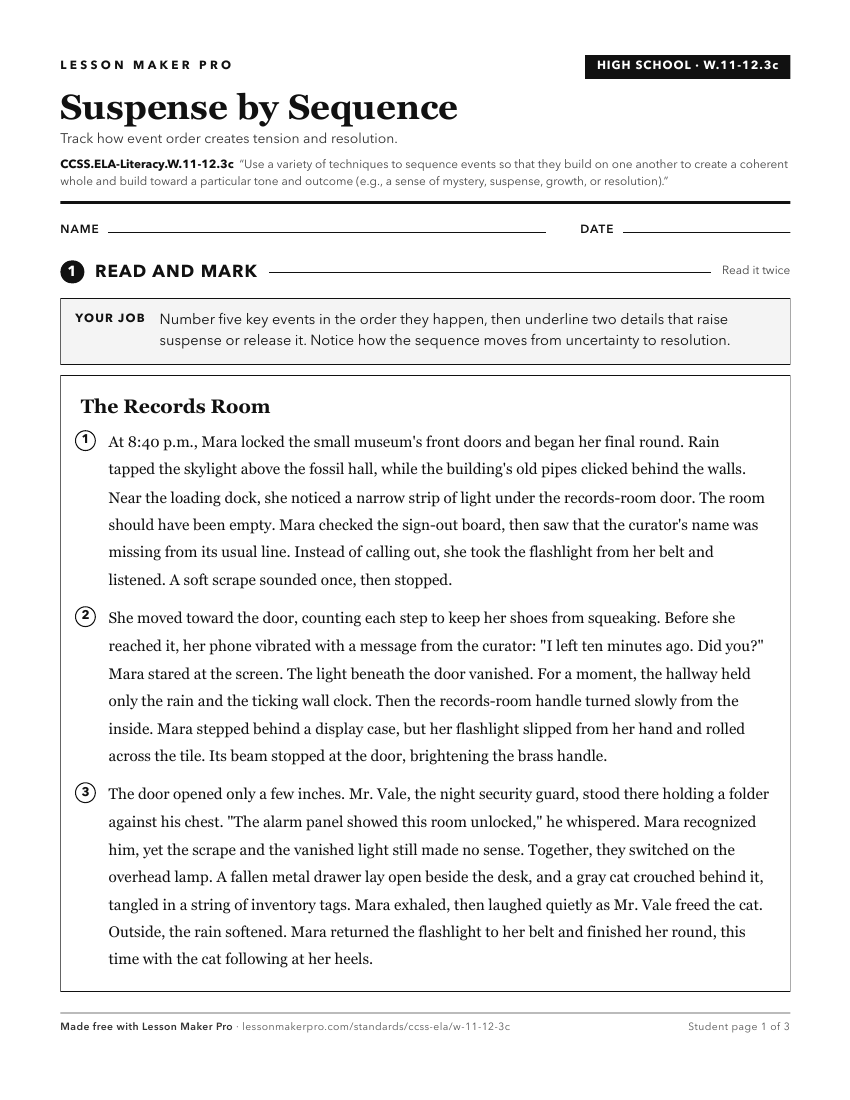
A ready-to-print activity worksheet aligned to CCSS.ELA-Literacy.W.11-12.3c, with an answer key for the teacher on its own page. No account needed.
PDF, US Letter, prints cleanly in black and white.
Download the worksheetLearning progression
Where This Standard Sits
Before This Standard
If students are struggling here, check these first.
Keep exploring
Related Standards
- CCSS.ELA-Literacy.W.4.3c
Use a variety of transitional words and phrases to manage the sequence of events.
- CCSS.ELA-Literacy.RL.9-10.5
Analyze how an author's choices concerning how to structure a text, order events within it (e.g., parallel plots), and manipulate time (e.g., pacing, flashbacks...
- CCSS.ELA-Literacy.W.5.3c
Use a variety of transitional words, phrases, and clauses to manage the sequence of events.
Turn this exact standard into a lesson
Grade, subject, topic, and the complete standard are prefilled. Create one free, no account needed.
Also for this standard:Make a WorksheetMake a QuizMake a Sub Lesson