CCSS.
The Standard
Provide a concluding statement or section that follows from and supports the information or explanation presented (e.g., articulating implications or the significance of the topic).
Common Core State Standards for English Language Arts
Teacher's field guide
What This Standard Means
What Students Need to Do
- Students write an ending that grows logically from the information already presented. They bring key ideas together and explain the topic’s significance or likely implications without introducing unsupported material.
What Mastery Looks Like
- A strong student writes a conclusion that connects the main ideas and answers the reader’s “so what?” question. The ending stays within the evidence, scope, and tone of the explanation.
Common Misconceptions
- Students often repeat the thesis word for word or list earlier points without connecting them. They may add new evidence, make an unsupported claim, or end with a vague statement about importance.
How to Assess It
- Give students a short explanation and ask them to write a three-sentence conclusion that synthesizes its main point and states one supported implication.
Lesson moves
Ways to Teach It
Give groups sentence strips from sample conclusions to sort as synthesis, implication, repetition, or unsupported new claim.
Ask students to write one sentence explaining why their topic matters and underline the earlier evidence that supports it.
Play Conclusion Match by pairing short explanatory passages with possible endings, then have students defend each match.
Compare endings from two news explainers and identify how each helps readers understand the topic’s wider significance.
Free download
Printable W.11-12.2f Worksheet
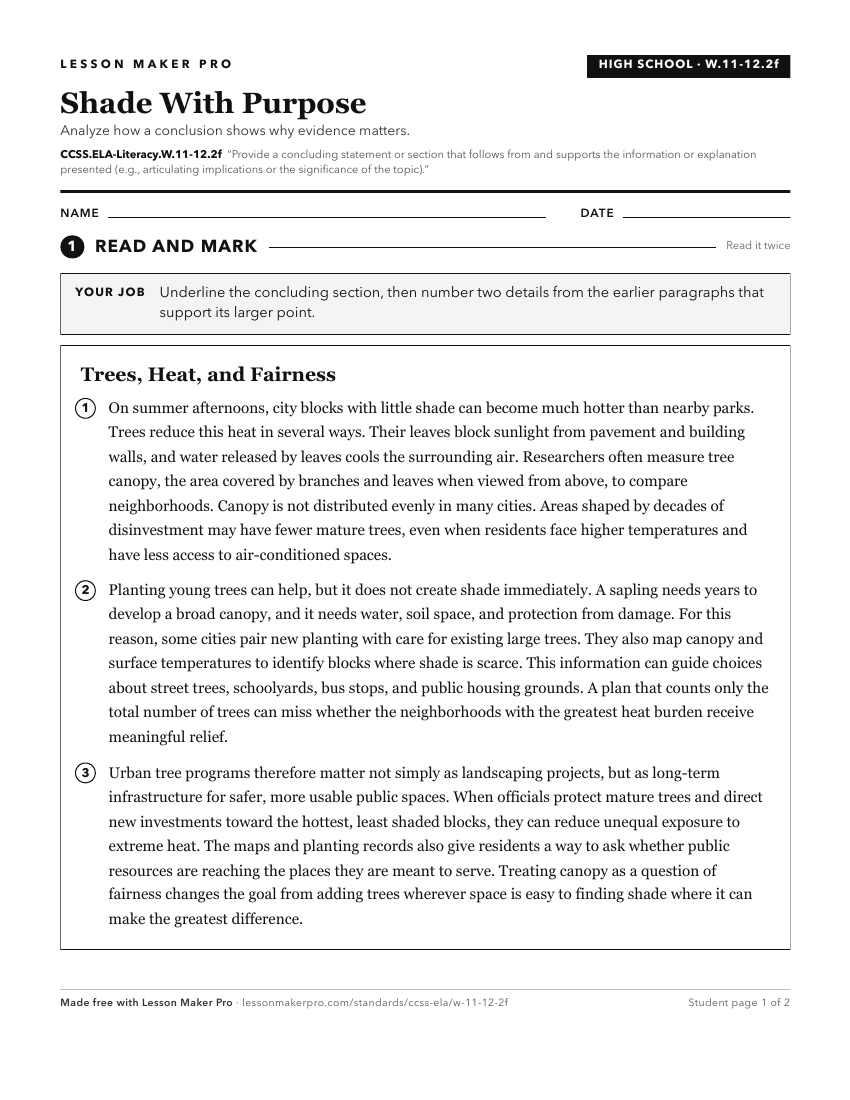
A ready-to-print activity worksheet aligned to CCSS.ELA-Literacy.W.11-12.2f, with an answer key for the teacher on its own page. No account needed.
PDF, US Letter, prints cleanly in black and white.
Download the worksheetLearning progression
Where This Standard Sits
Before This Standard
If students are struggling here, check these first.
Keep exploring
Related Standards
- CCSS.ELA-Literacy.WHST.6-8.2f
Provide a concluding statement or section that follows from and supports the information or explanation presented.
- CCSS.ELA-Literacy.WHST.11-12.2e
Provide a concluding statement or section that follows from and supports the information or explanation provided (e.g., articulating implications or the signifi...
- CCSS.ELA-Literacy.WHST.9-10.2f
The Grades 9–10 version of this standard.
Turn this exact standard into a lesson
Grade, subject, topic, and the complete standard are prefilled. Create one free, no account needed.
Also for this standard:Make a WorksheetMake a QuizMake a Sub Lesson