CCSS.
The Standard
Come to discussions prepared, having read and researched material under study; explicitly draw on that preparation by referring to evidence from texts and other research on the topic or issue to stimulate a thoughtful, well-reasoned exchange of ideas.
Common Core State Standards for English Language Arts
Teacher's field guide
What This Standard Means
What Students Need to Do
- Students read assigned material, research the issue, and prepare notes with specific evidence before a discussion. They use that evidence to explain, question, support, or challenge ideas during the exchange.
What Mastery Looks Like
- Students arrive with organized notes, relevant passages, and source details ready to use. They cite specific evidence, explain its relevance, and connect it to a classmate’s point or question.
Common Misconceptions
- Students may treat preparation as simply finishing the reading, without selecting useful evidence. They may mention a source vaguely, quote without explanation, or repeat a prepared point instead of responding to classmates.
How to Assess It
- Give students one discussion question and five minutes to prepare two cited notes. During a six-minute discussion, track whether each student uses one note to support or challenge an idea.
Lesson moves
Ways to Teach It
Give groups evidence cards from several sources to sort by claim, relevance, and strength before discussing the strongest choices.
Ask students to write two possible discussion claims, then attach one quotation or research detail and explain how each supports the claim.
Run an evidence relay where teams earn points by finding, citing, and explaining the best support for a new discussion question.
Use a local school issue and have students research two sources before holding a mock school board discussion with cited evidence.
Free download
Printable SL.11-12.1a Worksheet
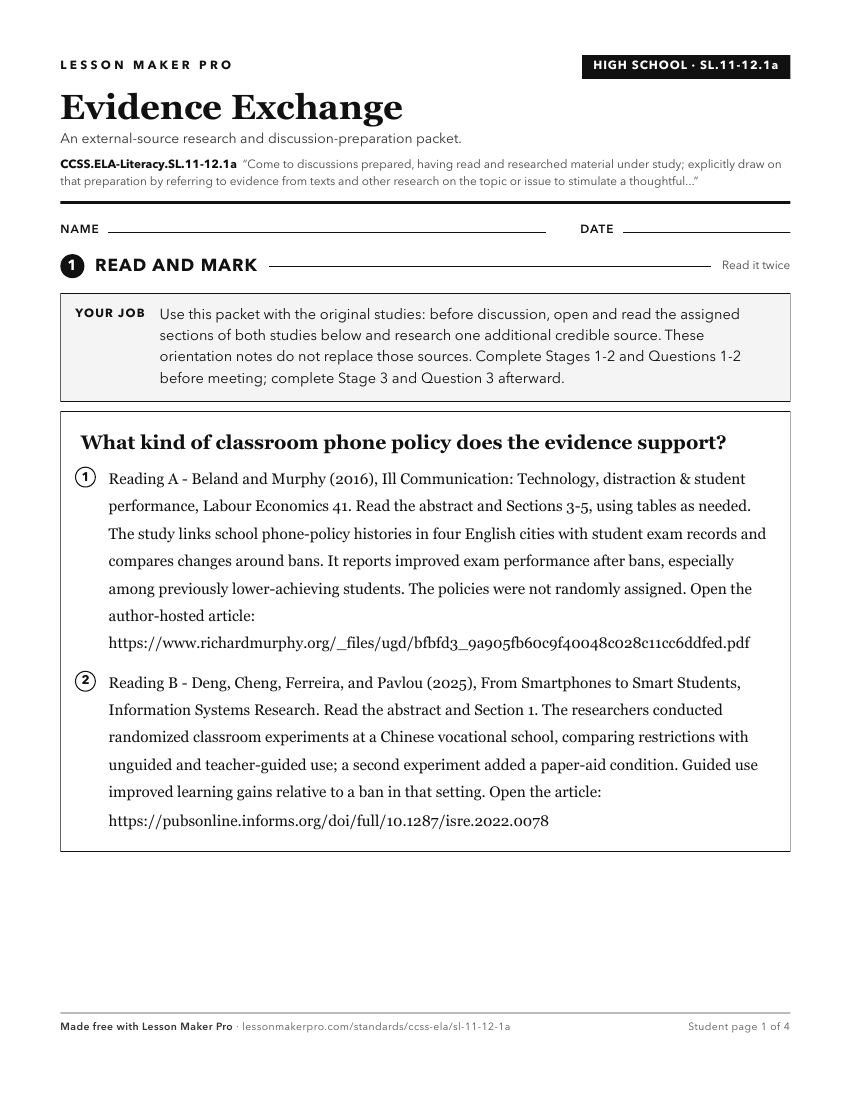
A ready-to-print activity worksheet aligned to CCSS.ELA-Literacy.SL.11-12.1a, with an answer key for the teacher on its own page. No account needed.
PDF, US Letter, prints cleanly in black and white.
Download the worksheetLearning progression
Where This Standard Sits
Before This Standard
If students are struggling here, check these first.
Keep exploring
Related Standards
- CCSS.ELA-Literacy.SL.6.1a
Come to discussions prepared, having read or studied required material; explicitly draw on that preparation by referring to evidence on the topic, text, or issu...
- CCSS.ELA-Literacy.SL.8.1a
Come to discussions prepared, having read or researched material under study; explicitly draw on that preparation by referring to evidence on the topic, text, o...
- CCSS.ELA-Literacy.SL.7.1a
Come to discussions prepared, having read or researched material under study; explicitly draw on that preparation by referring to evidence on the topic, text, o...
Turn this exact standard into a lesson
Grade, subject, topic, and the complete standard are prefilled. Create one free, no account needed.
Also for this standard:Make a WorksheetMake a QuizMake a Sub Lesson