CCSS.
The Standard
Analyze how a text uses structure to emphasize key points or advance an explanation or analysis
Common Core State Standards for English Language Arts · Reading Standards for Literacy in History/Social Studies 6—12
Teacher's field guide
What This Standard Means
What Students Need to Do
- Students identify how a history or social studies text is organized. They explain how the order and placement of ideas highlight key points or build an explanation.
What Mastery Looks Like
- Students can identify patterns such as chronology, cause and effect, comparison, or problem and solution. They can cite specific sections and explain how their placement highlights an idea or develops an analysis.
Common Misconceptions
- Students often summarize the content instead of explaining how its organization shapes meaning. They may label a passage chronological without noticing shifts, comparisons, causes, or repeated ideas.
How to Assess It
- Give students a three-paragraph history excerpt. Ask: “What structural choice emphasizes the author’s main point, and how does one specific section support that choice?”
Lesson moves
Ways to Teach It
Print a short historical passage in sections, then have pairs arrange the sections and explain how each order changes the emphasis.
Ask students to write: “Why did the author place this example before the conclusion, and what would change if it moved?”
Play Structure Detective by having teams label paragraph roles, find transition clues, and defend which section carries the main emphasis.
Compare a news article with a timeline of the same event, then discuss how each structure directs attention to different details.
Free download
Printable RH.9-10.5 Worksheet
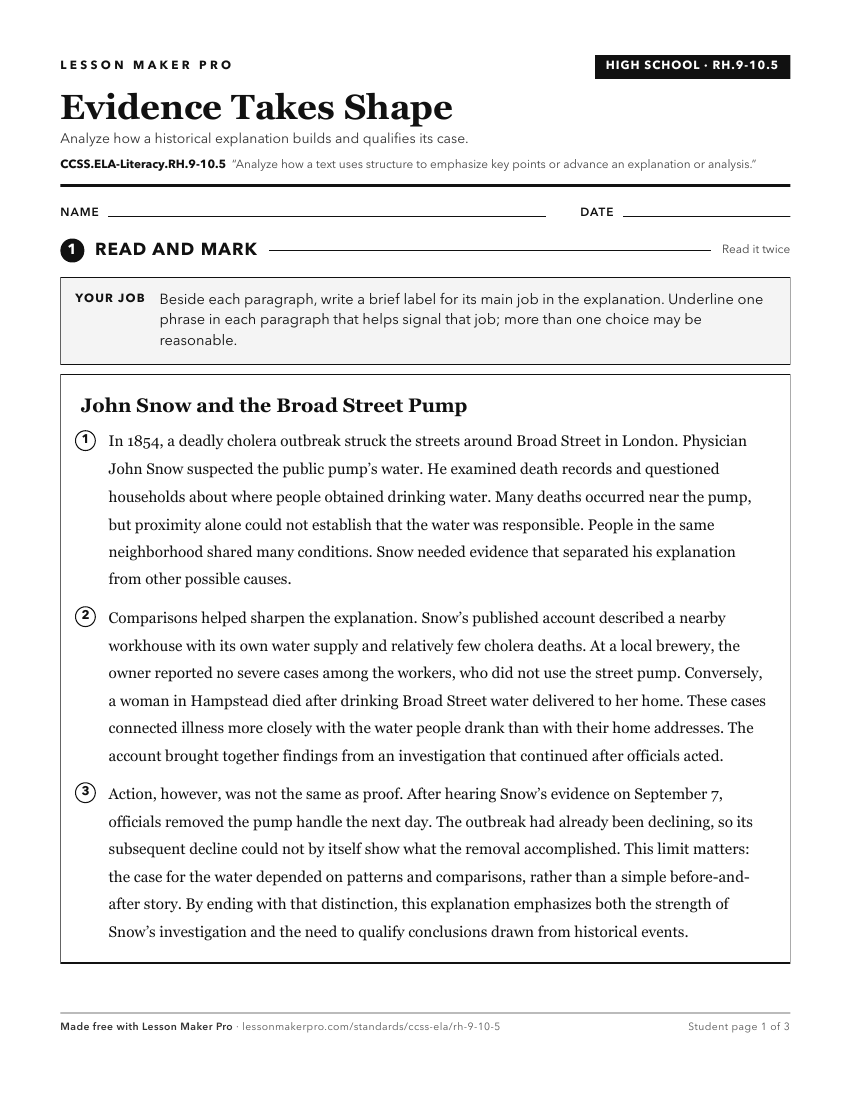
A ready-to-print activity worksheet aligned to CCSS.ELA-Literacy.RH.9-10.5, with an answer key for the teacher on its own page. No account needed.
PDF, US Letter, prints cleanly in black and white.
Download the worksheetLearning progression
Where This Standard Sits
See the whole path on the Reading: History/Social Studies progression map.
What This Unlocks
Mastery here sets students up for these next.
Keep exploring
Related Standards
- CCSS.ELA-Literacy.CCRA.R.5
Analyze the structure of texts, including how specific sentences, paragraphs, and larger portions of the text (e.g., a section, chapter, scene, or stanza) relat...
- CCSS.ELA-Literacy.RI.7.5
Analyze the structure an author uses to organize a text, including how the major sections contribute to the whole and to the development of the ideas.
- CCSS.ELA-Literacy.RST.6-8.5
Analyze the structure an author uses to organize a text, including how the major sections contribute to the whole and to an understanding of the topic.
- CCSS.ELA-Literacy.RL.8.5
Compare and contrast the structure of two or more texts and analyze how the differing structure of each text contributes to its meaning and style.
Turn this exact standard into a lesson
Grade, subject, topic, and the complete standard are prefilled. Create one free, no account needed.
Also for this standard:Make a WorksheetMake a QuizMake a Sub Lesson