CCSS.
The Standard
Demonstrate understanding of figurative language, word relationships, and nuances in word meanings.
Common Core State Standards for English Language Arts · Language Standards
Teacher's field guide
What This Standard Means
What Students Need to Do
- Students explain the intended meaning of similes, metaphors, idioms, adages, and proverbs in context. They connect synonyms, antonyms, and homographs. They also compare similar words and explain how each changes the tone or meaning.
What Mastery Looks Like
- A student can explain what a simile, metaphor, idiom, adage, or proverb means in context. The student can identify word relationships and choose among related words based on tone and meaning.
Common Misconceptions
- Students may call every comparison a simile, even when it lacks “like” or “as.” They may interpret idioms literally or assume synonyms are interchangeable in every sentence. Homographs can also cause confusion when students ignore context.
How to Assess It
- Use this exit ticket: “Lena crept into the room, and her brother was a sleeping bear. Explain the metaphor and replace crept with a stronger synonym.”
Lesson moves
Ways to Teach It
Sort phrase cards into literal, simile, metaphor, and idiom groups, then write the intended meaning on each card.
Discuss how strolled, marched, and stomped change the picture in “Jalen walked home,” then defend the best choice.
Play a matching game with synonym, antonym, and homograph cards, requiring players to explain each match before keeping it.
Collect figurative phrases from ads or sports headlines, then rewrite each one literally and explain why the writer chose it.
Free download
Printable L.5.5 Worksheet
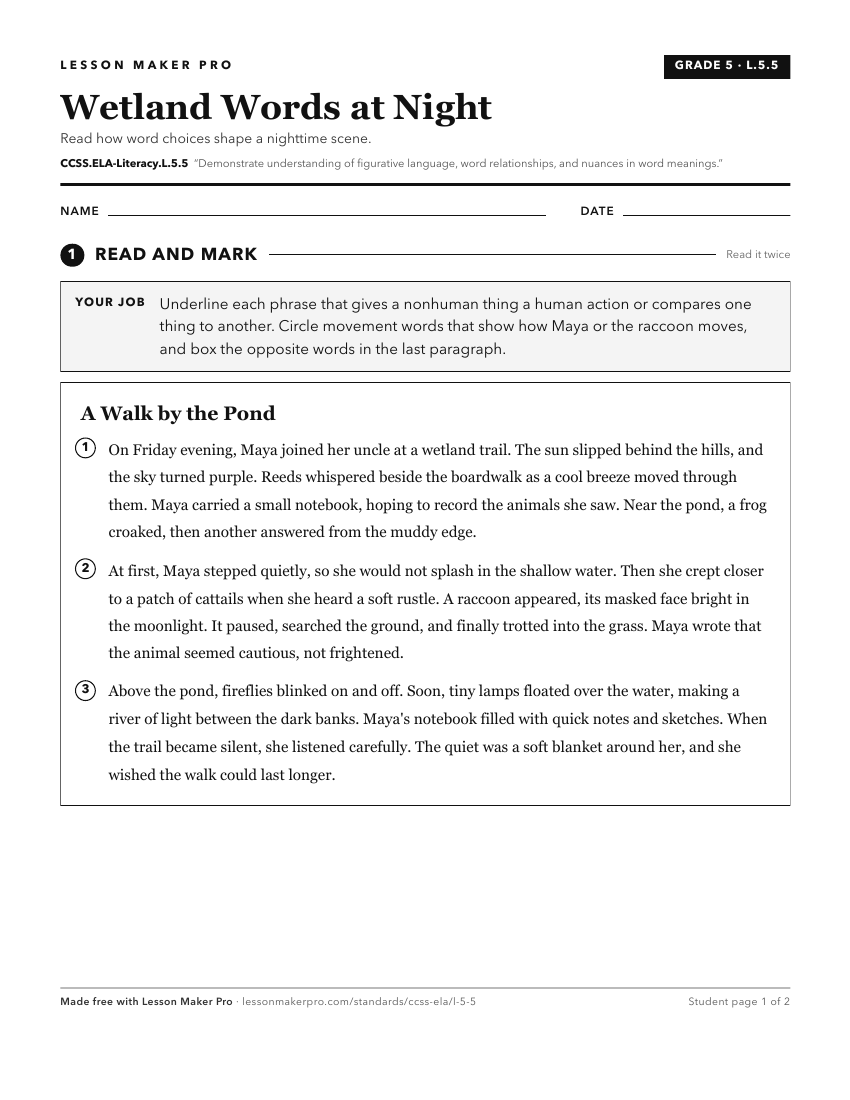
A ready-to-print activity worksheet aligned to CCSS.ELA-Literacy.L.5.5, with an answer key for the teacher on its own page. No account needed.
PDF, US Letter, prints cleanly in black and white.
Download the worksheetBefore This Standard
If students are struggling here, check these first.
What This Unlocks
Mastery here sets students up for these next.
Keep exploring
Related Standards
Turn this exact standard into a lesson
Grade, subject, topic, and the complete standard are prefilled. Create one free, no account needed.
Also for this standard:Make a WorksheetMake a QuizMake a Sub Lesson